
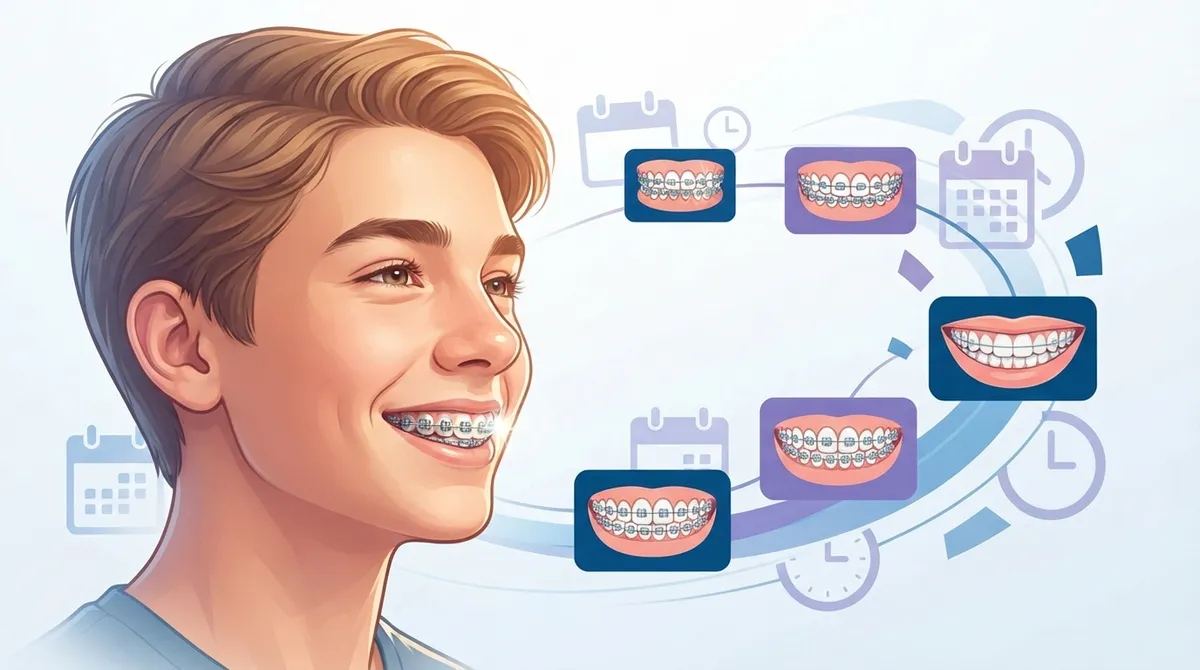
Key Takeaways
-
Ages 12-13 is an ideal time to start braces because most permanent teeth have erupted, allowing orthodontists to clearly assess bite development and plan treatment with confidence.
-
Starting braces after age 12 is normal and effective; teens respond well to treatment even at ages 14-16, so missing the early years does not mean missing the opportunity.
-
Most children need only one round of braces in adolescence, not two phases; early treatment is typically reserved for specific cases like prominent upper front teeth prone to injury.
-
Treatment duration averages 12-30 months depending on bite complexity, how well your teen follows instructions, and how their teeth respond; orthodontists provide personal estimates after examination.
-
Metal braces remain the top choice for complex bites, while clear aligners work only for responsible, organized teens who commit to wearing them 20-22 hours daily.
-
Retainers must be worn for at least 12 months after braces and often longer to prevent teeth from shifting back, making long-term retention essential for keeping results.
If your child just turned 12 or 13, you might be wondering if it is time to think about braces. Good news: you are right on schedule. Starting braces for children over 12 is very common, and it is not too late at all. In fact, many orthodontists see early adolescence as a great time to begin.
By this age, most permanent teeth have come in. That gives your orthodontist a clear picture of how your child’s bite and jaws are developing. It also means treatment can be planned with real confidence.
At Chacon Orthodontics, we meet families every week who ask the same questions. Is it the right time? How long will it take? What kind of braces work best? This guide walks you through all of it in plain, friendly language. Let’s get your child (and you) feeling ready.
Is 12 a Good Age to Start Braces?
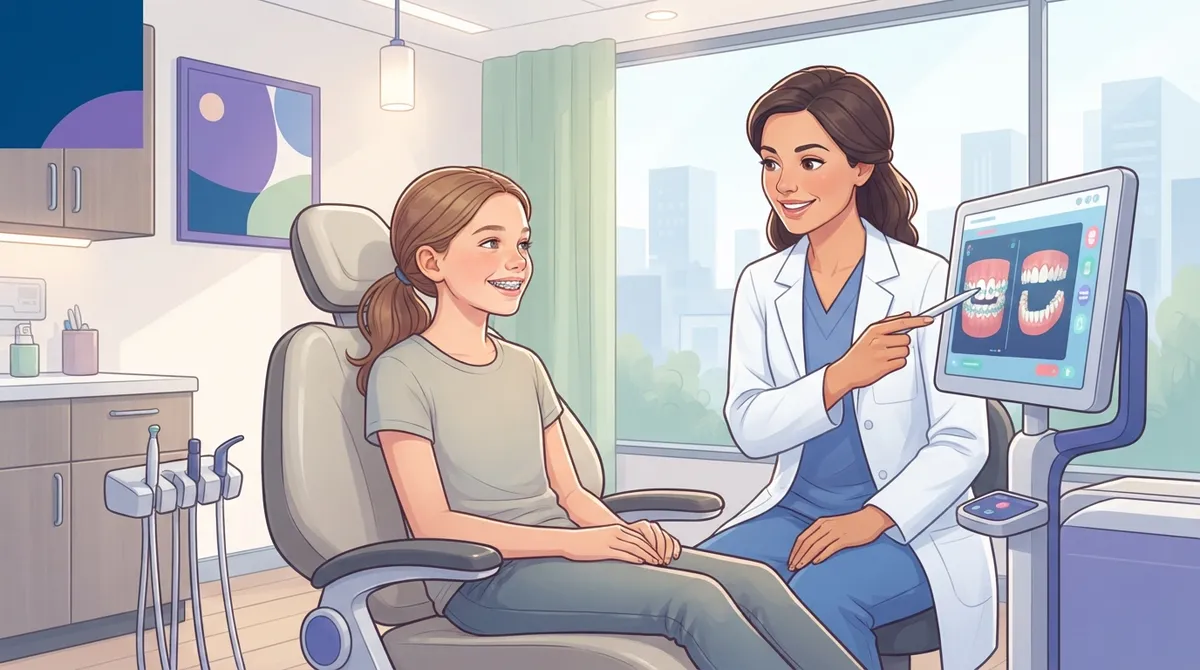
For many kids, yes. Treatment often begins around ages 12 to 13, once most adult teeth have erupted. The NHS notes that treatment commonly starts around age 12, after most adult teeth have started to come through. That said, there is no single perfect age for every child.
Every smile grows on its own schedule. Some kids are ready at 11. Others are ready at 14. A few need to wait a bit longer because their teeth are still coming in. The right timing depends on three big things:
- Tooth eruption: Are most permanent teeth in place?
- Jaw growth: Is the jaw still growing in a way that helps or affects the bite?
- The specific bite problem: Some issues are best treated at certain stages.
This is why a personal evaluation matters more than a birthday. If your child is past 12 and you have never had a visit, there is no need to worry. You can simply start with a consultation.
Is It Too Late for Braces After Age 12?
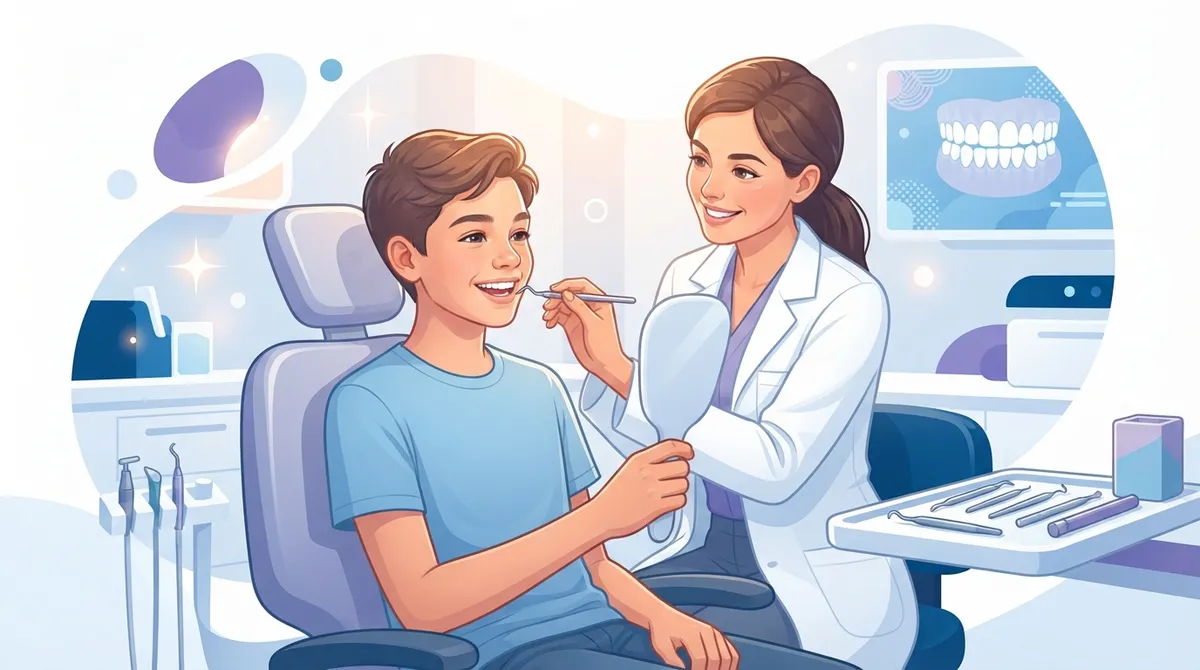
Not at all. This is one of the most common worries we hear, and the answer is a happy one. Starting braces after 12 is normal and effective. Teens often respond very well to treatment because their teeth and jaws are still adapting.
Even if your child is 14, 15, or 16, braces can still make a big difference. Adults get braces too! If you are curious about how age plays a role, our guide on the age requirements for braces in 2026 is a helpful read.
The Orthodontic Check-Up by Age 7: What It Really Means
You may have heard that kids should see an orthodontist by age 7. That is true. The American Association of Orthodontists recommends a check-up no later than age 7. But here is the part many parents miss: this is an evaluation, not a promise that treatment starts right away.
For most children, the orthodontist simply watches and waits. Then braces begin when the timing is best, often in the early teen years. If your child skipped that early visit, you have not missed your chance. Learn more about early orthodontic treatment to see how it compares.
Do Kids Need Two Rounds of Braces?
Not usually. Some families worry that early treatment means two phases of braces. A Cochrane review looked at this closely. It found that, for most problems, two-phase treatment is not better than one round of treatment in the teen years.
There is one notable exception. Early treatment for prominent upper front teeth can lower the risk of injury to those teeth. Outside of that, treating in adolescence works just as well. That is great news for busy families who would rather do things once.
Signs Your Child May Need Braces
How do you know if your 12-year-old needs braces? Some signs are easy to spot. Others only show up during an exam. Here are common reasons orthodontists recommend treatment:
- Crowding: Teeth overlap or twist because there is not enough room.
- Spacing: Noticeable gaps between teeth.
- Overbite: Upper front teeth stick out past the lower teeth.
- Underbite: Lower teeth sit in front of the upper teeth.
- Crossbite: Some upper teeth bite inside the lower teeth.
- Teeth that do not meet properly: Trouble biting or chewing evenly.
Other clues include mouth breathing, jaw clicking, or teeth that wear down unevenly. For a deeper look, check out early signs you need braces and how to know if you need braces.
Braces Options for Kids and Teens
Today’s teens have more choices than ever. The best option depends on your child’s needs, maturity, and ability to follow instructions. Dr. Chacon will review all of this during the exam.
| Option | How It Works | Good Fit For |
|---|---|---|
| Custom metal braces | Brackets and wires gently move teeth over time | Complex bites, crowding, and teens who want a proven option |
| Ceramic (clear) braces | Tooth-colored brackets that blend in | Teens who want a less noticeable look |
| Clear aligners | Removable, nearly invisible trays | Suitable cases with a responsible, organized teen |
Metal Braces
Metal braces are still a top choice for good reason. They are strong, dependable, and handle many types of bite problems. Plus, teens can pick fun colored bands to show off their personality. See why in 15 reasons metal braces are still a top choice in 2026.
Clear Aligners
Clear aligners are popular with teens who play sports, perform in band, or just want a low-profile look. They come out for eating and brushing. But they only work if they are worn about 20 to 22 hours a day, so your child has to stay on top of it. Our post on braces vs. clear aligners for teens can help you decide.
Which Is Right for Your Child?
Ask yourself a few simple questions. Is your child organized? Will they remember to wear aligners all day? Does the bite problem need the steady control of fixed braces? Sometimes the honest answer is that traditional braces are the safest path. Other times, aligners are a great match. Our orthodontist will give you an honest recommendation.
How Long Will Treatment Take?
This is the question every parent asks. The truth is, it varies. NHS guidance gives a typical range of about 12 months to 2.5 years. Another NHS overview describes a wider range of 6 to 30 months.
What affects the timeline?
- How complex the bite is. Mild crowding is quicker than a major bite correction.
- How well your child follows instructions. Wearing rubber bands and keeping appointments helps a lot.
- How the teeth and jaws respond. Every mouth moves a little differently.
- Regular visits. Appointments usually happen every 4 to 10 weeks.
Your orthodontist should give you a personal estimate after the exam. For more planning help, read 10 facts on how long braces take.
What Life With Braces Is Really Like
Let’s be honest. The first few days can feel a little sore. Teeth may ache as they start to move. The good news is that this usually fades quickly. Soft foods, cold water, and over-the-counter pain relief (as your orthodontist advises) can help. You can read what Dr. Chacon says in Are Braces Painful?
Eating and Brushing
Food rules are simple. Avoid anything very sticky, hard, or crunchy. Think caramel, hard candy, ice, and popcorn. Stock up on friendly snacks instead. We list plenty in top braces-friendly snacks, and you can see the full no-go list in foods to avoid with braces.
Brushing matters even more with braces. Food hides around brackets, so teens should brush after meals and floss daily. Our tips on brushing and flossing with braces make it easy.
Sports, School, and Social Life
Braces fit right into a busy teen life. Kids can still play sports, play instruments, and hang out with friends. A mouthguard made for braces keeps teeth and brackets safe during games. If a wire pokes or a bracket breaks, do not panic. Here is what to do about braces emergencies.
Teens often feel more confident as their smile changes. That boost shows up at school, on the field, and in photos. It is one of the best parts of this journey.
Retainers: Keeping the Smile You Earned
When braces come off, the work is not quite done. Teeth can drift back over time. That is why retainers are so important. They hold teeth in their new spots while the bone and gums settle.
The NHS says retainers are usually worn for at least 12 months, and often longer. Your orthodontist will give exact instructions. Follow them closely and keep your follow-up visits. Learn more about retainer facts and the different retainer types.
Why Might an Orthodontist Suggest Waiting?
Sometimes the best plan is patience. If your child still has several baby teeth, braces may be too early. If the jaw is still growing in a way that could fix the issue on its own, watching is smart. Waiting is not the same as ignoring the problem. It simply means the timing will give a better result.
An orthodontist will track your child’s growth and tell you when to start. This careful approach saves time and avoids treatment that is not needed.
Cost and Payment Options
Cost is a real concern for most families. Pricing depends on the type of treatment and how long it takes. The good news is that many practices offer flexible plans. Explore how much braces cost in 2026 and financing options that make treatment affordable. It also helps to review how dental insurance covers orthodontic treatment.
What to Expect at the First Visit
The first appointment is relaxed and informative. Here is what usually happens:
- We review your child’s health and dental history.
- We check the teeth, bite, and jaw development.
- We take digital images to plan treatment.
- We talk through options, timing, and costs with you and your teen.
You will leave with clear answers and a plan. You can read more in what to expect at your first orthodontist visit in Westchase.
Why Families Choose Chacon Orthodontics
Chacon Orthodontics is a board-certified practice led by Dr. Omar Chacon. We treat children, teens, and adults with custom braces, clear aligners, and retainers. We use advanced tools like 3D digital imaging, and we offer care in both English and Spanish, so every family feels comfortable and understood.
We want your child to feel at ease, too. Our team keeps visits friendly and explains each step. You can learn more about the benefits of choosing Chacon Orthodontics for teen braces and read about why a board-certified orthodontist makes a difference.
Curious what other families think? Visit our Chacon Orthodontics West Chase page on Google to read reviews from local families. You can also follow along on Instagram, connect with us on Facebook, or find Dr. Chacon on LinkedIn.
Ready to Take the Next Step?
If your child is over 12 and you are wondering about braces, the best move is a simple evaluation. There is no pressure and no guesswork. You will get honest advice about timing, options, and what to expect.
We would love to meet your family at our Westchase or Brandon office. Schedule your free consultation today, or contact us with any questions. Your child’s best smile is closer than you think.
FAQs
Q: Is 12 or 13 a good age for a child to get braces?
A: Yes, it often is! Many kids start braces around 12 or 13, once most of their permanent teeth have come in. The best timing really depends on your child’s tooth eruption, jaw growth, and bite, so a quick orthodontic exam will tell you for sure.
Q: Is it too late for my child to get braces after age 12?
A: Not at all. Starting braces after 12 is very common and works well for most teens. Even older teens and adults can get great results, so there is no need to worry that you have missed the window.
Q: How long do braces usually take for a teenager?
A: Most treatment lasts about 12 months to 2.5 years, though some cases are shorter or longer. Your orthodontist will give you a personal estimate after the exam, since it depends on how complex the bite is and how well your teen follows instructions.
Q: What types of braces or clear aligners work for children over 12?
A: Teens can choose from custom metal braces, ceramic braces, and clear aligners in suitable cases. The best pick depends on your child’s bite, maturity, and ability to follow directions, and Dr. Chacon will help you choose.
Q: How long does a child need to wear a retainer after braces?
A: Retainers are usually worn for at least 12 months, and many patients keep wearing them longer at night. Teeth can shift over time, so following your orthodontist’s retainer plan helps your new smile last.





