
Key Takeaways
-
Traditional metal braces are usually the lowest-cost fixed option, with estimates of about $3,000 to $7,000 without insurance in the U.S., though your exact fee depends on your case and location.
-
Compare written quotes for the same scope of treatment, confirming whether exams, X-rays, emergency visits, and retainers are included, since a lower advertised price may leave out costs you'll need later.
-
Check your dental insurance limits (age rules, waiting periods, lifetime maximums) and ask your orthodontist about in-office payment plans or upfront-payment discounts.
-
Explore dental school clinics, community programs, and Medicaid's EPSDT rules, which may cover medically necessary orthodontic care for children under 21 (cosmetic-only care is not covered).
-
Avoid mail-order or unsupervised clear aligners and fashion braces: the FDA classifies aligners as prescription devices, and unsupervised treatment can cause bite problems, pain, and tooth loss.
Let’s be honest: braces are an investment, and nobody wants to overpay. If you have typed “cheap braces” into a search bar, you are not alone. Parents, teens, and adults all ask the same thing. How can I get a straighter smile without wrecking my budget?
Here is the good news. Cheap braces can be a smart goal when “cheap” means lower cost, not lower quality. The real trick is finding a plan that fits your wallet and still comes with a real diagnosis, real oversight, and a clear written plan. A rock-bottom price tag from a source with no exam can end up costing you far more later.
In this friendly guide, we will walk through what braces cost in 2026, which options tend to be the least expensive, and the smartest ways to save. We will also cover the risky shortcuts to avoid. Whether you are a parent planning for your child, a teen who wants a great smile, or an adult juggling work and life, you will find practical tips below.
What Does “Cheap Braces” Really Mean?
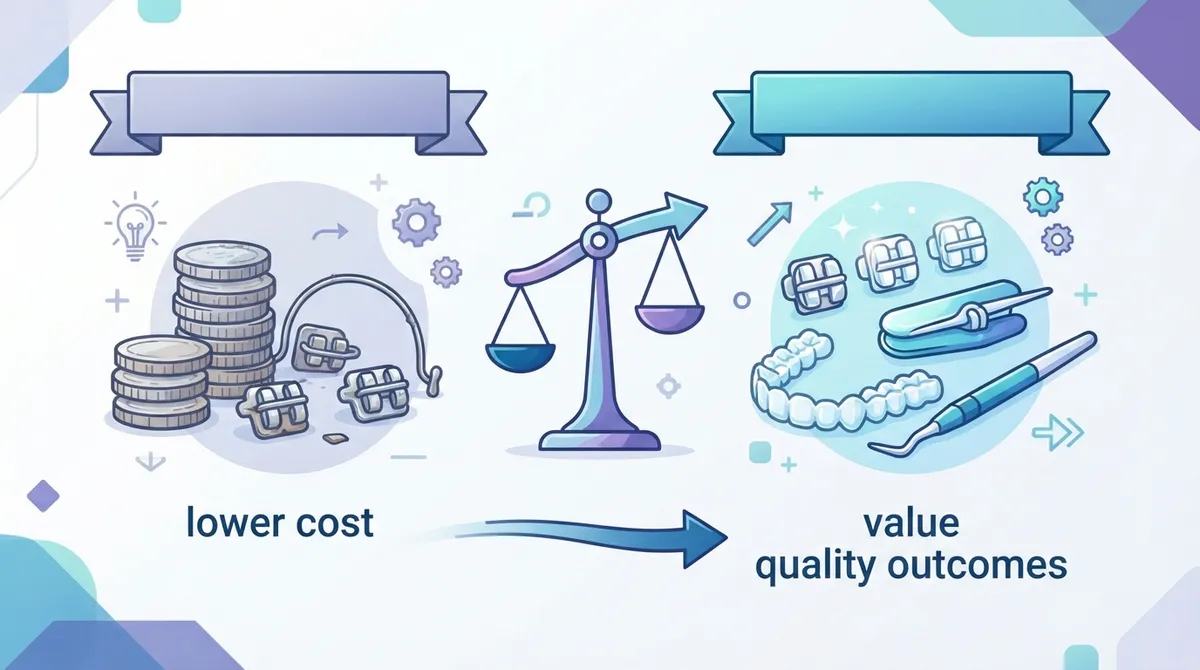
When most people search for cheap braces, they want a lower out-of-pocket cost. That is a perfectly reasonable wish. But “cheap” and “affordable” are not always the same thing.
Think of it like buying shoes for a long hike. The lowest price might look great at the store. But if the shoes fall apart on day three, you pay twice. Braces work the same way. Good orthodontic care includes a proper exam, a custom plan, regular adjustments, and a retainer plan at the end.
So the best way to think about it is this: find the lowest cost for the right care. That means getting treatment from a qualified professional who watches over your progress from start to finish.
How Much Do Braces Cost Without Insurance in 2026?
Prices vary a lot by location, case type, and treatment length. Published estimates give us a helpful ballpark. One consumer health source reports roughly $3,000 to $7,000 for metal braces without insurance. An American Dental Association survey range cited by another source is $5,000 to $6,000 for comprehensive orthodontic treatment.
Here is a simple look at typical U.S. estimates, based on GoodRx figures (page updated in 2026):
| Type of Braces | Estimated Cost Without Insurance | Good to Know |
|---|---|---|
| Traditional metal braces | $3,000 – $7,000 | Usually the lowest-cost fixed option |
| Ceramic braces | $4,000 – $8,000 | Tooth-colored brackets blend in more |
| Lingual braces | $5,000 – $13,000 | Placed behind teeth; often the priciest |
These are broad estimates, not guaranteed local prices. Your exact fee depends on your own smile and your orthodontist’s fee structure. For a deeper dive, check out our clear pricing guide for braces in 2026.
Why Traditional Metal Braces Are Usually the Cheapest Fixed Option
If your main goal is cheap braces from a trusted provider, traditional metal braces are often your best bet. They are tried, tested, and effective for many types of cases, from mild crowding to complex bite problems.
Metal braces tend to cost less because the materials are simpler and more common. They are also very reliable for moving teeth. Many families choose them for kids and teens for exactly this reason. If you are curious about why they remain popular, take a look at these reasons metal braces are still a top choice in 2026.
And no, they do not have to be boring! Colored bands let your teen add a little personality. It is a fun, low-cost way to make braces feel like their own.
What Affects the Price of Braces?
Before you compare quotes, it helps to know what drives the total. Several things play a role:
- Case complexity: Mild crowding costs less to treat than a severe overbite or underbite.
- Appliance type: Metal, ceramic, lingual, or clear aligners each have different price points.
- Treatment length: Longer treatment means more visits and adjustments.
- Location: Costs can differ from one city or region to another.
- Practice fee structure: Some offices bundle everything into one price. Others charge for items separately.
Because of that last point, always compare the same scope of treatment. A low advertised price may leave out things you will need later.
What Should a Braces Quote Include?
This is one of the most helpful questions you can ask. A clear quote prevents surprise bills down the road. Ask whether the estimate includes the items below:
- Diagnostic records: X-rays, photos, and digital scans.
- Appliance cost: The braces or aligners themselves.
- Regular adjustments: All your scheduled visits.
- Emergency visits: Broken brackets or poking wires.
- Retainers: Keeping your results in place after treatment.
- Post-treatment follow-up: Check-ins after the braces come off.
If you want to see how an exam and plan come together, read about what orthodontist prices really include in 2026. It can help you compare quotes side by side with confidence.
Smart Ways to Lower Your Braces Cost
Now for the fun part: saving money. You do not have to sacrifice quality to bring your costs down. Try these ideas.
Compare Written Treatment Plans
Get quotes from more than one orthodontist. Ask for each plan in writing. Then compare the same treatment scope, not just the starting price. A slightly higher quote that includes retainers and emergency visits may beat a cheaper one that leaves them out.
Ask About Payment Plans and Discounts
Many orthodontic offices offer in-office payment plans that spread the cost into smaller monthly amounts. Some also offer discounts for paying upfront. Do not be shy about asking. Our team is happy to walk you through flexible payment plans so treatment fits your budget. You can also learn more about orthodontic payment plans and how they work.
Check Your Dental Insurance Benefits
Some dental plans cover part of orthodontic treatment. But coverage often comes with limits, such as age rules, waiting periods, or a lifetime maximum. Call your insurer and your orthodontist to confirm what you are eligible for and what your remaining cost will be. Our guide on how dental insurance covers orthodontic treatment breaks this down in plain language, and you can review our insurance information too.
Look Into Dental Schools and Community Clinics
Dental-school clinics and community programs may offer reduced-cost orthodontic care. Students work under the watch of licensed faculty. Wait times can be longer, but the savings can be real for some families.
Explore Medicaid for Children
For Medicaid-enrolled children under 21, federal EPSDT rules require medically necessary dental services. That can include orthodontic care when it is needed to prevent disease, promote oral health, or restore function. Cosmetic-only braces are not covered. Each state decides what counts as medically necessary, so check with your state’s Medicaid office and your orthodontist.
Are Clear Aligners a Cheaper Option?
Not automatically. Clear aligners can be a wonderful choice for the right smile, especially for teens and adults who want a low-profile look. But they are not always cheaper than braces, and they are not right for every case.
The best option depends on your diagnosis and how complex your treatment is. A licensed orthodontist should decide whether aligners can handle your needs. To explore the differences, check out braces vs clear aligners and which solution fits you, or learn about clear aligners cost for a closer look at pricing.
The Risks of “Too Cheap” Orthodontics
We love a good bargain as much as anyone. But some shortcuts are not worth the risk. Here is what you should know.
Mail-Order and Unsupervised Aligners
The FDA says clear aligners are prescription devices. It has not authorized aligners sold directly to consumers without a dentist’s or orthodontist’s prescription and supervision. Without proper oversight, risks may include unintended tooth movement, bite problems, pain, and even tooth loss.
An American Association of Orthodontists (AAO) member survey, conducted from November 2021 to January 2022, found that 77% of responding orthodontists had seen patients seeking retreatment after direct-to-consumer treatment without an initial in-person exam. That is a survey of orthodontists, not a patient-wide complication rate. Still, it shows why an in-person evaluation matters.
Fashion Braces and Decorative Appliances
Fashion braces are not real orthodontic treatment. They are decorative, and when fitted without qualified dental care, they can harm your oral health. Research on fashion braces and oral-health quality of life has raised concerns about these appliances, which you can read about in this study on fashion braces and oral health-related quality of life.
A low upfront price may lead to costly corrective treatment later. Always get an in-person dental evaluation and a written plan before starting any tooth movement.
Cheap Braces for Every Age: What Families Should Know
Different people have different needs. Here is a quick look at how to think about cost for each group.
- Parents of children: An early visit can catch problems while they are easier and cheaper to fix. Learn more in our guide to early orthodontic treatment that saves time, money, and smiles.
- Teens: Metal braces with fun colors are a budget-friendly, effective pick for many teens. Explore teen braces in Brandon: costs, options, and confidence.
- Adult professionals: Adults have lots of choices, from classic braces to clear options. Our adult orthodontics page shows what is possible.
- Bilingual families: Clear communication helps you understand costs and ask questions. Our team provides care in both English and Spanish, so every family feels comfortable.
Your Step-by-Step Plan to Find Affordable Braces
Ready to get started? Here is a simple path you can follow.
- Set your budget. Decide what monthly payment feels comfortable.
- Check your insurance. Confirm your orthodontic benefits and limits.
- Book a consultation. Many offices offer free first visits, including virtual ones.
- Ask for a written plan. Make sure it lists everything included.
- Compare payment options. Ask about monthly plans and discounts.
- Choose a qualified provider. Pick someone you trust to guide you the whole way.
For even more ideas, see these 7 ways to get affordable orthodontic care in 2026 and our tips on getting braces without insurance.
Why Chacon Orthodontics Is a Budget-Friendly Choice in Brandon
At Chacon Orthodontics, we believe a great smile should feel within reach. Dr. Omar Chacon is a board-certified orthodontist who offers personalized care for kids, teens, and adults. We serve families in Brandon and Westchase with custom braces, clear aligners, retainers, and teeth whitening.
We keep things simple and honest. You get a clear plan, friendly guidance, and flexible ways to pay. See what our neighbors are saying and visit us on Google — Chacon Orthodontics Brandon. You can also follow along with smile stories on Instagram, join the conversation on Facebook, or connect with Dr. Chacon on LinkedIn.
If you are in the area, our guides to braces in 33511 Brandon FL and affordable braces in Westchase are great next reads.
Final Thoughts: Cheap Braces Done the Smart Way
Cheap braces do not have to mean cheap results. With a little planning, you can find lower-cost orthodontic care that keeps your health first. Start with traditional metal braces if budget is your top concern. Compare written plans. Ask about payment plans. Check your insurance and any programs you may qualify for. And always skip the unsupervised shortcuts.
Your smile is worth doing right, and you deserve a plan that feels good for both your teeth and your wallet. Ready to take the first step? Book your free consultation today, or contact us with any questions. We would love to help you smile with confidence!
FAQs
Q: How much do braces cost without insurance?
A: In the U.S., traditional metal braces often run about $3,000 to $7,000 without insurance, depending on your case and location. Ceramic and lingual braces usually cost more. The best way to know your real price is to get a written quote after an in-person exam.
Q: What is the cheapest safe type of braces?
A: Traditional metal braces are generally the lowest-cost fixed option, and they work well for many different smiles. The safest choice is whatever your orthodontist recommends after a proper diagnosis. Always pair a lower price with real professional oversight.
Q: Are cheap or mail-order clear aligners safe?
A: The FDA says clear aligners are prescription devices and has not authorized direct-to-consumer aligners without a dentist’s or orthodontist’s supervision. Without that care, risks can include bite problems, pain, unintended tooth movement, and tooth loss. A quick in-person exam is a much safer starting point.
Q: Does Medicaid or dental insurance cover braces?
A: Some dental plans cover part of orthodontic care, but limits like age rules, waiting periods, and lifetime maximums often apply. For Medicaid-enrolled children under 21, medically necessary orthodontic care may be covered, though cosmetic-only treatment is not. Check with your insurer, your state Medicaid office, and your orthodontist to confirm.
Q: Are payment plans available for braces?
A: Yes! Many orthodontic offices offer in-office payment plans that spread the cost into manageable monthly amounts, and some offer discounts for paying upfront. Ask about your options at your first visit so you can pick a plan that fits your budget.