

Key Takeaways
-
Ceramic braces typically cost $4,000 to $8,000 before insurance in 2026, with some estimates reaching $8,500 or more, though your personal price depends on your specific case.
-
Ceramic braces usually cost more than metal braces, which typically range from $3,000 to $7,000 before insurance, but they offer much less visibility.
-
Always get a written quote that spells out what's included, such as consultations, adjustments, emergency repairs, removal, and retainers, since costs can rise later.
-
Ceramic brackets can chip or break more easily than metal, so ask how replacements are handled and whether they cost extra.
-
Check your insurance for orthodontic coverage limits, including age limits, exclusions, lifetime maximums, and which braces types are eligible.
-
Ask about monthly payment plans, financing, discounts, and HSA or FSA accounts to make ceramic braces more affordable.
Thinking about braces but dreading the metal-mouth look? You’re not alone. Many teens, parents, and working adults love the idea of a straighter smile, but they want it to blend in. That’s where ceramic braces come in. They use clear or tooth-colored brackets that are much less noticeable than metal ones.
Of course, the next question is always the same: how much will it cost? The cost of ceramic braces can feel like a mystery, since every smile is different. In this guide, we’ll break down the typical price ranges in 2026, what changes the final number, what should be included in your quote, and how to make the cost easier to manage. Let’s take the guesswork out of it together.

How Much Do Ceramic Braces Cost in 2026?
Most U.S. consumer guides put the cost of ceramic braces at roughly $4,000 to $8,000 for a full course of treatment before insurance. Some published estimates stretch up to about $8,500 or more. According to GoodRx’s 2026 overview, $4,000 to $8,000 is a common range.
A separate 2026 fee-study summary reports an average of $5,834, with an observed range of $4,480 to $11,312. These studies use different methods, so the numbers do not match perfectly. Think of them as helpful guideposts, not a personal quote.
The American Dental Association’s annual survey also places the average fee for comprehensive orthodontic treatment at about $5,000 to $6,000. That figure covers orthodontics in general, not just ceramic braces.
The only way to know your real price is a one-on-one exam. At Chacon Orthodontics, we offer a free consultation so you can get a clear, written estimate with no pressure.
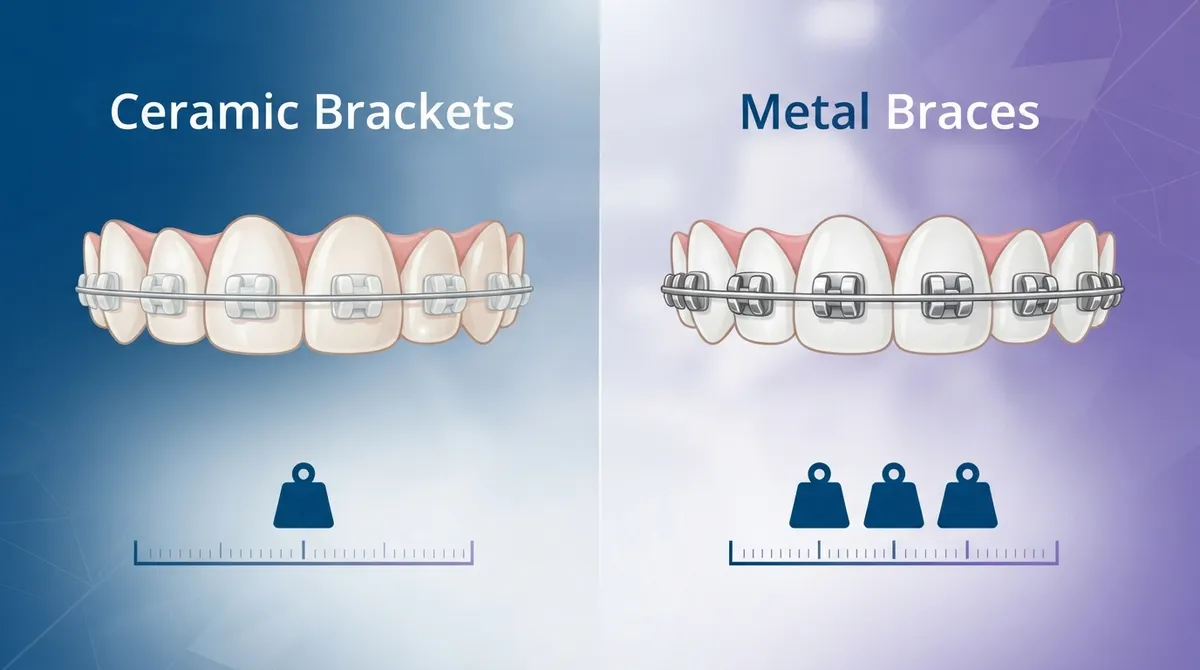
Ceramic Braces vs. Metal Braces: Cost Comparison
Ceramic braces usually cost a bit more than traditional metal braces. The brackets are made from a different material, and they take extra care to produce. Here is a quick look at the published ranges.
| Type of Braces | Typical Guide Range (Before Insurance) | 2026 Fee-Study Average | Visibility |
|---|---|---|---|
| Ceramic braces | $4,000 – $8,000 | $5,834 (range $4,480 – $11,312) | Low (clear or tooth-colored brackets) |
| Metal braces | $3,000 – $7,000 | $6,343 (range $2,500 – $10,000) | High (silver brackets) |
Notice that the fee-study averages look a little different from the guide ranges. That’s normal. Different sources use different methods and different mixes of patient cases. So please don’t compare numbers from two sources as if they were exact matches.
If you want to learn more about the metal side of the equation, check out our post on the cost of metal braces in 2026. You can also read our guide on metal braces vs. ceramic braces for a side-by-side look.
What Affects the Cost of Ceramic Braces?
No two smiles are the same, so no two price tags are either. Several things shape your final fee. Knowing them can help you understand your quote and ask smart questions.
- Your orthodontic needs: Mild crowding is often simpler than a serious bite problem. More complex cases may need more visits or extra appliances.
- Treatment length: The longer your teeth need to move, the more visits and adjustments you may need.
- Your location: Prices vary by city and region because the cost of running a practice is different from place to place.
- The provider: Experience, training, and technology can all play a role. A board-certified orthodontist focuses only on straightening teeth and jaws.
- What the fee includes: Some quotes bundle everything together. Others list items separately.
Want to know why credentials matter? Read why board-certified orthodontist status matters. It can make a real difference in the care you receive.
What Should Be Included in Your Quote?
Here is a tip we share with every family: always ask what the quoted fee covers. A low number can look great until extra charges show up later. A clear quote should spell out what is and isn’t included.
Here are the questions worth asking before you say yes:
- Does the fee include the initial consultation and diagnostic records, such as X-rays and digital scans?
- Is the cost of placing the braces covered?
- Are regular adjustment visits included?
- Are emergency repairs included, or do they cost extra?
- Does the quote cover removing the braces when treatment is done?
- Are retainers included? Retainers are key to keeping your new smile in place.
- What happens if a bracket breaks and needs to be replaced?
- Will you pay more if treatment runs longer than first estimated?
Ceramic brackets can be more prone to chipping or breaking than metal ones. So it’s smart to ask how replacements are handled. Getting the answers in writing keeps everyone on the same page.
Not sure how to prepare for that conversation? Our guide on what orthodontist prices really include walks you through it step by step.
Do Ceramic Braces Cost More for Adults or Kids?
This is a common question, and the honest answer is that age alone doesn’t set the price. The treatment plan does. A child with an early bite issue and an adult with long-standing crowding may both have very different needs.
That said, here is how it often plays out for different groups:
- Parents of children: Younger kids may start with early treatment, which can sometimes simplify care later. Learn more in our guide on how early treatment can save time and money.
- Teens: Ceramic braces can feel like a good fit for school photos, sports, and social life. Many teens love how subtle they look. If your teen is weighing options, see braces vs. clear aligners for teens.
- Adults: Working professionals often choose ceramic braces to keep a low profile at the office. Treatment for adults can take a bit longer in some cases, but it’s absolutely worth exploring. See our post on orthodontic treatment for adults.
No matter your age, a personal exam is the best way to see what your own plan might cost.
Does Insurance Cover Ceramic Braces?
Sometimes, yes. Orthodontic insurance benefits vary a lot from plan to plan. Some plans help with orthodontics, but they often come with limits. Common ones include age limits, exclusions, and a lifetime maximum.
Here are a few things to check with your insurance company:
- Whether your plan covers orthodontics at all
- Which types of braces are eligible (some plans only cover metal braces or pay a set amount)
- Whether you must see an in-network provider
- How much of your lifetime benefit is still available
Don’t worry if the details feel confusing. Our team is happy to help you sort through your benefits. You can also read how dental insurance covers orthodontic treatment or visit our insurance page for more information.
Ways to Make Ceramic Braces More Affordable
A big number can feel scary at first. The good news is that you have options. The American Association of Orthodontists notes that many practices offer payment plans or financing, and some offer discounts.
Here are a few ways families make the cost fit their budget:
- Ask about monthly payment plans. Spreading the cost over time can make it much easier to handle. See our payment plans page for details.
- Use your insurance benefits. Even a partial benefit can lower your out-of-pocket cost.
- Look into HSA or FSA accounts. If you have one through your job, you may be able to use pre-tax dollars. Check with your plan administrator for the rules.
- Ask about discounts. Some practices offer savings for paying in full or for treating more than one family member.
- Get everything in writing. Ask for the total fee, the payment schedule, any financing terms, and any discounts before you start.
For more budgeting ideas, check out 12 braces financing options to fit any budget and 7 ways to get affordable orthodontic care.
Are Ceramic Braces Worth the Extra Cost?
That depends on what matters most to you. Let’s look at the good and the not-so-good so you can decide with confidence.
The Pros
- They blend in. The clear or tooth-colored brackets are much less noticeable than metal.
- They work like metal braces. They use wires to move teeth in a similar way, so you get dependable results.
- They boost confidence. Many patients feel more at ease smiling during treatment.
The Trade-Offs
- They cost more. Expect a higher price than metal braces in most cases.
- They can chip or break more easily. The brackets can be more fragile, so careful eating habits matter.
- They need good care. Brushing and flossing well helps keep your brackets and teeth looking their best.
Speaking of eating, you may want to review foods to avoid with braces and our tips on cleaning your teeth with braces every day.
If you want a smile that looks natural during treatment and you’re comfortable with the extra care, ceramic braces can be a great pick. If budget is your top concern, metal braces may be the more wallet-friendly path. There’s no wrong answer, only what fits your life.
How to Get an Accurate Price for Your Smile
The best way to learn your true cost is to talk to an orthodontist. Here is a simple path to follow.
- Book a consultation. A good exam looks at your teeth, bite, and goals.
- Review your treatment options. Ask whether ceramic braces, metal braces, or clear aligners fit you best.
- Request a written estimate. Make sure it lists what’s included.
- Check your insurance. Confirm your benefits and any limits.
- Pick a payment plan. Choose a schedule that works for your budget.
Dr. Omar Chacon is a board-certified orthodontist with over 10 years of experience. He and his team serve families in Westchase and Brandon with warm, bilingual care in English and Spanish. That means everyone in your family can ask questions and feel comfortable in the language they prefer. We use advanced tools like 3D digital imaging to plan your care with care and precision.
Curious what other patients think? You can see what folks say about us on Google by choosing to visit us on Google — Chacon Orthodontics West Chase. You can also follow our smile stories on Instagram and Facebook, or learn more about Dr. Chacon’s background on LinkedIn.
Final Thoughts on the Cost of Ceramic Braces
The cost of ceramic braces in 2026 usually lands between $4,000 and $8,000 before insurance, though your own number depends on your case, your treatment plan, and what your quote includes. Ceramic braces cost a little more than metal ones, but many people feel the discreet look is worth it. With payment plans, insurance help, and clear questions, you can plan with confidence.
Ready to see what a straighter smile could cost you? Take the first step and schedule your free consultation with Chacon Orthodontics today. If you have questions first, feel free to contact us. We can’t wait to meet you and help you smile bigger.
FAQs
Q: How much do ceramic braces cost in the United States?
A: Most consumer guides estimate about $4,000 to $8,000 for a full course of ceramic braces before insurance, with some estimates reaching $8,500 or higher. Your own price depends on your case and treatment plan, so a personal estimate from an orthodontist is the best way to know for sure.
Q: Are ceramic braces more expensive than metal braces?
A: Usually, yes. One consumer guide lists $4,000 to $8,000 for ceramic and $3,000 to $7,000 for metal. Prices vary by source and by case, so the exact gap depends on your treatment plan.
Q: Does dental insurance cover ceramic braces?
A: It depends on your plan. Some plans help with orthodontics but may have age limits, exclusions, or a lifetime maximum, and some only cover certain appliance types. Call your insurer to confirm what’s covered and how much benefit you have left.
Q: Can I pay for ceramic braces monthly?
A: Many orthodontic practices offer monthly payment plans or financing, and some offer discounts. Ask for the total fee, the payment schedule, and any financing terms in writing before you begin treatment.
Q: What is usually included in the price of ceramic braces?
A: It varies from practice to practice. A quote may include the consultation, records, placement, adjustment visits, emergency repairs, removal, and retainers, but not always. Ask exactly what’s covered and whether replacement brackets or extra treatment time cost more.





