
Key Takeaways
-
Most people wear braces for 12 to 24 months, and a typical comprehensive case takes about 18 to 24 months, though your personal timeline depends on your teeth, bite, and how well you follow the plan.
-
Adjustment visits usually happen every 4 to 12 weeks, so keeping every appointment is one of the easiest ways to stay on schedule.
-
Skipping elastics, missing appointments, and broken brackets or wires can add months, so call your orthodontist promptly if something feels loose or broken.
-
Complex cases involving impacted or missing teeth, extractions, or jaw surgery take longer, with surgical cases sometimes running 2.5 to 3 years.
-
A 2020 meta-analysis found no significant difference in treatment time between adults and teens, so age alone does not determine how long braces take.
-
Getting your braces off is not the finish line, since teeth can drift back, so wearing your retainer as directed protects your results.
So you’re thinking about braces, and one big question keeps popping up: how long will this take? You’re not alone. It’s the first thing most parents, teens, and adults ask us. Nobody wants to feel stuck in treatment forever, and everyone wants to know when that big smile reveal will happen.
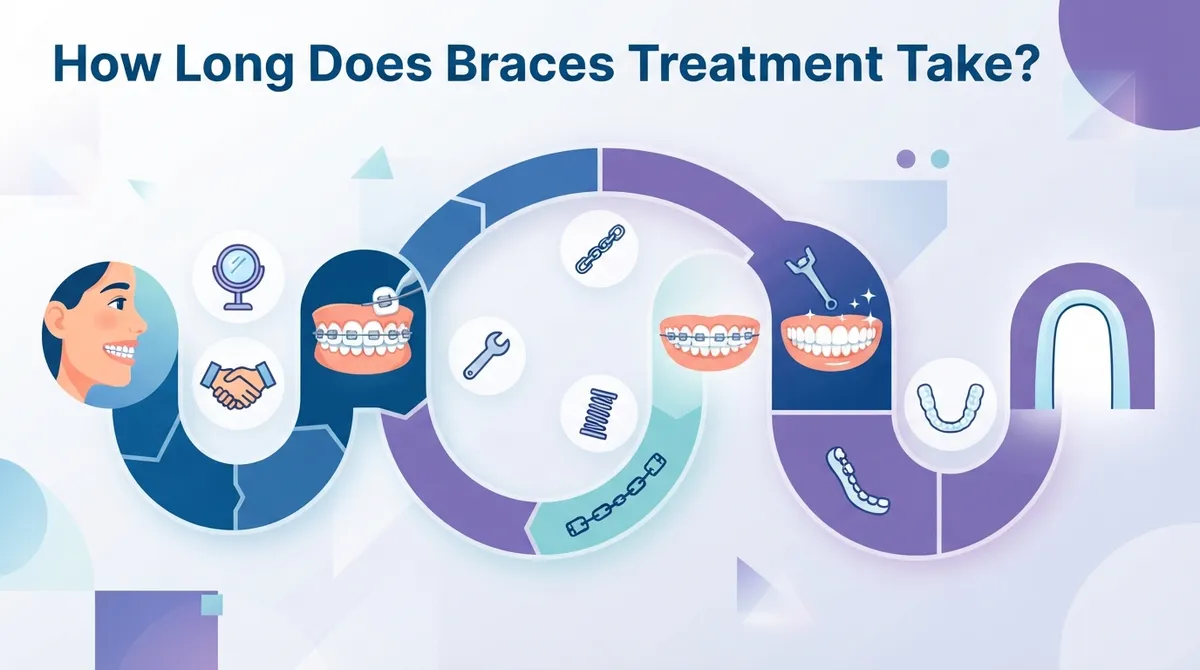
Here’s the good news. The braces treatment timeline is easier to understand than you might think. Most people wear braces for about 12 to 24 months, and a typical comprehensive case lands around 18 to 24 months. Your own timeline depends on your teeth, your bite, and how well you follow the plan.
In this guide, we’ll walk you through every stage of the braces treatment timeline, from your first visit to the day you get your retainer. We’ll also share what can speed things up, what can slow things down, and how to plan your life around treatment. Let’s dive in.
What Is the Typical Braces Treatment Timeline?
The American Association of Orthodontists says most people wear braces for 12 to 24 months. A large review of 34 clinical trials, covering 6,207 patients, found an average fixed-brace treatment time of about 24.9 months. Hospital guidance in the UK commonly describes about 18 months to two years.
So a good rule of thumb is this: plan on roughly 18 to 24 months. Some lucky smiles finish sooner. Some complex cases take longer. Your orthodontist can give you a personal estimate after a full exam.
| Case Type | Typical Braces Time | What It Often Involves |
|---|---|---|
| Mild case | 12 to 18 months | Minor crowding or small gaps |
| Moderate case | 18 to 24 months | Crowding plus bite changes |
| Complex case | 24 to 36 months | Impacted teeth, missing teeth, or jaw surgery |
Think of these numbers as a roadmap, not a stopwatch. Every mouth is different, just like every road trip has its own traffic.
The Stages of Your Braces Journey
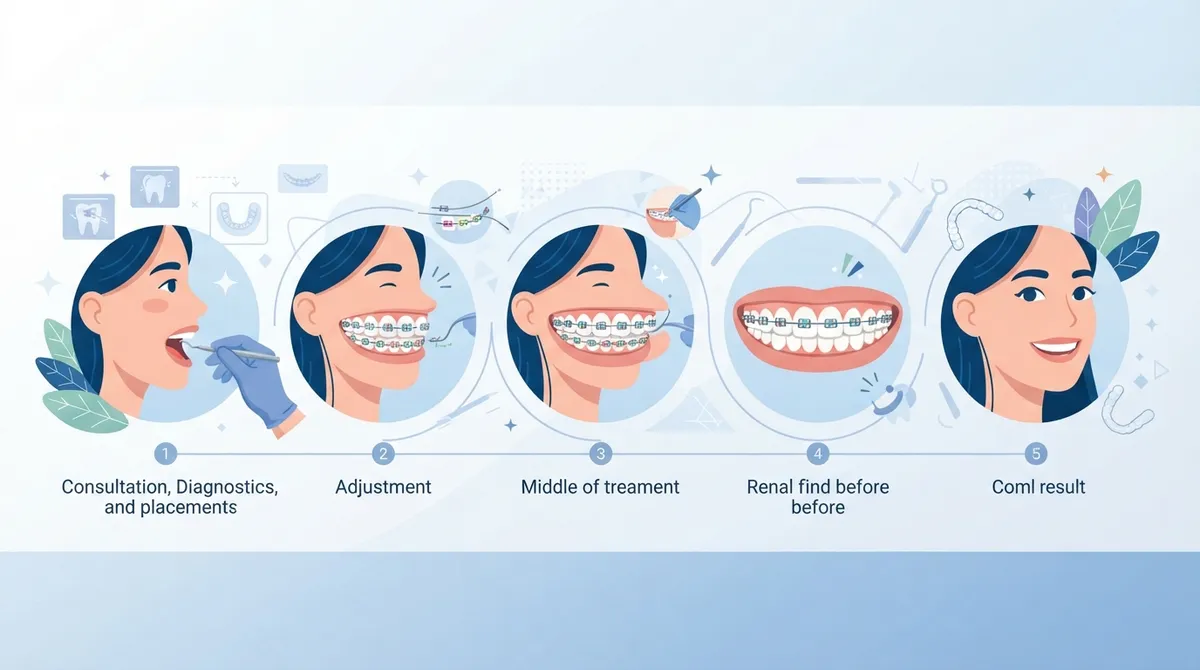
Braces treatment is more than just wearing brackets. It has clear stages, and knowing them helps you feel calm and ready. Here is how the braces treatment timeline usually flows.
- Consultation and records: We look at your teeth and bite, take photos and digital images, and talk about your goals.
- Treatment planning: We map out which teeth need to move and how far. This is when we give you a personal time estimate.
- Getting your braces: The brackets and wires are placed. It’s usually a comfortable visit.
- Active treatment: Your teeth slowly move into place with regular adjustment visits.
- Braces removal: Once the planned movements are done, the braces come off. Cue the happy dance!
- Retention: You wear a retainer to keep your new smile from shifting.
If you want a deeper look at each step, check out our guide on the 9 steps in the orthodontic treatment process.
Stage 1: Your First Visit and Planning
Your journey starts with a conversation. At Chacon Orthodontics, we offer a free consultation so you can ask questions with no pressure. We use advanced tools like 3D digital imaging to see exactly how your teeth and bite fit together.
This planning stage is where your timeline gets real. We look at how crowded your teeth are, how your upper and lower teeth meet, and what you want from your smile. Then we build a plan just for you.
Stage 2: Getting Your Braces On
On the day your braces go on, we clean and prepare your teeth, place the brackets, and add the wire. Most people say it feels more strange than painful. Your teeth may feel sore for a few days as they begin to move. If you’re curious, Dr. Chacon shares more in Are Braces Painful? What to Expect.
Stage 3: Active Treatment and Adjustments
This is the longest stage, and it’s where the magic happens. Your orthodontist slowly guides your teeth with wires, and sometimes elastics, into better positions. Think of it like gently steering a ship. Small, steady changes add up to a big result.
How Often Will You Visit Your Orthodontist?
Adjustment visits are usually scheduled every 4 to 12 weeks. The American Association of Orthodontists gives that range, while some UK hospital guidance mentions about 6 to 8 weeks. The exact timing depends on your treatment stage and your orthodontist’s plan.
Here’s what a typical adjustment visit may include:
- Checking how your teeth are moving
- Changing or tightening wires
- Swapping out elastic bands
- Checking your brushing and flossing
- Answering your questions
These visits are usually quick. For busy families, that’s a nice bonus. Teens can often fit them around school and sports, and working adults can plan around their calendars.
What Can Make Braces Treatment Take Longer?
Many things affect your braces treatment timeline. Some are about your teeth, and some are about daily habits. Let’s look at both.
Factors Related to Your Teeth and Bite
- Severity of the problem: Simple spacing or mild crowding usually takes less time than a major bite problem.
- Impacted or missing teeth: Teeth that haven’t come in properly may need extra time and planning.
- Extractions: Plans that include removing teeth can take longer, though it depends on the whole case.
- Jaw surgery: Complex cases with surgery may take around 2.5 to 3 years.
If your bite is the main concern, learn more about braces for overbite or how to correct an underbite.
Factors Related to Your Daily Habits
- Missed appointments: Skipping visits can slow your progress.
- Not wearing elastics: Elastics do important work. Skipping them can add months.
- Broken brackets or wires: Loose parts can stall tooth movement, so call us quickly if something breaks.
- Poor oral hygiene: Cavities and gum problems can pause treatment while they get fixed.
The good news is that most of these are in your hands. If something breaks, here’s what to do in our guide on broken braces brackets. And for daily care, see how to brush and floss with braces.
Do Adults Take Longer Than Teens?
This is a question we hear all the time from adult professionals. The answer might surprise you. A 2020 systematic review and meta-analysis of seven studies found no statistically significant difference in treatment time between adults and adolescents. The mean difference was just about 0.8 months.
The research is limited, and every case is different. But the takeaway is encouraging: age alone does not decide how long your braces treatment takes. Adults are never too old for a great smile. You can explore more in our adult braces timeline guide and our post on orthodontic treatment for adults.
Timeline by Age Group: What Families Can Expect
| Age Group | What to Know | Helpful Tip |
|---|---|---|
| Kids | Early evaluation can spot problems while the jaw is still growing | Visit around age 7 for a checkup |
| Teens | Treatment fits well with school years and growth | Plan visits around sports and exams |
| Adults | Timelines are similar to teens in research | Ask about low-profile options |
For Parents of Younger Children
If you’re a parent, you may wonder if your child needs braces now or later. An early checkup helps you plan. Sometimes we simply watch and wait. Sometimes early care saves time and effort down the road. Our guide on early orthodontic treatment explains more. You can also read early signs you need braces.
For Teens Who Want a Smooth Experience
Teens often want to know if braces will get in the way of their life. The good news is that braces fit right in. With the right care routine and snack choices, you can keep doing what you love. Check out our list of foods to avoid with braces to keep things on track.
For Working Adults
Adults often worry about how braces look at the office. Today there are more discreet choices than ever. You can compare options in braces vs. clear aligners and see how clear trays work in our guide to removable aligners.
Do Braces Take Longer If Teeth Need to Be Extracted?
Sometimes, yes. When a mouth is very crowded, your orthodontist may plan to remove a tooth or two to make room. Closing that space takes time, so these cases can run longer. But it isn’t always the case. Treatment length depends on your full plan, not on extractions alone.
The best way to know is to ask. At your visit, we’ll explain whether extractions are part of your plan and what that means for your braces treatment timeline.
Life After Braces: The Retention Phase
Here’s something many people miss. Getting your braces off is not the finish line. It’s the start of the retention phase. Teeth have a habit of drifting back, so a retainer helps hold your results in place.
Your orthodontist will tell you how often to wear your retainer and for how long. Many patients wear it full time at first, then switch to nights only. Keeping up with this step protects all the time and effort you put in. Learn more in retainers in Westchase and our list of 11 retainer types.
7 Smart Ways to Keep Your Braces Treatment on Track
Want to stay on schedule? These simple habits help you finish on time, or even a bit sooner.
- Show up to every appointment. Consistency keeps your teeth moving.
- Wear your elastics as directed. They are small but mighty.
- Brush and floss every day. Healthy gums and teeth mean fewer delays.
- Avoid hard and sticky foods. They can break brackets and wires.
- Call us if something feels loose or broken. Quick fixes prevent setbacks.
- Ask questions. We love explaining your progress.
- Wear your retainer after braces. It protects your finished smile.
Need snack ideas? Our parent-friendly list of braces-friendly snacks makes it easy.
Braces vs. Clear Aligners: How Do Timelines Compare?
Many patients ask if clear aligners are faster. The honest answer is that it depends on the case. Both braces and aligners can move teeth effectively, and treatment length depends on how complex your needs are. Aligners work best when you wear them as directed, usually most of the day.
Not sure which is right for you? Take a look at traditional braces vs. clear aligners or what’s best for your teen. Your orthodontist can recommend the best fit after seeing your smile in person.
Planning Your Life Around Your Braces Timeline
Eighteen to twenty-four months can feel like a long time, but it flies by. Many families plan around big moments like school years, sports seasons, weddings, or work projects. Knowing your estimated timeline helps you set goals.
We also help families plan for cost. Treatment length and type can affect pricing, so it helps to ask about payment options early. Our guide on how to plan your life around braces treatment duration offers more tips. Curious about the numbers? See how much braces cost in 2026.
Braces Care Close to Home in Westchase and Brandon
If you’re in the Tampa Bay area, you don’t have to look far. Chacon Orthodontics offers personalized care at our Westchase and Brandon offices. Dr. Omar Chacon is a board-certified orthodontist who speaks both English and Spanish, so families can feel comfortable asking questions in the language they prefer.
We use advanced technology and a friendly, patient-first approach for kids, teens, and adults. You can learn more about our custom braces and see why families trust Chacon Orthodontics in Westchase. You can also visit us on Google — Chacon Orthodontics West Chase to read what patients say. Follow along with smile stories on Instagram and Facebook, or connect with Dr. Chacon on LinkedIn.
Ready to Start Your Own Braces Journey?
The braces treatment timeline may look long on paper, but each month brings you closer to a smile you’ll love. Most people finish in about 18 to 24 months, and with the right habits, you can stay right on track. Remember that your plan is personal, and your orthodontist is your best guide.
Ready to get your own custom estimate? Book your free consultation with Chacon Orthodontics today, or contact us with any questions. We can’t wait to meet you and start planning your best smile yet!
FAQs
Q: How long do braces take to straighten teeth?
A: Most people wear braces for about 12 to 24 months, and a typical case lands around 18 to 24 months. Your own timeline depends on how complex your teeth and bite are, so your orthodontist can give you a personal estimate after an exam.
Q: How often do you have to visit the orthodontist with braces?
A: Adjustment visits usually happen every 4 to 12 weeks, depending on your treatment stage and your orthodontist’s plan. These visits are quick, so they fit easily around school and work.
Q: Can broken brackets or missed appointments delay braces treatment?
A: Yes, they can! Loose brackets, missed visits, and skipped elastics can slow tooth movement and add time to your treatment. The easy fix is to keep your appointments and call us right away if something feels loose or broken.
Q: How long do you wear a retainer after braces?
A: Your orthodontist will give you a plan, but many patients wear a retainer full time at first and then switch to nights only. Because teeth can shift after treatment, retainers help protect your new smile for the long run.
Q: Do adults take longer than teens to finish braces?
A: Not necessarily. A 2020 review found no statistically significant difference in treatment time between adults and adolescents. Every case is unique, but age alone doesn’t decide how long you’ll wear braces.