
Key Takeaways
-
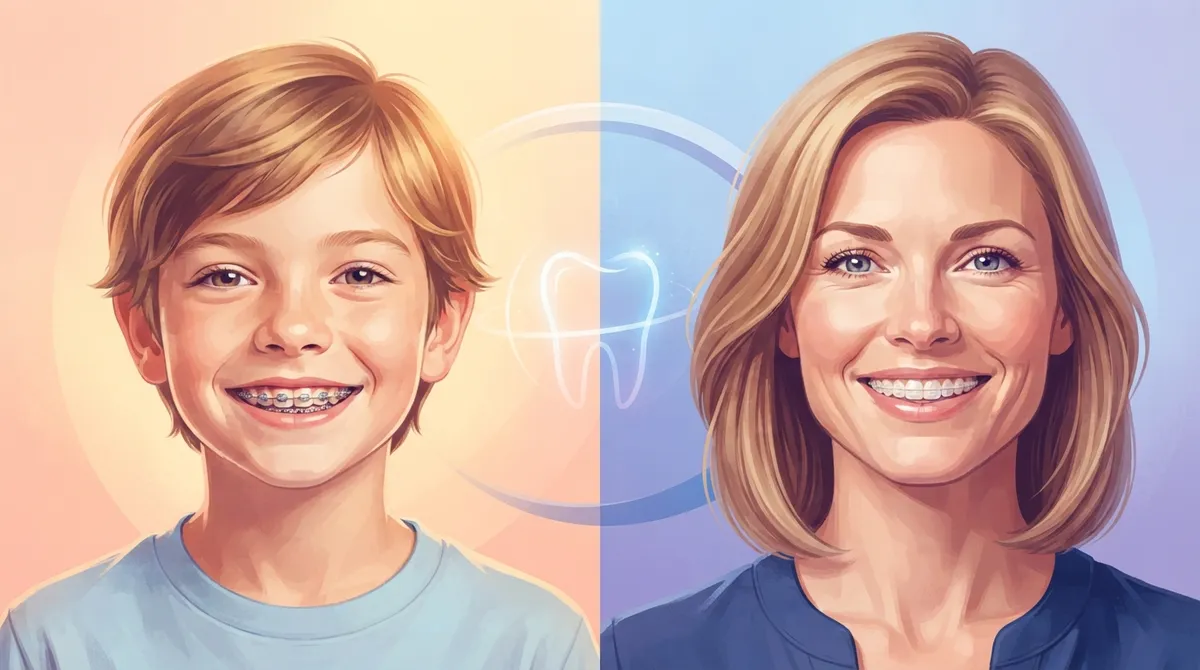
The American Association of Orthodontists recommends a child's first orthodontic evaluation by age 7, but this evaluation does not mean immediate braces—it allows specialists to monitor dental development and plan early intervention if needed.
-
Most children begin full braces between ages 9 and 16, with 12 to 13 being the most common starting point when most permanent teeth are in place, but timing varies based on individual dental development and treatment goals.
-
There is no minimum or maximum age for braces; eligibility depends on dental development, bite quality, gum health, and personal goals rather than age alone, making treatment possible from early childhood through senior years.
-
Early interceptive treatment using appliances or partial braces between ages 8 to 10 can sometimes simplify and shorten later comprehensive treatment for conditions like crossbites, underbites, and severe crowding.
-
Adults can pursue orthodontic treatment at any age with healthy teeth and gums, though treatment timelines may differ from children since jaw growth is complete; discreet options like clear aligners are particularly popular.
-
Insurance coverage for braces varies by country, plan, and insurer and may differ from clinical readiness; families should verify their specific plan's age limits and requirements before beginning treatment.
Is there a magic birthday for braces? Parents ask us this all the time, and so do teens and adults who wonder if they missed their chance. Here is the good news: braces age requirements are a lot more flexible than most people think.
There is no single minimum or maximum age for braces. Orthodontists look at your dental development, your bite, your gum health, and your goals. Age is only one piece of the puzzle.
In this friendly guide, we will walk through what age means for kids, teens, and adults. We will cover when to schedule that first visit, when full braces usually begin, and what to expect at any stage of life. Whether you are a parent planning ahead, a teen ready for a change, or an adult who has always wanted a straighter smile, you are in the right place.
Is There a Set Age for Braces?
Short answer: no. Orthodontic treatment is based on the person, not just the number on their birthday cake. A healthy 10-year-old, a 14-year-old, and a 45-year-old can all be great candidates for braces.
What matters most is this:
- Dental development: Which baby and permanent teeth have come in?
- Bite and jaw growth: Is the jaw growing in a healthy way?
- Oral health: Are teeth and gums healthy enough for treatment?
- Goals: What does the patient want from their smile?
That is why a personal exam beats any rule of thumb. If you are curious about the basics, our Braces 101 guide is a great place to start.
What Age Should a Child See an Orthodontist?
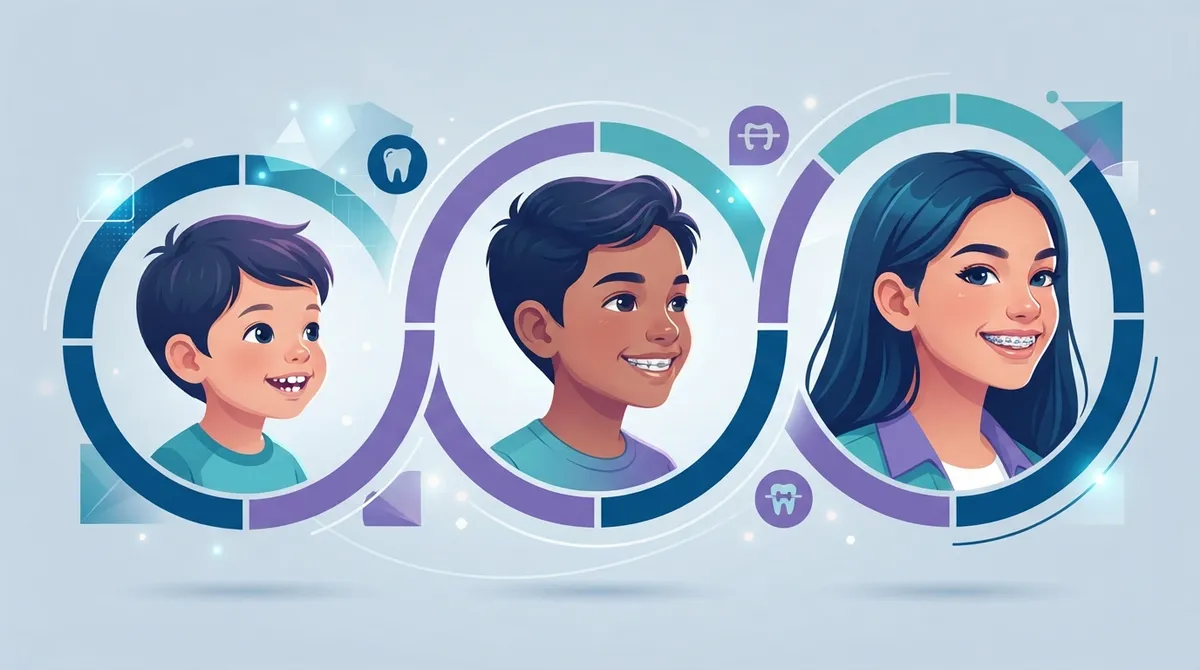
The American Association of Orthodontists (AAO) recommends a child’s first orthodontic evaluation by age 7. If you notice a concern sooner, it is fine to go earlier.
Here is the part that surprises many parents: an evaluation at age 7 does not mean braces at age 7. It simply means a specialist takes a look and keeps an eye on things.
Why Age 7 Works So Well
At around age 7, most kids have a mix of baby teeth and new permanent teeth. This lets an orthodontist spot early clues about crowding, bite problems, and jaw growth. Think of it like a quick weather check before a family road trip. You are not canceling the trip, you are just making sure you are prepared.
Most of the time, the answer is simple: “Everything looks good, let’s watch and see you again in a year.” Other times, we catch something that is easier to fix early. You can read more about what happens at this stage in our guide on what to expect at your child’s first visit.
Signs Your Child May Need an Earlier Look
- Early or late loss of baby teeth
- Difficulty chewing or biting
- Mouth breathing or thumb sucking past the toddler years
- Crowded, misplaced, or protruding teeth
- Jaws that shift or make sounds
- Teeth that do not meet in a normal way
Not sure what to watch for? Our post on the early signs you need braces breaks it down in plain English.
What Is the Best Age for Braces?
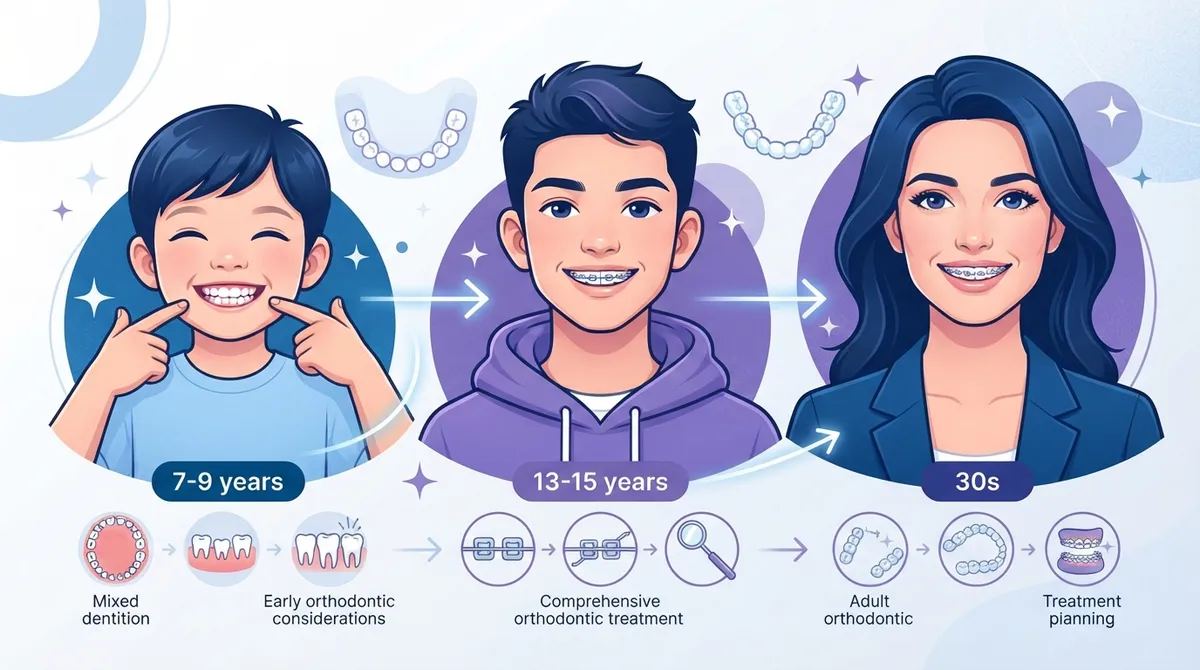
Most children who need full braces start after more permanent teeth have come in. In the United States, that is often between ages 9 and 16, and many kids begin around ages 12 to 13. The exact timing depends on the child and the problem we are treating.
Here is a simple overview of how it often looks across different life stages:
| Age Range | Typical Stage | What Often Happens |
|---|---|---|
| Around 7 | Mixed baby and adult teeth | First orthodontic evaluation; watch and wait or plan early care |
| 8 to 10 | Growing jaws | Possible early (interceptive) treatment for certain problems |
| 9 to 16 | Most permanent teeth in | Common window for full braces or clear aligners |
| 12 to 13 | Many teens begin here | Popular start time for comprehensive treatment |
| 18 and up | Fully grown jaws | Adult braces or aligners if teeth and gums are healthy |
Remember, this table is a guide, not a rulebook. Every smile grows on its own schedule. Our team has also put together a helpful read on when your child should really get braces.
Can Kids Get Braces at Age 7 or Earlier?
Sometimes, yes. Some problems respond best to early, or interceptive, treatment while a child is still growing and still has some baby teeth. This early care is often a smaller step, like an appliance or partial braces, not full braces.
Conditions that may benefit from early care include:
- Certain crossbites
- Underbites
- Severe crowding
- Problems with jaw growth
Starting early can sometimes make later treatment simpler and shorter. Our readers often ask about the value of this approach, so check out how early orthodontic treatment can save time, money, and smiles. If you want a deeper parent-focused read, see our guide for parents on early treatment.
Is Age 7 Too Early?
Not at all. Age 7 is a great time for a check-up, not a rush to braces. Most kids walk out of that first visit with no treatment needed right away. The visit simply gives you peace of mind and a plan.
Do You Need All Your Permanent Teeth Before Braces?
Not always. For many comprehensive treatments, it helps to wait until most permanent teeth have come in. That is why many full braces cases begin in the preteen or early teen years.
But for early treatment, the goal is different. We may use a smaller appliance to guide growth while some baby teeth are still in place. Your orthodontist will tell you which path fits your child.
Braces for Teens: A Popular Starting Point
The teen years are when many people begin full treatment. Jaws are still growing, most permanent teeth are in, and teens are often ready to take part in their own care.
Teens also have unique needs. Between school, sports, band, and social life, they want a treatment that fits their routine. Many teens love having options such as custom braces or clear aligners. Not sure which suits your teen? We compare them in braces vs. clear aligners: what’s best for your teen.
Parents often ask us about cost and options as well. Our guide on how to choose braces for teenagers in 2026 is a handy next read.
Tips for Teens Starting Treatment
- Ask your orthodontist about all your options, including clear aligners.
- Learn which foods to skip. Our list of foods to avoid with braces will help.
- Brush and floss every day, especially after meals.
- Wear your rubber bands or aligners as directed.
- Keep up with your appointments.
Are Adults Too Old for Braces?
Absolutely not. Adults can get braces at any age, as long as their teeth and gums are healthy enough. In fact, more adults than ever are choosing orthodontic care, and it is easy to see why. A straighter smile can boost confidence at work, in photos, and in everyday life.
Here is what is different about adult treatment:
- Jaw growth is complete. That means treatment may take a bit longer or have different limits than it does for a growing child.
- Gum health matters a lot. Gum disease or untreated cavities may need care before braces go on.
- Discreet options are popular. Many adults love clear aligners or low-profile braces that blend into a busy professional life.
If you are curious, you can read more about orthodontic treatment for adults or learn how to know if you can get braces as an adult. If you are weighing your options, our guide to choosing the right adult braces for your lifestyle can help. And if you are in the Westchase area, take a look at adult orthodontics in 33626.
Can You Get Braces With Cavities or Gum Disease?
It is best to treat these first. Braces put gentle pressure on teeth, and that works best when teeth and gums are healthy. If you have cavities, gum disease, or another oral health problem, your dentist may need to treat it before we begin.
The good news is that most issues can be handled. Once your mouth is healthy, you can move forward with confidence. This is one reason a full exam is so important at the start.
Do Braces Have a Maximum Age?
No maximum age exists. We have seen people in their 30s, 40s, 50s, and beyond start treatment and love the results. If you are curious about starting later in life, you may enjoy our read on braces for seniors. And if you are wondering why this trend keeps growing, see why more adults choose braces later in life.
Insurance and Coverage: Age Rules Can Be Different
Here is something that confuses a lot of families. The age you are clinically ready for braces is not always the same as the age your coverage applies. Insurance plans and public programs often have their own age limits and rules.
For example, in the United Kingdom, the NHS generally covers orthodontic care for eligible people under 18, based on clinical need. That is a UK rule, though, and it does not apply to insurance in the United States. Coverage varies by country, plan, and insurer.
If you have questions about your plan, we are happy to help. Read our guides on how dental insurance covers orthodontic treatment and orthodontic payment plans to plan ahead with confidence.
What to Expect at an Age-Based Evaluation
Whatever your age, a first visit is simple and friendly. Here is a quick look at the steps:
- A warm welcome. We chat about your goals or your child’s concerns.
- A careful exam. We check teeth, gums, bite, and jaw growth.
- Digital imaging. Advanced technology helps us see the full picture.
- A personalized plan. We explain your options, timing, and cost in plain language.
At Chacon Orthodontics, Dr. Omar Chacon is a board-certified orthodontist who offers bilingual care in English and Spanish. That means families in Westchase and Brandon can feel comfortable asking questions in the language they prefer. Wondering about the benefits of working with a specialist? Learn why board-certified orthodontist status matters.
Finding Care in Brandon, Florida
If you live near Brandon, our local office makes it easy to get started. We welcome kids, teens, and adults, and we love helping families figure out the right timing. You can learn more about braces in 33511 Brandon, FL or meet the team in our post on meeting your orthodontist in Brandon.
Want to see what our neighbors say? Visit us on Google — Chacon Orthodontics Brandon to read reviews from local families. You can also follow along with smile stories on Instagram and Facebook, or connect with Dr. Chacon on LinkedIn.
Quick Answers: Braces Age Requirements at a Glance
| Question | Short Answer |
|---|---|
| Minimum age for braces? | None. It depends on dental development and need. |
| When is the first check-up? | By age 7, or sooner if you notice a concern. |
| Most common age for full braces? | Often 9 to 16, with many starting at 12 to 13. |
| Maximum age for braces? | None, if teeth and gums are healthy. |
| Can adults get braces? | Yes, including clear aligners and discreet options. |
Ready to Find Your Perfect Timing?
The best age for braces is the age when your smile is ready and you feel ready too. Whether your child is 7, your teen is 13, or you are well into adulthood, there is a path to a healthier, more confident smile.
We would love to meet you and talk about your options. Book your free consultation today, or contact us with any questions. We are here to help your whole family smile with confidence in 2026 and beyond.
FAQs
Q: What is the youngest age a child can get braces?
A: There is no strict minimum age. Most kids get a first check-up around age 7, and some may have early treatment with appliances or partial braces. Full braces usually wait until more permanent teeth have come in.
Q: Is age 7 too early to see an orthodontist?
A: Not at all! Age 7 is the perfect time for an evaluation because kids have a mix of baby and adult teeth. It does not mean braces start right away. Most of the time, it is simply a quick look and a friendly plan.
Q: Can adults get braces, and is there an age limit?
A: Yes, adults can get braces, and there is no upper age limit. The key is having healthy teeth and gums. Many adults love discreet choices like clear aligners or low-profile braces.
Q: Can you get braces if you have cavities or gum disease?
A: It is best to treat cavities and gum problems first, so your teeth and gums are healthy before braces go on. Once your mouth is in good shape, you can start treatment with confidence.
Q: What is the best age for braces?
A: Many children who need full braces start between ages 9 and 16, with a lot beginning around 12 or 13. But the best age really depends on your own dental development and needs, so a personal exam is the best guide.





