Key Takeaways
-
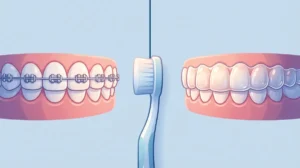
Traditional braces are fixed and work around the clock, while clear aligners are removable and must be worn about 20 to 22 hours a day, so choose based on how consistently you can wear them.
-
Metal braces are generally the most affordable fixed option and handle a broad range of alignment and bite problems, while ceramic and lingual braces usually cost more.
-
Ask any provider for the total treatment fee in writing and confirm whether it includes visits, repairs, emergency care, and retainers, since a lower quote may leave out key costs.
-
Many patients wear braces for about 12 to 24 months, according to the American Association of Orthodontists, though your timeline depends on case complexity and how closely you follow the plan.
-
Ceramic braces use tooth-colored brackets for a lower-profile look, and lingual braces sit behind the teeth, but both may take getting used to and can be harder to clean.
-
Brush after meals, floss daily, and avoid sticky or hard foods like popcorn and nuts, and always wear your retainer afterward to keep your results in place.
Thinking about braces can feel a little overwhelming. There are so many choices, and everyone seems to have an opinion. Do you pick classic metal brackets? Tooth-colored ones? Hidden braces? Or skip braces and go with clear aligners?
Good news: you do not have to figure it all out alone. This traditional braces comparison walks you through your main options in plain, friendly language. We will look at how each type works, what it looks like, how it feels, and what it may cost. You will also see how braces stack up against clear aligners.
Whether you are a parent planning for your child, a teen who wants a great smile before prom, or an adult juggling a busy career, this guide is for you. Every smile is different, so the best choice depends on your teeth, your bite, and your lifestyle. Let’s break it all down together.
What Are Traditional Braces and How Do They Work?
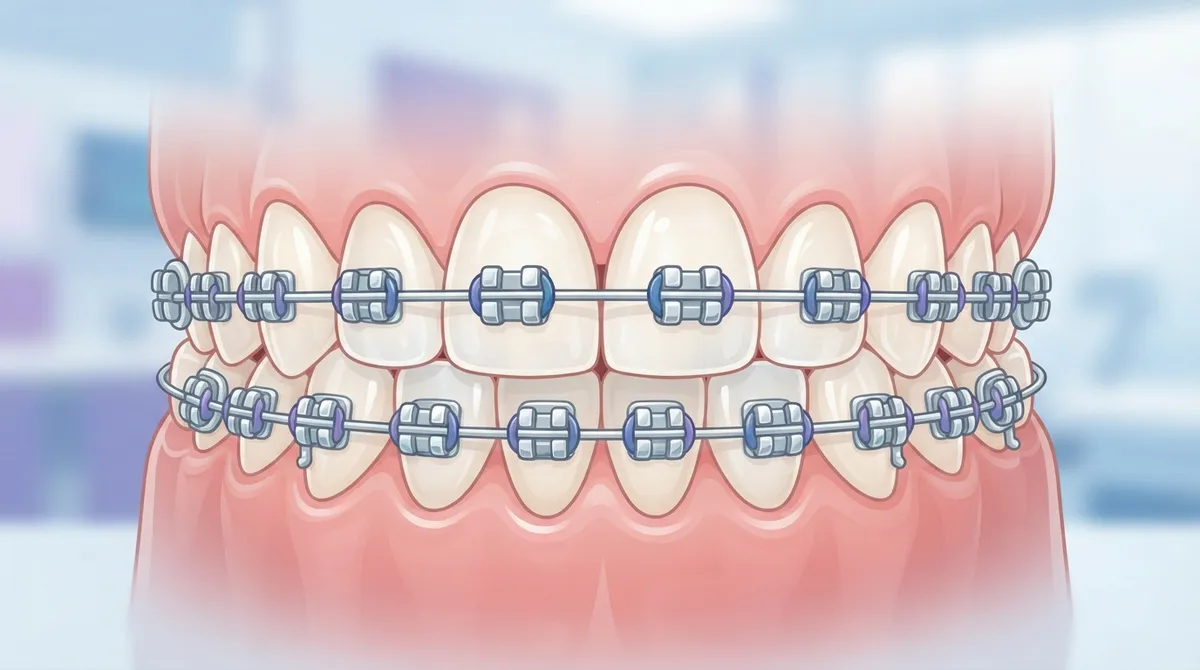
Traditional braces are fixed appliances. That means they stay on your teeth the whole time you are in treatment. Small brackets are bonded to the teeth. A thin wire runs through the brackets and applies gentle, steady pressure. Over time, that pressure guides your teeth into better positions.
Your orthodontist checks your progress at regular visits. At these visits, the wire may be changed or adjusted to keep things moving. If you are curious about what happens at those appointments, our guide on what really happens during braces tightening explains it nicely.
The big plus? Braces work around the clock. You do not have to remember to put them in. The teeth move because the braces are always doing their job.
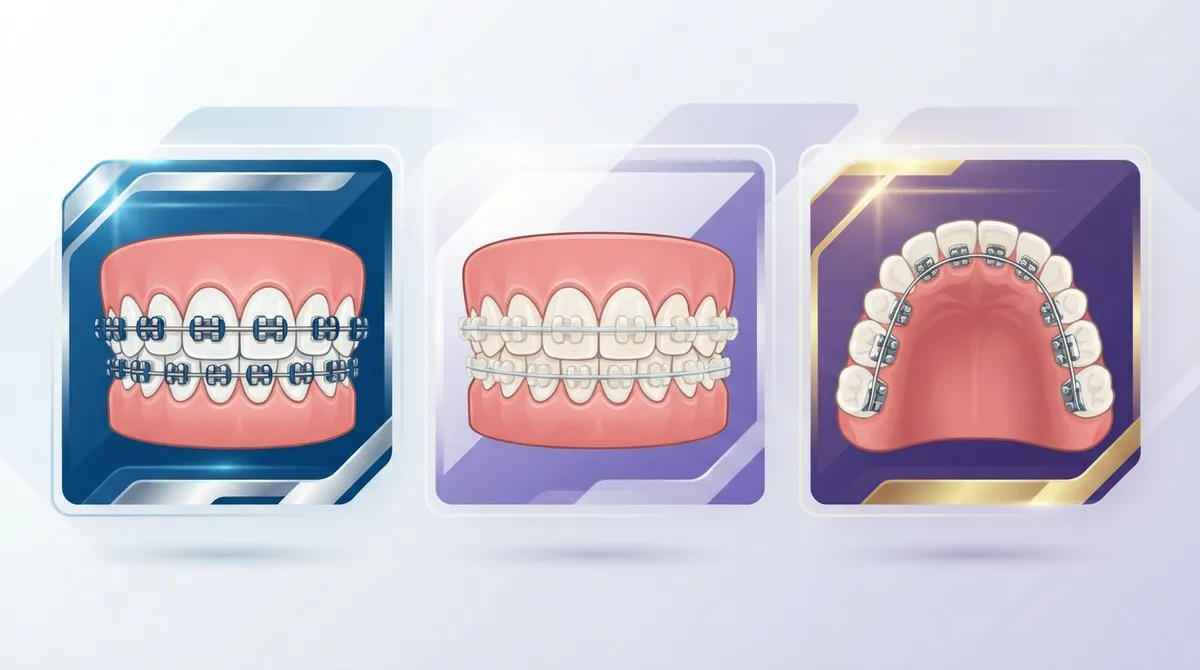
The Main Types of Braces at a Glance
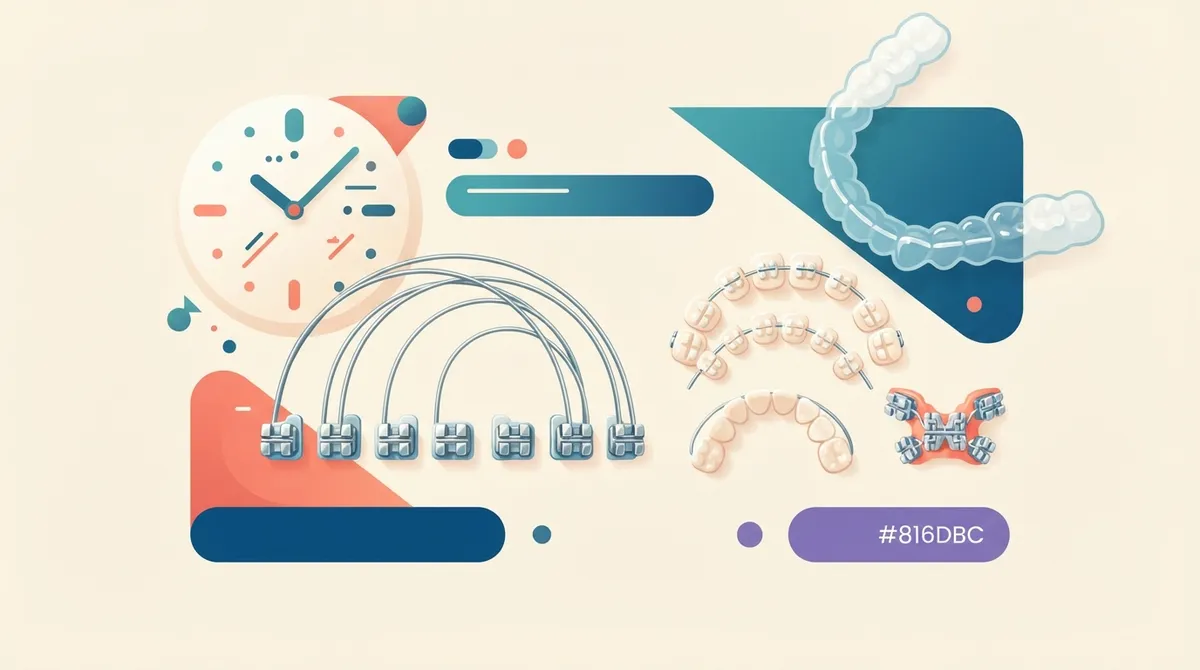
When people say “traditional braces,” they usually mean metal braces. But there are a few fixed options, plus one popular non-fixed alternative. Here is a quick side-by-side view.
| Option | How It Looks | Typically Fixed or Removable | General Cost Level | Best For |
|---|---|---|---|---|
| Metal braces | Silver brackets, most visible | Fixed | Often the lowest of the fixed options | A wide range of alignment and bite problems |
| Ceramic braces | Tooth-colored brackets, less noticeable | Fixed | Often higher than metal | Teens and adults who want a lower profile |
| Lingual braces | Attached behind the teeth, mostly hidden | Fixed | Often higher than metal | People who want braces out of sight |
| Clear aligners | Nearly invisible trays | Removable | Varies by case | Many mild-to-moderate cases |
Keep in mind that exact prices vary by location, provider, case complexity, and what the treatment fee includes. Your orthodontist can give you a real number after an exam.
Metal Braces: The Classic Choice
Metal braces are the type most people picture. They use stainless steel brackets and wires. Many families still choose them, and for good reason.
Pros of Metal Braces
- Versatile: They can treat a broad range of alignment and bite problems, including more complex cases.
- Often more affordable: Metal is generally the least expensive fixed-brace option.
- Always working: You do not need to remember to wear them.
- Fun for kids and teens: Colored bands let you show off your personality.
Cons of Metal Braces
- Most visible: They are the easiest type to spot.
- Food rules: Sticky and hard foods can damage them.
- Extra cleaning effort: Brushing and flossing take more time.
Curious why so many people still pick them? Check out why metal braces are still so popular in 2026. And if you want pricing details, see what the cost of metal braces looks like in 2026.
Ceramic Braces: A Subtle Upgrade
Ceramic braces work just like metal braces. The difference is the brackets. They are tooth-colored or clear, so they blend in with your smile. Many teens and working adults like this lower-profile look.
They can cost more than metal, and the brackets may need a bit more care to keep looking fresh. Still, they are a popular middle ground for people who want fixed braces without the shiny silver look.
Want a deeper dive? Our post on metal braces vs ceramic braces covers the details, and the cost of ceramic braces guide helps you plan your budget.
Lingual Braces: Hidden Behind the Teeth
Lingual braces are bonded to the back of your teeth, so they are mostly out of view. That sounds perfect for anyone who wants privacy during treatment. But there are trade-offs.
- Pros: Very discreet and fixed in place, so no daily wear schedule.
- Cons: They can feel odd on the tongue at first, may take time to get used to when speaking, and can be harder to clean. They may also cost more.
Not every case is a good fit for lingual braces. Your orthodontist will tell you honestly if they make sense for your teeth.
Traditional Braces vs Clear Aligners
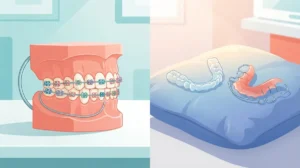
Clear aligners are not a type of brace. They are an alternative to braces. They are removable plastic trays that gently move your teeth in small steps. They are a favorite among image-conscious teens and busy adult professionals.
| Factor | Traditional Braces | Clear Aligners |
|---|---|---|
| Visibility | Noticeable (metal) or less noticeable (ceramic/lingual) | Nearly invisible |
| Removable? | No, fixed in place | Yes, for eating and cleaning |
| Wear time | Always on | Often around 20 to 22 hours a day |
| Complex cases | Handle a broad range of problems | Best for many mild-to-moderate cases |
| Food limits | Yes, avoid sticky and hard foods | Fewer, since you take them out to eat |
| Cleaning | Brush and floss around hardware | Brush and floss normally, clean the trays |
The real question is not which one is “better.” It is which one fits your teeth and your life. If you tend to forget things, fixed braces take that worry away. If you hate the look of hardware, aligners may feel more comfortable. For more help deciding, read braces vs clear aligners: which fits your smile best.
How Long Does Treatment Take?
Treatment time depends mostly on your orthodontic problem, how complex it is, and how well you follow the plan. The American Association of Orthodontists says many patients wear braces for about 12 to 24 months. That is a general range, not a promise.
The FDA notes that clear-aligner treatment may take about 6 to 18 months, though it varies. Please do not treat those two ranges as a direct match, because the cases are not always the same.
Want a closer look? See how long braces treatment takes in 2026.
Comparing Cost: What to Expect
Cost is a big part of any traditional braces comparison. Metal braces are usually the most budget-friendly fixed option. Ceramic and lingual braces often cost more because of the materials and extra skill involved. WebMD notes that traditional metal braces may run about $5,000 or less in some rural areas, but fees vary a lot by location, treatment needs, and provider.
When you compare quotes, ask what the fee includes. Does it cover visits, repairs, and retainers? A lower price that leaves out key items may end up costing more.
- Ask for the total treatment fee in writing.
- Find out if retainers are included.
- Ask about repair and emergency visit costs.
- Check what your insurance may cover.
- Ask about payment plans and financing.
For budgeting help, explore the factors that shape your braces price range and how orthodontist payment plans work.
Which Option Fits Which Person?
For Parents of Children
Kids often do very well with fixed braces. They cannot lose them, and they work every day. If you are wondering about timing, our guide on when your child should really get braces is a great place to start.
For Teens
Teens care about looks, sports, and school life. Ceramic braces or clear aligners can feel more discreet. Metal braces with fun colors can also be a confidence booster. Our post on how to choose braces for teenagers can help.
For Adult Professionals
Adults often want a low-profile option that will not get in the way of work. Ceramic braces, lingual braces, and clear aligners are all popular. Explore braces for adults options to consider to see what might suit you.
Daily Life With Braces
Living with braces is very doable. A few simple habits make it smooth.
- Brush after meals: Food gets trapped easily around brackets.
- Floss daily: Floss threaders or water flossers can help.
- Watch your diet: Skip sticky candy, hard nuts, and popcorn.
- Wear your retainer: It keeps your new smile in place after treatment.
Need tips? Try how to brush with braces and braces diet restrictions that protect your smile.
How to Choose the Right Option for You
The best way to compare is to meet an orthodontist who can look at your teeth and bite. Photos, scans, and X-rays help show what is really going on. From there, you can talk through your options honestly.
Here are some smart questions to bring along:
- What do you recommend for my teeth and why?
- How long will treatment likely take?
- What is the total cost, and what does it include?
- How often will I need appointments?
- What happens if a bracket breaks or a wire pokes?
- What kind of retainer will I need afterward?
At Chacon Orthodontics, Dr. Omar Chacon is a board-certified orthodontist who offers custom braces, clear aligners, and retainers for kids, teens, and adults. The team speaks both English and Spanish, so families in Brandon and Westchase can feel comfortable asking every question. You can see what others say by reading our reviews on Google: Visit us on Google — Chacon Orthodontics Brandon. You can also follow our smile stories on Instagram or connect with Dr. Chacon on LinkedIn.
For more help picking a provider, read how to choose the right local braces provider. And if you are comparing timing and results, types of braces: which option fits your smile best is a handy next read.
The Bottom Line on Your Traditional Braces Comparison
Every option in this traditional braces comparison can give you a beautiful, healthy smile. Metal braces are strong, versatile, and often the most affordable. Ceramic braces blend in more. Lingual braces hide behind your teeth. Clear aligners offer a removable, nearly invisible path for many cases.
The right pick depends on your teeth, your budget, and your daily life. An honest exam is the best way to know for sure. We would love to meet you and talk through it, with no pressure at all.
Ready to take the next step? Book your free consultation with Chacon Orthodontics, and let’s find the option that fits your smile best. You can also contact us with any questions, or say hello on Facebook.
FAQs
Q: What is the difference between traditional metal braces and clear aligners?
A: Traditional braces are fixed in place with brackets and a wire, so they work all day, every day. Clear aligners are removable trays that you wear for roughly 20 to 22 hours daily and take out to eat and clean. Your orthodontist can tell you which one suits your teeth best.
Q: How long does treatment with traditional braces usually take?
A: The American Association of Orthodontists says many patients wear braces for about 12 to 24 months. Your own time may be shorter or longer depending on how complex your case is and how closely you follow your plan. Your orthodontist will give you a personal estimate after an exam.
Q: Are ceramic braces as effective as metal braces?
A: Ceramic braces work in the same basic way as metal braces, using brackets and a wire to move teeth. The main difference is the look, since the brackets are tooth-colored. They often cost a little more, so it is worth asking your orthodontist if they are a good match for your case.
Q: Can adults get traditional braces?
A: Absolutely! Plenty of adults choose braces, and many pick lower-profile options like ceramic braces or clear aligners to fit their careers. It is never too late to get a healthier, more confident smile.
Q: What should I think about when choosing between braces and clear aligners?
A: Think about your bite needs, how visible you want treatment to be, your budget, and how consistent you can be with daily wear. A friendly consultation with an orthodontist will help you weigh each of these and pick the best fit.