Key Takeaways
-
There is no single best option to straighten teeth; the right choice depends on your alignment, bite, gum health, lifestyle, and goals, and starts with an in-person orthodontic exam.
-
Braces handle a broad range of cases, including complex movements, while clear aligners are nearly invisible and removable but usually suit mild to moderate cases.
-
Clear aligners typically need to be worn about 20 to 22 hours a day, so choose them only if you can stick to that schedule; otherwise fixed braces may be safer.
-
Treatment with clear aligners often takes about 6 to 18 months per the FDA, though timing varies with case complexity and how well the plan is followed.
-
Avoid unsupervised mail-order aligners: the FDA classes them as prescription medical devices, and without X-rays and an exam, problems like bite changes or tooth loss can go unnoticed.
-
Always wear your retainer as directed after treatment, since teeth naturally drift back toward their old positions without one.
Thinking about straightening your teeth? Maybe you are a parent noticing crowding in your child’s smile. Maybe you are a teen who wants a change before the next school year. Or maybe you are a busy professional who has put this off for years. Whatever your story, you are probably asking the same big question: what is the best option to straighten teeth?
Here is the honest and friendly answer. There is no single winner for everyone. The best option depends on your teeth, your bite, your gum health, your goals, and your daily life. A choice that works great for your neighbor might not be right for you, and that is perfectly okay.
In this guide, we will walk through the main choices in plain language. You will learn how braces and clear aligners differ, what an exam includes, how long treatment may take, and how to pick a plan you can stick with. By the end, you will feel ready to take the next step with confidence.
Why There Is No One-Size-Fits-All Answer
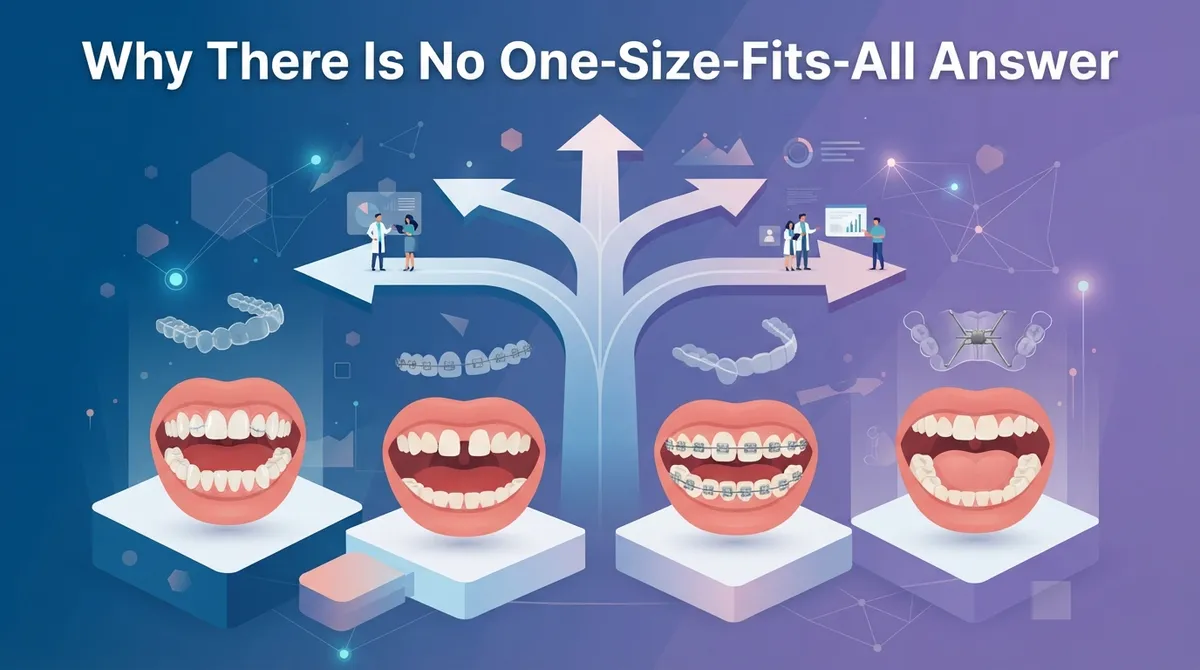
Teeth are like fingerprints. No two smiles are exactly alike. Some people have mild spacing. Others have tight crowding, a deep overbite, or a crossbite that affects how the jaws meet.
That is why the best option to straighten teeth starts with a careful look at you. A licensed orthodontist checks how your teeth line up, how your upper and lower jaws fit together, and whether your teeth and gums are healthy enough to move. Then they match a treatment to your needs.
Here are the main things that shape the answer:
- Tooth alignment: How crowded or spaced your teeth are.
- Your bite: Whether you have an overbite, underbite, or crossbite.
- Jaw relationship: How your upper and lower jaws line up.
- Oral health: The condition of your teeth, gums, and roots.
- Your lifestyle: Your schedule, sports, job, and habits.
- Your goals: What you want your smile to look like.
The Main Ways to Straighten Teeth
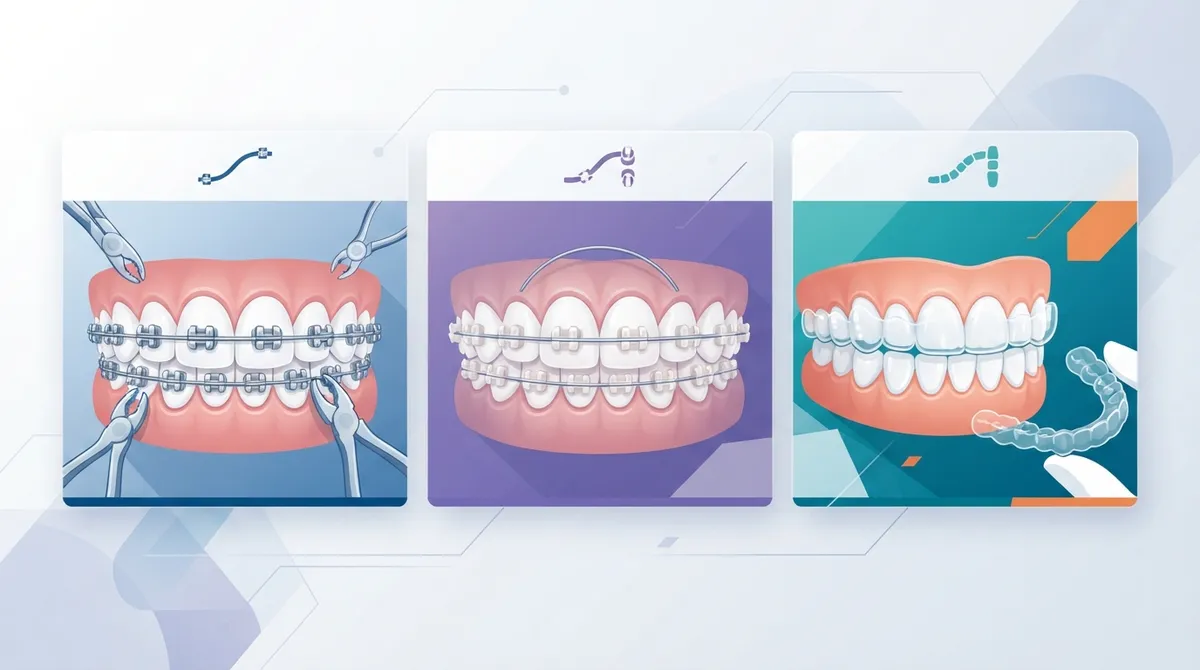
Most people choose from a short list of proven options. Each one moves teeth using gentle, steady pressure. The difference is in how the pressure is delivered and how the treatment fits into your day.
Traditional Metal Braces
Metal braces use small brackets bonded to your teeth and a wire that guides them into place. They are fixed, which means they stay on the whole time. Modern metal braces are smaller and more comfortable than the ones many parents remember.
Braces can treat a very wide range of problems, including complex tooth movements. If you want to learn more about why they remain so popular, see our post on why metal braces are still so popular in 2026.
Ceramic Braces
Ceramic braces work like metal braces, but the brackets are tooth-colored. They blend in more, which many teens and adults like. You can compare the two in our guide to metal braces vs ceramic braces.
Lingual Braces
Lingual braces sit behind your teeth, so they are hidden from the front. They can be a fit for some people, though they may feel different on the tongue at first and are not right for every case.
Clear Aligners
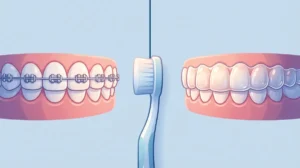
Clear aligners are nearly invisible plastic trays. You switch to a new set every one to two weeks, and each set moves your teeth a little bit. You take them out to eat and to clean your teeth. At Chacon Orthodontics, clear aligners are one of our core treatment options. You can read more about what clear aligners are and how they work.
Braces vs Clear Aligners: A Quick Comparison
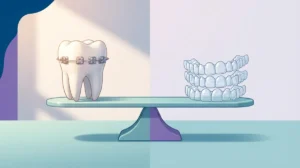
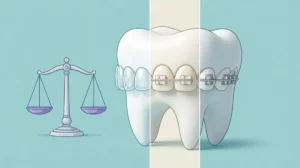
This is the question we hear most. Both can give you a beautiful result when they are the right match. Here is a simple side-by-side look.
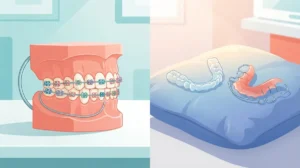
| Feature | Braces | Clear Aligners |
|---|---|---|
| Visibility | Visible, though ceramic and lingual options are more discreet | Nearly invisible |
| Removable | No, fixed in place | Yes, for meals and cleaning |
| Range of cases | Broad, including complex movements | Often mild to moderate cases, with some bite problems |
| Your role | Care for the braces and avoid certain foods | Wear trays as prescribed, usually 20 to 22 hours a day |
| Cleaning | Takes extra time around brackets | Brush and floss as usual, then put trays back in |
| Eating | Avoid hard and sticky foods | Take trays out to eat |
For a deeper dive, check out our friendly guide on braces vs clear aligners and which fits your smile best.
Who Might Be a Good Fit for Each Option?
Let’s look at a few common situations. These are general ideas only. Your orthodontist will confirm what is right after an exam.
Parents of Children
If your child has crowding, a bite issue, or teeth that are coming in oddly, an early check can help. Many parents are surprised to learn that a first visit can happen before all the baby teeth are gone. Our post on when to get braces and the best ages and signs can help you spot what to look for.
Teen Patients
Teens often care a lot about looks, sports, and social life. Aligners can feel low-profile, while braces can handle bigger changes. Some teens even enjoy picking fun colors. Our guide to how to choose braces for teenagers walks through the pros and cons.
Adult Professionals
Many adults want a low-profile option that does not disrupt work or meetings. Clear aligners and ceramic braces are popular choices. It is never too late to start, and our post on how to know if you can get braces as an adult is a great place to begin.
Bilingual Families
Clear communication matters when you are making a big health decision. Our team offers care in both English and Spanish, so every family member can ask questions and feel understood.
What Happens at an Orthodontic Evaluation?
Your first visit is the key to finding the best option to straighten teeth for you. It is relaxed and informative, and there is no pressure. A typical exam may include:
- A friendly conversation about your goals, concerns, and health history.
- A physical exam of your teeth, gums, and bite.
- Diagnostic records such as X-rays, photographs, and digital scans or dental models.
- A review of the findings so you can see what is going on beneath the surface.
- A personalized plan that explains your options, timeline, and costs.
Those records matter more than you might think. X-rays can reveal things you cannot see in a mirror, like root health or teeth that have not yet come in. To learn more, read what to expect at an orthodontic consultation. At Chacon Orthodontics, you can also book a free consultation, including virtual options.
How Long Does Treatment Take?
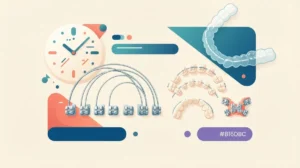
Timing depends on your case. The FDA reports that clear aligner treatment can take about 6 to 18 months, depending on the person. Braces timelines also vary based on how much movement is needed and how well the plan is followed.
Your orthodontist can give you a realistic estimate after your exam. You can also explore our guide on how long braces treatment takes in 2026 for helpful context.
A few things can speed things along or slow them down:
- Wearing aligners as directed, every single day
- Keeping your appointments
- Taking care of your braces and avoiding foods that can break them
- The complexity of your bite and alignment
The Role You Play in Your Results
Here is something many people do not realize. The best option to straighten teeth is often the one you can stick with. A plan only works if you can follow it.
If You Choose Aligners
Results depend on wearing your trays as prescribed. The FDA says patients typically wear them at least 20 hours a day, or as directed by the clinician. The American Association of Orthodontists commonly describes about 22 hours a day. Your orthodontist will give you the exact schedule for your plan.
That means aligners are out only for eating, drinking anything but water, and cleaning. Brush your teeth before you put the trays back in. If you often forget or lose small things, braces may be a safer fit.
If You Choose Braces
Braces work around the clock, so there is no tray to forget. You will need to avoid some hard and sticky foods and spend extra time cleaning. Our guide to brushing with braces and our tips on flossing with braces make the daily routine much easier.
Are Mail-Order Aligners a Safe Shortcut?
You may have seen ads for at-home teeth straightening. They sound simple and fast, but it is smart to be careful. The FDA describes clear aligners as prescription medical devices and warns that treatment without proper supervision may raise the risk of problems. These can include unintended tooth movement, bite changes, pain, or even tooth loss.
Without an in-person exam and X-rays, hidden problems can be missed. Gum disease or root issues, for example, can make moving teeth unsafe. A licensed dental professional should supervise your care from start to finish. Our post on orthodontist vs dentist for braces explains why specialized training matters.
A Simple Way to Decide: Five Questions
Not sure where to start? Try asking yourself these questions. Then bring your answers to your consultation.
- How much do I mind visible braces? If looks matter most, ask about aligners or ceramic braces.
- Can I wear trays almost all day? If yes, aligners may work. If not, fixed braces may be better.
- How complex is my bite? Bigger bite problems may need braces or a combined plan.
- What does my schedule look like? Think about sports, travel, and work events.
- What is my budget? Ask about payment plans and insurance early.
Cost is a real part of the decision. Our guides on braces cost in 2026 and the real differences in aligner cost vs braces can help you plan.
Do Not Skip the Retainer
Straight teeth are wonderful, but they do not stay put on their own. After active treatment, teeth can drift back toward their old positions. That is called relapse. A retainer helps hold your new smile in place.
Your orthodontist will tell you how long and how often to wear it. Clear or wire retainers are both common. Learn more in our post on what dental retainers are and why you need one. Think of a retainer as the finishing touch that protects all your hard work.
What Are the Risks and Side Effects?
Orthodontic care is safe when it is planned and supervised by a licensed professional. Still, it helps to know what to expect:
- Mild soreness after new braces or a new set of aligners
- Temporary pressure or sensitivity as teeth move
- Extra cleaning needs, especially with braces
- Possible irritation from brackets or wires
Most of these are short-lived and manageable. If you ever feel sharp pain or a wire pokes you, call your orthodontist. Our posts on easing braces soreness and fixing a poking wire are handy to keep nearby.
How Chacon Orthodontics Can Help
At Chacon Orthodontics, Dr. Omar Chacon is a board-certified orthodontist who offers clear aligners, custom braces, retainers, and teeth whitening for children, teens, and adults. We use advanced tools like 3D digital imaging to build a plan that fits you. Care is available in English and Spanish, with offices in Westchase and Brandon.
We believe the best option to straighten teeth is the one built around your smile and your life. If you are near Brandon, you can visit us on Google — Chacon Orthodontics Brandon to see what neighbors say about their experience. You can also follow along with smile stories and updates on Instagram and Facebook, or learn more about Dr. Chacon’s background on LinkedIn.
Your Next Step Toward a Straighter Smile
So, what is the best option to straighten teeth? It is the one that matches your teeth, your bite, your health, and your life. Braces and clear aligners are both excellent tools. The right pick comes from a careful exam and an honest talk with a specialist who listens.
You do not have to figure it all out alone. Take the first small step today. Book your free consultation to explore your options, or contact us with any questions. We would love to help you smile with confidence in 2026 and beyond.
FAQs
Q: What is the best way to straighten teeth?
A: The best way depends on your teeth, bite, and goals, so there is no single answer for everyone. Braces and clear aligners both work well when they match your needs. A quick exam with an orthodontist will point you to the right choice.
Q: Are braces or clear aligners better for me?
A: Braces can handle a wide range of cases, including complex ones, while aligners offer a removable, less visible option for many mild to moderate cases. Your lifestyle and how well you can follow the plan matter too. Your orthodontist can help you weigh the two.
Q: How many hours a day do I need to wear clear aligners?
A: The FDA says most people wear them at least 20 hours a day, and the American Association of Orthodontists commonly describes about 22 hours. Your orthodontist will give you the exact schedule for your plan. The more consistent you are, the better your results.
Q: Are mail-order or at-home aligners safe?
A: The FDA calls clear aligners prescription medical devices and warns that unsupervised treatment can raise risks like unwanted tooth movement or bite problems. An in-person exam with X-rays helps catch hidden issues. It is safest to have a licensed dental professional guide your care.
Q: Do I need a retainer after my teeth are straight?
A: Yes, a retainer helps keep your new smile from drifting back. Teeth naturally want to shift, so wearing your retainer as directed protects your results. Your orthodontist will tell you how long and how often to wear it.