Key Takeaways
-
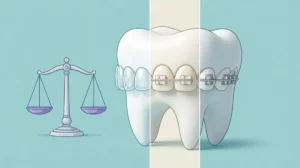
Fixed braces and clear aligners can both correct common crowding, gaps, and mild-to-moderate bite issues, so neither is a universal winner; the right choice depends on your diagnosis.
-
A 2025 review of 21 trials found no significant difference in overall outcomes for straightforward cases, but the evidence quality was rated low.
-
Fixed braces may offer more predictable control for complex movements like tooth torque, rotation, and vertical correction, though the research base is limited.
-
Aligners only work when worn as prescribed, usually most of the day, so choose them if you are consistent; fixed braces suit busy schedules or younger children better.
Choosing how to straighten your teeth can feel like a big decision. You might wonder if clear aligners work as well as traditional braces. Or maybe you worry that one option will take longer, cost more, or fall short on a tricky bite problem. That is exactly why a braces effectiveness comparison is so helpful. It shows what each treatment does well, and where each one has limits.
Here is the friendly truth: both fixed braces and clear aligners can create beautiful, healthy smiles. The best choice depends on your teeth, your bite, your lifestyle, and your goals. Recent research backs this up. In 2026, orthodontists are still guided by a simple idea. The right treatment is the one matched to your diagnosis, not a one-size-fits-all claim.
Whether you are a parent planning for your child, a teen juggling school and sports, or an adult professional who wants a low-profile option, this guide walks you through nine key facts. At Chacon Orthodontics, we love helping families sort through these choices with clear, honest answers.

1. Both Treatments Can Be Effective for Many Smiles
Let’s start with the good news. Fixed braces and clear aligners can both correct many common alignment problems. These include crowding, gaps, and mild to moderate bite issues.
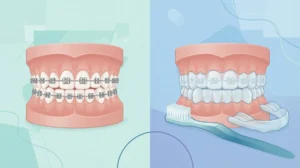
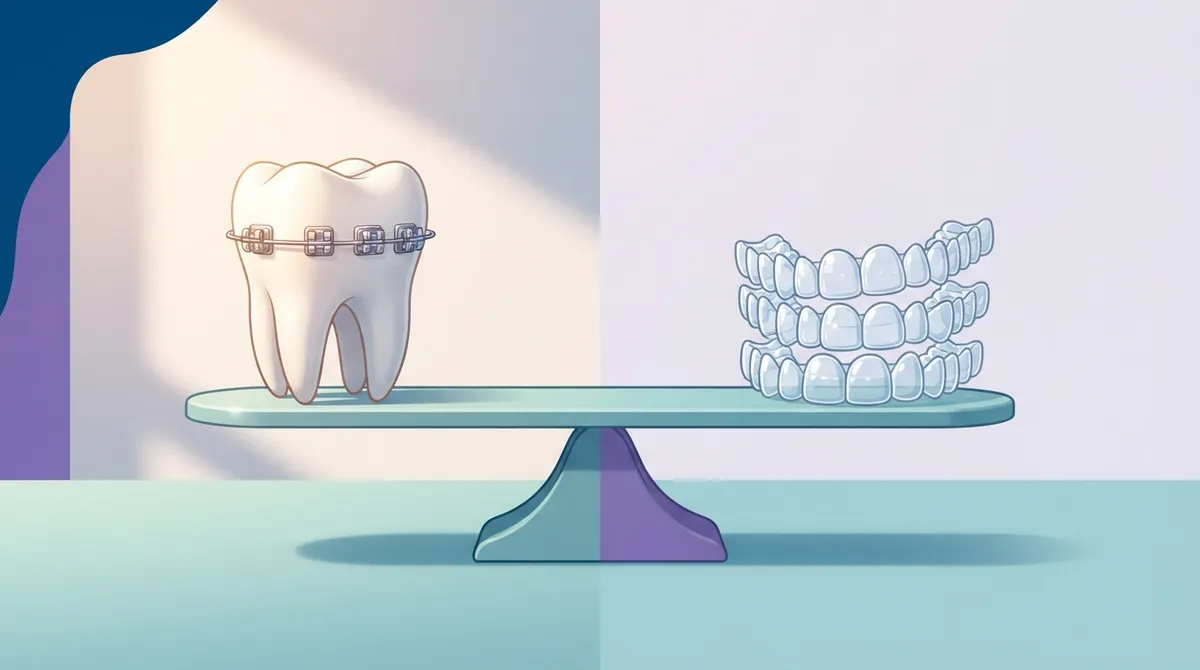
When people talk about a braces effectiveness comparison, they usually mean fixed braces versus clear aligners. Neither one is a winner in every case. Your orthodontist looks at your diagnosis, the tooth movements you need, and how well you can follow the plan. Then they recommend what fits you best.
If you want a deeper side-by-side look, our guide on braces vs clear aligners breaks down the everyday differences in a simple way.
2. Research Shows Comparable Results for Straightforward Cases
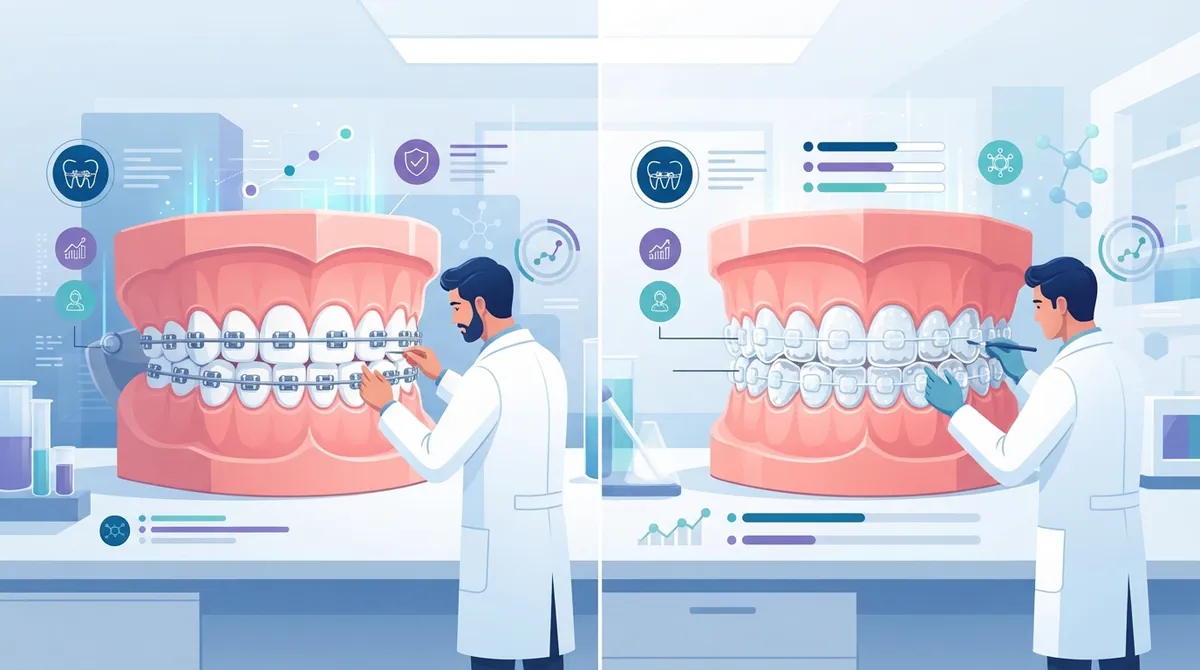
For simple, non-extraction cases, the evidence points to similar results. A 2025 systematic review looked at 21 randomized trials with 970 participants. It found no significant difference in key outcome measures between clear aligners and fixed appliances. Those measures included the ABO Objective Grading System, Little’s Irregularity Index, and PAR scores.
That is encouraging. But there is an honest note to add. The reviewers rated the overall evidence quality as low. So the takeaway is not that every case ends the same. It is that straightforward cases often do well with either option.
3. Fixed Braces May Offer More Control for Complex Movements
Some tooth movements are harder than others. Fixed braces stay attached to your teeth, which can give your orthodontist steady, predictable control. A 2019 systematic review suggested fixed braces may have an edge with certain movements, including:
- Tooth torque: tilting the root of a tooth into the right position
- Rotation: turning a twisted tooth
- Vertical correction: moving teeth up or down
- Occlusal contacts: getting upper and lower teeth to meet well
The research base here is limited, so we treat it as a helpful guide, not a rule. Still, it is a big reason a careful exam matters. Curious how different bracket styles compare? See our types of braces guide.
4. Wear Time Matters More With Aligners
Clear aligners are removable. That is a big perk, but it comes with a job. They only work when you wear them as prescribed, usually most of the day. If you skip wear time, progress can slow down. Sometimes you will need extra aligners to catch up.
Fixed braces do not depend on you remembering to put anything in. They stay on and keep working. Both options still need good oral hygiene and regular visits.
Here is a quick way to think about it:
- If you are very organized and consistent, aligners can fit beautifully.
- If your schedule is busy or you tend to forget things, fixed braces may be easier.
- Parents of younger children often prefer the built-in accountability of fixed braces.
5. Aligners May Be Easier on Oral Hygiene
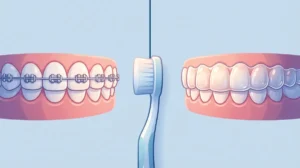
Brushing and flossing are simpler when you can take your trays out. Studies back this up. The 2025 review found better plaque, gingival, and bleeding index results for aligner groups. For example, the plaque index difference was −0.76, the gingival index was −0.61, and the bleeding index was −0.71. The evidence quality ranged from low to moderate.
That does not mean braces are a problem. With a little practice, you can keep your teeth clean in any treatment. Our tips on how to brush with braces and flossing with braces make it feel easy.
6. Treatment Time Depends on the Case, Not the Brand
Many people ask which option finishes faster. The honest answer is: it depends. A 2024 systematic review of mild to moderate crowding included 10 studies, six of them randomized trials. It found low-certainty evidence of no significant difference in treatment duration. High inconsistency between studies kept the authors from combining the data.
An earlier 2019 review reported shorter aligner treatment in its pooled analysis. But it also noted possible drawbacks in occlusal contacts, torque control, and transverse expansion. So results vary by case and study design.
Want to plan ahead? Read how long braces treatment takes for a realistic timeline.
7. Comfort, Looks, and Lifestyle Count Too
Effectiveness is about the result you achieve. But it is not the only thing that matters. A fair comparison also looks at comfort, appearance, hygiene, cost, and daily life. The 2025 review found quality of life at six months favored clear aligners, with a mean difference of −4.37 (95% CI −6.93 to −1.80). Again, we read that result with the evidence quality in mind.
Here is how the two options often feel in real life:
| Factor | Fixed Braces | Clear Aligners |
|---|---|---|
| Appearance | Visible; metal or ceramic options | Nearly invisible |
| Removable | No | Yes |
| Hygiene | Needs extra cleaning care | Easier brushing and flossing |
| Control of complex movements | Often more predictable | May be less predictable in some cases |
| Depends on patient wear | Little | A lot |
| Food rules | Some foods to avoid | Remove trays to eat |
Teens often love the freedom of aligners for sports and photos. Others enjoy the fun of colored bands. Our post on choosing braces for teenagers can help families decide together.
8. A Side-by-Side Look at Evidence Strength
It helps to see what the research says in one place. Here is a simple snapshot of the main findings:
| Outcome | What Studies Suggest | Evidence Quality |
|---|---|---|
| Overall results (ABO, PAR, Little’s Index) | No significant difference | Low |
| Plaque, gum health, bleeding | Better with aligners | Low to moderate |
| Quality of life at six months | Favored aligners | Interpret with caution |
| Treatment duration (crowding) | No significant difference | Low certainty |
| Torque, rotation, vertical control | Fixed braces may be more reliable | Limited |
Notice a theme? A lot of the evidence is low quality. That is why a personal exam beats any blanket claim. Your orthodontist can tell you what to expect for your teeth.
9. Retainers Are Needed After Either Treatment
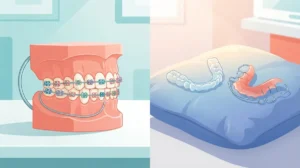
Here is a fact that surprises many people. No matter which option you choose, you will need retainers afterward. Teeth naturally want to drift back. Retainers help keep your new smile in place for the long run.
Think of retainers as the finishing touch that protects your investment of time and effort. Learn more in our guide on braces retainers tips.
Which Option Is Best for Your Family?
Every patient group has different needs. Here is a friendly way to think it through:
- Parents of children: Early evaluation can spot crowding and bite issues while a child is still growing. See when your child should get braces.
- Teens: Many want discreet options that fit school, sports, and social life. Reliability matters too.
- Adult professionals: Low-profile choices can fit work life. Learn about braces for adults.
- Bilingual families: Clear communication in English or Spanish makes every step less stressful.
- Smile seekers: If looks matter most, your orthodontist can show cosmetic options that still deliver strong results.
Cost is part of the picture, too. Our look at Invisalign cost vs braces can help you plan.
Why a Specialist Exam Makes the Difference
You may be tempted to pick a treatment based on a friend’s story or an online ad. But the best braces effectiveness comparison happens in the orthodontist’s chair. A board-certified orthodontist studies your bite, your jaw, and your goals. Then they build a plan that fits.
At Chacon Orthodontics, Dr. Omar Chacon offers clear aligners, custom braces, retainers, and teeth whitening for kids, teens, and adults. Our team uses advanced technology like 3D digital imaging, and we proudly care for families in English and Spanish. Not sure what to ask? Our tips on asking your orthodontist the right questions will help you feel ready.
Want to see what neighbors are saying? You can visit us on Google — Chacon Orthodontics West Chase to read reviews from local patients. You can also follow our smile stories on Instagram and Facebook, or connect with Dr. Chacon on LinkedIn.
Ready to Find Your Best Fit?
A braces effectiveness comparison is really about you. Both fixed braces and clear aligners can deliver great smiles. Fixed braces may give extra control for complex cases. Aligners may bring comfort and easier cleaning. Treatment time varies, and retainers matter either way.
The next step is simple. Let a specialist look at your teeth and talk through your options in a relaxed, no-pressure visit. Book your free consultation today, or contact us with any questions. We cannot wait to help you smile with confidence in 2026!
FAQs
Q: Are clear aligners as effective as traditional braces?
A: For many straightforward cases, yes! A 2025 review of 21 randomized trials found no significant difference in key overall outcomes, though the evidence quality was low. For more complex movements, fixed braces may offer more dependable control, so an exam is the best way to know for sure.
Q: Which works better for severe crowding or a complex bite problem?
A: Fixed braces may give more predictable control for some complex movements, like torque, rotation, and vertical correction. That said, every smile is different. Your orthodontist will review your bite and recommend the option that fits your needs best.
Q: Do braces or clear aligners finish treatment faster?
A: It really depends on the case. A 2024 review of mild to moderate crowding found low-certainty evidence of no significant time difference between the two. Your own timeline will depend on what your teeth need and how well you follow your plan.
Q: Are braces or aligners better for oral hygiene and gum health?
A: Aligners can make brushing and flossing easier because you take them out to clean your teeth. A 2025 review found better plaque, gum, and bleeding scores for aligner groups. With good habits, you can keep your smile healthy with braces too.
Q: Do I need a retainer after braces or clear aligners?
A: Yes, retainers are generally needed after either treatment. They help keep your teeth in their new spots so your hard work lasts. Your orthodontist will tell you how long and how often to wear yours.