Key Takeaways
-
Braces actively move teeth and fix bite problems, while retainers passively hold teeth in their corrected positions after treatment. Retainers cannot replace braces for major movement.
-
Retention is a real phase of care, not optional. Skipping retainers risks relapse, as teeth can drift back toward their old positions over time.
-
Removable retainers like Hawley and Essix require consistent nightly wear, while fixed bonded retainers work without daily effort but need careful cleaning around the wire.
-
If a retainer breaks, cracks, or no longer fits, don't force it onto your teeth. Contact your orthodontist promptly for an assessment.
Here’s a question we hear all the time: “Wait, aren’t braces and retainers the same thing?” It’s a fair one! Both are orthodontic tools, both live in your mouth, and both help your smile look its best. But they do very different jobs.
When it comes to braces vs retainers, think of it like building and maintaining a house. Braces are the construction crew that moves everything into place. Retainers are the security system that keeps it all there. One doesn’t replace the other, and most patients need both at different stages.
Whether you’re a parent wondering what your child needs, a teen dreading the “R word,” or an adult professional planning a discreet smile upgrade, this guide breaks it all down in plain English. We’ll walk through eight key differences, share the latest research, and help you feel confident about what comes next. Let’s dive in!
1. They Have Completely Different Jobs
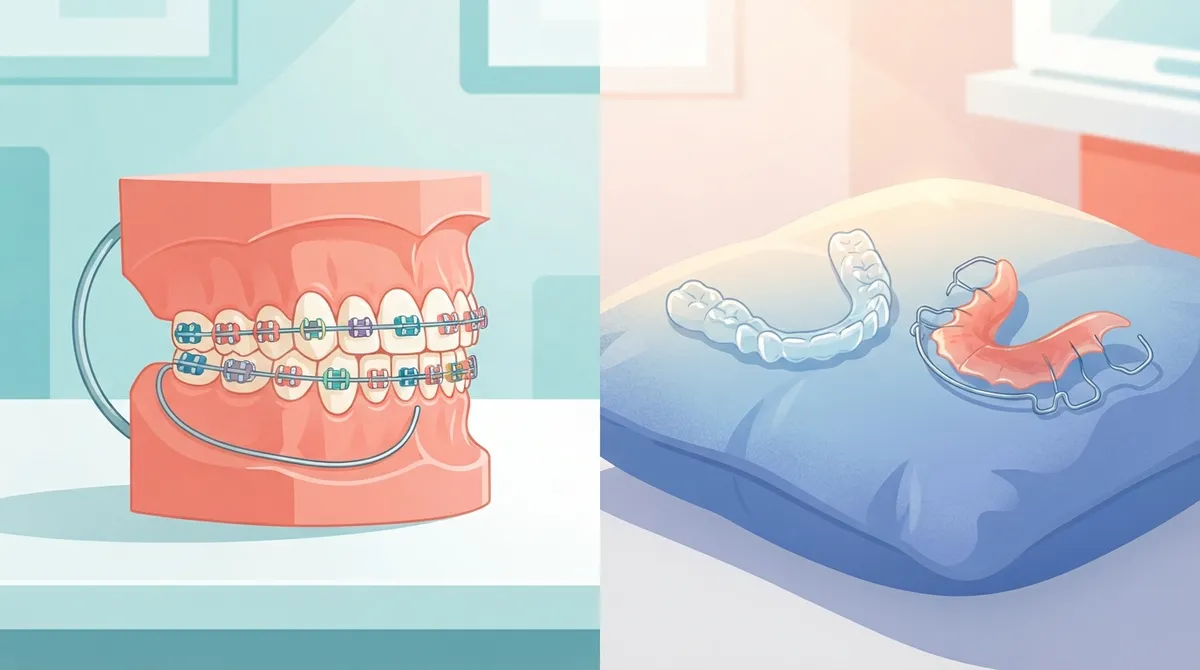
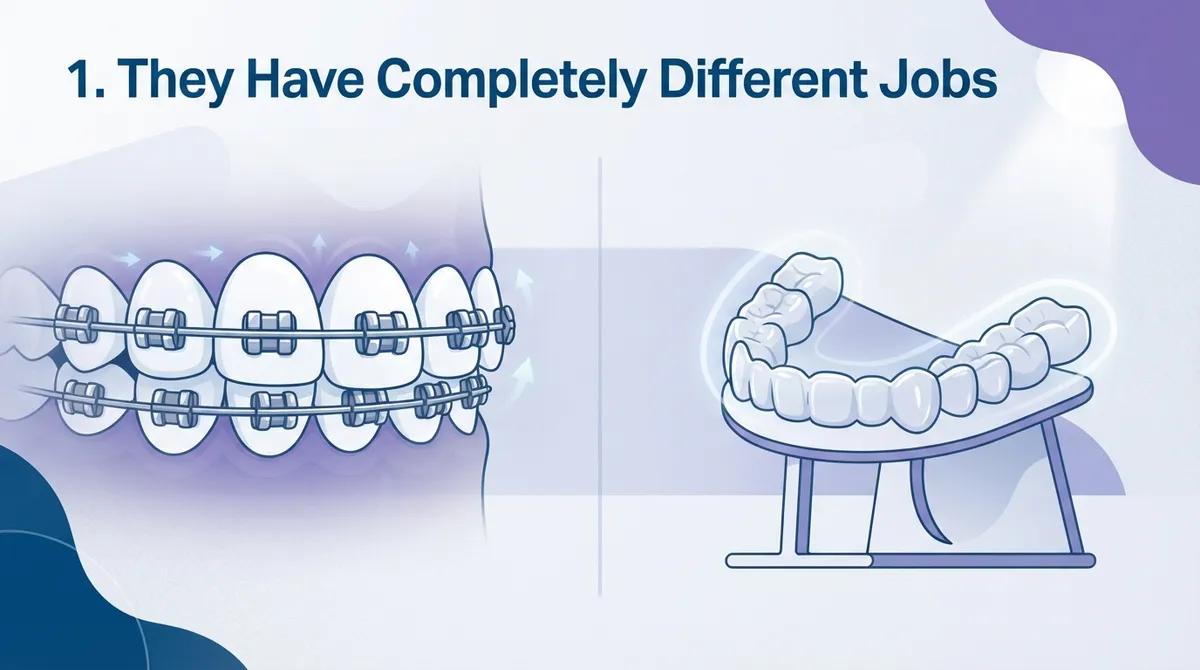
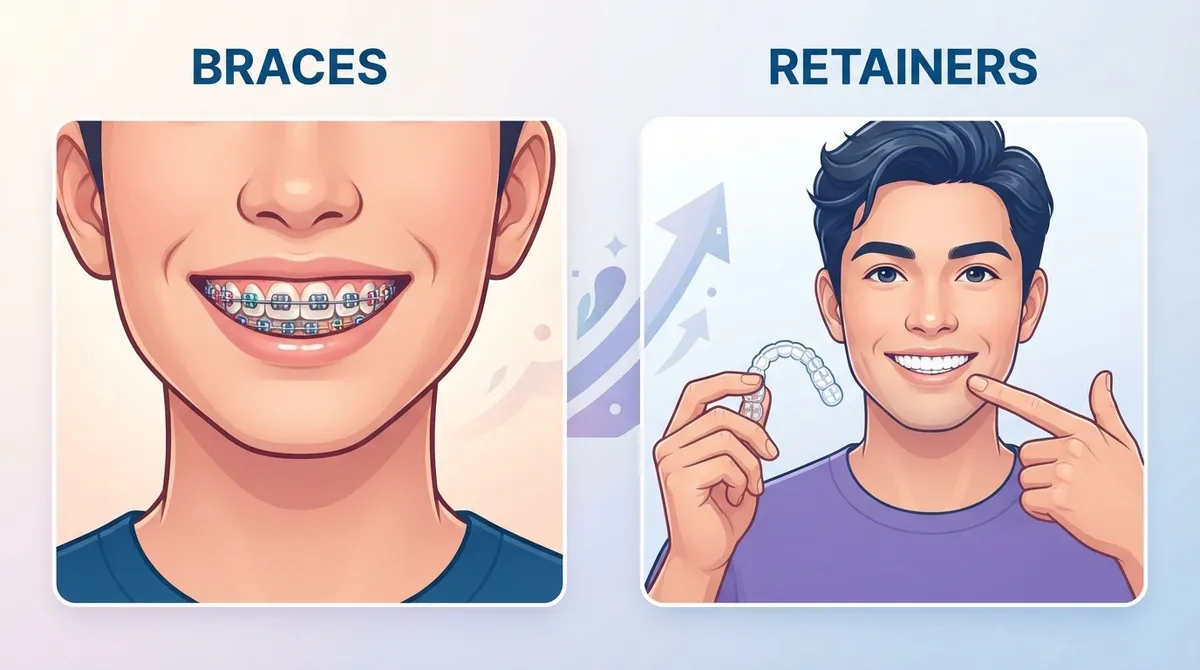
This is the big one. Braces are active appliances. They apply gentle, steady pressure to move teeth into new positions. In some cases, they also improve how your upper and lower teeth fit together.
Retainers are passive appliances. They hold teeth in their corrected spots after active treatment is done. A retainer doesn’t normally have the power to make big changes. It simply protects the work you already did.
- Braces: Move crowded, gapped, or crooked teeth and correct bite problems
- Retainers: Hold your results in place and guard against shifting
If you want a deeper look at how treatment unfolds, our guide on braces treatment steps from start to finish is a great next read.
2. They Show Up at Different Stages of Treatment
Orthodontic care has two main phases. First comes active treatment, when braces or aligners do the heavy lifting. Then comes retention, when retainers take over.
Retention is not a bonus step. It’s a real phase of care, and it matters just as much as the braces stage. Skipping it is a bit like finishing a marathon and then refusing to cool down. You risk undoing the hard work.
- Consultation: Your orthodontist reviews your smile and goals.
- Active treatment: Braces or clear aligners move your teeth.
- Removal day: Your braces come off and you get your retainer.
- Retention: Your retainer protects your new smile for the long haul.
Curious about the big reveal? Check out what to expect during the braces removal process.
3. Braces and Retainers Come in Different Types
Both come in more than one style, which means there is usually a good fit for your lifestyle.
Types of Braces
- Fixed metal braces: Brackets and wires bonded to your teeth
- Ceramic braces: Tooth-colored brackets that blend in more
- Clear aligners: Removable, nearly invisible trays that move teeth step by step
Types of Retainers
- Hawley retainers: A wire-and-acrylic removable appliance
- Essix retainers: Clear plastic removable trays
- Fixed retainers: A thin wire bonded behind the teeth
Not sure which braces style suits you? Our breakdown of types of braces can help. For retainer styles, see these 11 retainer types every orthodontic patient should know.
4. Here’s a Quick Side-by-Side Comparison
Sometimes a table says it best. Here is how braces vs retainers stack up on the basics:
| Feature | Braces | Retainers |
|---|---|---|
| Main purpose | Move teeth and fix bite issues | Hold teeth in their new positions |
| Treatment phase | Active treatment | Retention (after braces or aligners) |
| Common types | Metal, ceramic, clear aligners | Hawley, Essix, fixed wire |
| Can fix major crowding? | Yes | Not normally |
| Typical duration | Set by your treatment plan | Often long term, as advised |
| Who sets the plan? | Your orthodontist | Your orthodontist |
Notice that last row? Both need professional guidance. The right appliance and schedule depend on your unique smile.
5. Wear Time and Daily Habits Are Different
Fixed braces stay on around the clock, so there is nothing to remember. You simply keep them clean and follow your food rules. Our tips on brushing with braces make that routine much easier.
Retainers work differently. Many patients wear a removable retainer every night for the first year or so. After that, the schedule often shifts to fewer nights, or long-term nightly wear. There is no single schedule that fits everyone. NHS hospital guidance, for example, ranges from nightly wear for a year followed by reduced wear, to ongoing nightly use. Your orthodontist should set the plan for your case.
A few friendly habits can make retainer life simple:
- Keep your retainer in its case whenever it’s out of your mouth
- Clean it daily as your orthodontist recommends
- Never wrap it in a napkin (cafeteria trash cans have claimed many retainers!)
- Keep it away from hot water and pets
6. Why Retainers Matter: Teeth Like to Move
Here’s the part that surprises people. Your teeth have a bit of a memory. After braces come off, they can drift back toward their old positions. Orthodontists call this relapse. Natural changes that come with age can also shift your smile over time.
That’s why retainers are commonly prescribed after braces or aligners. They are your smile’s long-term insurance policy.
Recent research gives us a peek at how this plays out. A 2024 study of 150 patients measured average front-teeth relapse at six months:
| Retainer Type | Anterior Relapse (6 months) | Posterior Relapse (6 months) |
|---|---|---|
| Hawley | 1.0 mm | 0.8 mm |
| Essix | 0.8 mm | 0.6 mm |
| Fixed (permanent) | 0.2 mm | 0.1 mm |
A separate 2024 analysis of 175 patients found relapse in 13.3% of fixed-retainer cases, 25.0% of removable cases, and 12.5% of combination cases. That difference was not statistically significant, though.
The takeaway? These studies are small and short-term. They don’t prove one retainer is best for everyone. The smartest move is to let your orthodontist match the retainer to your needs.
7. Fixed vs Removable Retainers: Which One Is Right?
Since we’re comparing, let’s zoom in on retainers themselves. Each style has real pros and cons.
| Retainer Style | Pros | Cons |
|---|---|---|
| Fixed (bonded wire) | Nothing to remember; always working | Harder to clean around; needs a check if it loosens or breaks |
| Hawley (removable) | Durable; adjustable by your orthodontist | More noticeable wire; can be lost |
| Essix (removable) | Clear and discreet; comfortable for many | Can wear down or crack; can be lost |
Removable retainers need steady habits. If you forget them in the nightstand, they can’t do their job. Fixed retainers don’t rely on memory, but they do need careful cleaning around the bonded wire.
Teens, this one’s for you: if you love sports or have a packed social calendar, tell your orthodontist. Your lifestyle matters when choosing a retainer. Parents can also explore our guide on choosing braces for teenagers to plan the whole journey.
For a broader look at the topic, see what’s the difference between braces and retainers and our post on Hawley vs clear retainers.
8. Retainers Can’t Replace Braces (And Vice Versa)
Some folks hope a retainer can quietly fix their shifted teeth. It’s a tempting idea, but it’s not how things work. A retainer is built to hold, not to move teeth very far.
If your retainer suddenly feels too tight, no longer fits, or breaks, don’t force it. Pushing a poorly fitting appliance onto your teeth can cause problems. Call your orthodontic provider instead and get it assessed.
What if your teeth have shifted a lot since your first treatment? Many adults go through this. The good news is that it’s rarely too late. You may be a candidate for braces or clear aligners again, and an exam will tell you for sure. Our guide to getting braces as an adult walks through the process.
Likewise, braces don’t replace retainers. Skipping retention after braces is the fastest way to risk relapse. Together, they are a team.
How Chacon Orthodontics Can Help
At Chacon Orthodontics, Dr. Omar Chacon is a board-certified orthodontist who creates personalized plans for children, teens, and adults. From custom braces and clear aligners to retainers and teeth whitening, the whole journey is covered under one roof. Care is available in English and Spanish, which makes things easier for bilingual families in Westchase and Brandon.
Want to see what other patients think? You can visit us on Google — Chacon Orthodontics West Chase to read reviews from our community. You can also follow the team on Instagram for smile stories and tips, connect on Facebook, or learn more about Dr. Chacon’s background on LinkedIn.
Looking for more retainer guidance? Browse our braces and retainers tips, or see how retainers in Westchase keep smiles straight for life.
Quick Tips to Care for Your Retainer
- Clean it daily with a soft brush and mild soap, as your orthodontist advises.
- Store it safely in its case, never in a pocket or napkin.
- Skip the heat. Hot water and hot cars can warp plastic.
- Bring it to checkups so your orthodontist can inspect the fit.
- Call early if it cracks, loosens, or feels off.
Wrapping It Up: Braces and Retainers Work Better Together
So, braces vs retainers isn’t really a contest. Braces move your teeth. Retainers keep them there. One builds your dream smile, and the other protects it for years to come.
The best next step is a conversation with a trusted orthodontist who can look at your unique smile. Whether you’re starting treatment or wondering about your old retainer, we’d love to help. Book your free consultation today, or contact us with any questions. Your best smile is waiting!
FAQs
Q: What is the difference between braces and retainers?
A: Braces are active appliances that move teeth into new positions and can help fix bite problems. Retainers are used after braces or aligners to hold your teeth in their corrected spots. Think of braces as the builder and retainers as the protector.
Q: Can a retainer straighten teeth like braces?
A: Not usually! Retainers are made to hold teeth steady, not to move them very far. If your teeth have shifted a lot, your orthodontist can check whether braces or clear aligners are the better fix.
Q: How long do I need to wear my retainer after braces?
A: It depends on your case and the type of retainer. Many patients wear a removable retainer nightly for the first year, then reduce wear over time, while others wear one long term. Your orthodontist will set the right schedule for you.
Q: What should I do if my retainer breaks or no longer fits?
A: Don’t force it onto your teeth! Contact your orthodontic provider right away so they can check the retainer and your tooth positions. A quick visit can prevent bigger problems down the road.
Q: Which is better: a fixed retainer or a removable retainer?
A: There’s no one-size-fits-all winner. Fixed retainers don’t rely on you remembering to wear them, while removable ones are easier to clean. Your orthodontist can recommend the best fit for your smile and lifestyle.