
Key Takeaways
-
Braces treatment follows seven stages: consultation, diagnostic records, treatment planning and consent, fitting, regular adjustment visits, braces removal, and retention with a retainer.
-
Most people wear braces about 12 to 24 months, though complex cases can take longer; missed appointments and broken brackets can slow progress.
-
Adjustment visits typically occur every 6 to 8 weeks, where the orthodontist changes or tightens wires and checks your teeth and braces.
-
Expect soreness for a few days after fitting; soft foods, warm salt-water rinses, and orthodontic wax can help while your mouth adjusts.
-
Avoid hard, sticky, or chewy foods that can break brackets, and brush carefully around brackets since food gets trapped easily.
-
Retainers are essential after braces because teeth can drift back; wear schedules often start full-time and move to nights, sometimes long-term.
Thinking about braces can feel a little overwhelming. You might wonder what happens first, how long it takes, and what life looks like after the metal comes off. Good news: the whole journey follows a clear path, and knowing it ahead of time makes everything feel easier.
The braces treatment steps are simple to follow. First, you meet with an orthodontist for a consultation. Next comes records and planning. Then your braces are placed, you attend regular adjustment visits, and finally the braces come off and a retainer keeps your new smile in place.
Whether you are a parent planning for your child, a teen who wants a smile glow-up, or a busy adult who needs treatment that fits a work schedule, this guide walks you through each stage in plain language. Let’s take the mystery out of it, one step at a time.
The Big Picture: Braces Treatment Steps at a Glance
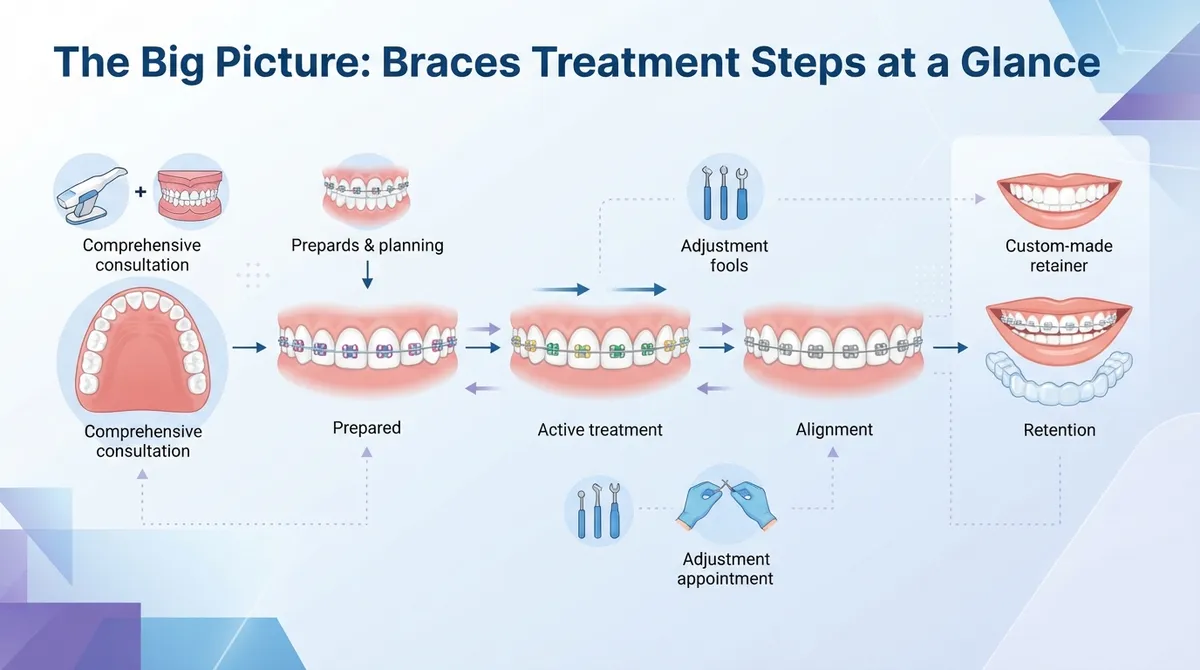
Before we dig into details, here is a quick overview. Every patient’s plan is a little different, but most journeys follow these braces treatment steps.
- Consultation: The orthodontist checks your teeth, jaws, and bite.
- Diagnostic records: X-rays, photos, and scans help build your plan.
- Treatment planning: You review options, timing, and care needs, then give consent.
- Fitting your braces: Brackets and wires are placed on your teeth.
- Adjustment visits: Regular check-ins keep your teeth moving on track.
- Braces removal: Your appliance comes off and your teeth are cleaned and checked.
- Retention: A retainer helps hold your results for the long run.
Now let’s walk through each step so you know exactly what to expect.
Step 1: The Orthodontic Consultation
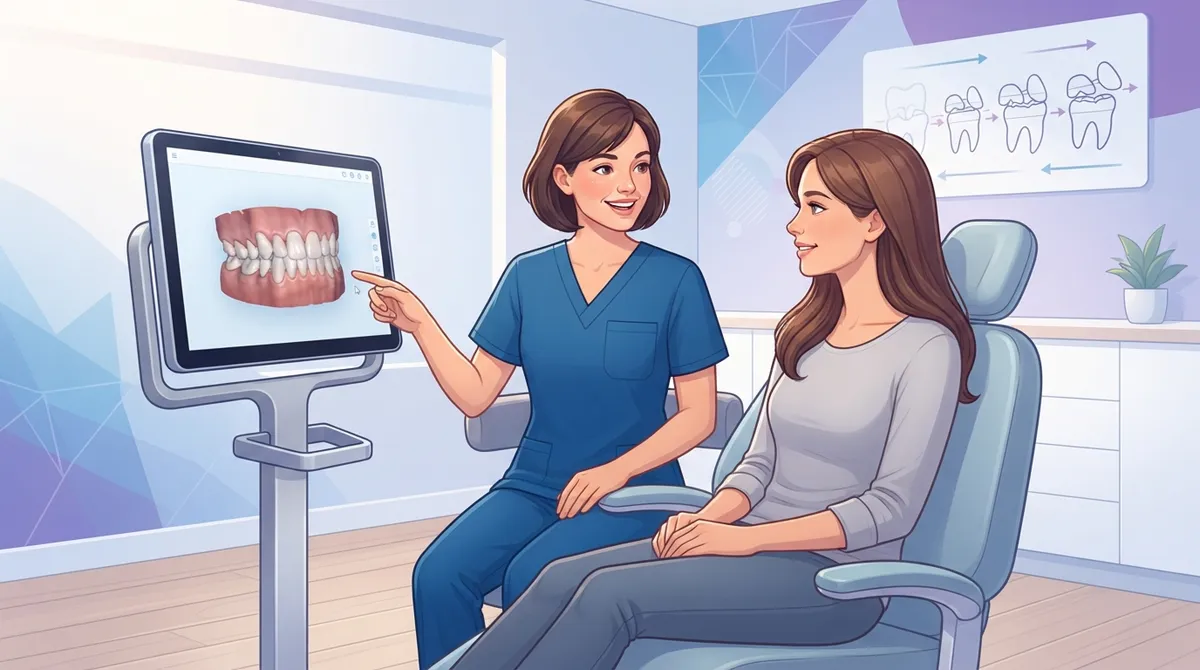
Every great smile story starts with a conversation. At your first visit, the orthodontist looks at your teeth and jaws, listens to your concerns, and decides whether orthodontic treatment makes sense for you.
This is your time to ask anything. Are you bothered by crowding? Do you have gaps, an overbite, or a bite that feels off? Tell the team what you hope to change. If you want a deeper look at this visit, our guide on what to expect at an orthodontic consultation covers it nicely.
What the orthodontist checks
- How your upper and lower teeth fit together
- Crowding, spacing, and tooth position
- Jaw alignment and bite issues
- Overall gum and tooth health
Who should come in, and when?
Parents often ask when the right time is. Many children benefit from an early check-up so any growth-related issues can be spotted soon. You can read more in early signs you need braces. Teens and adults are welcome too. It is never too late to start. Many adults are surprised by how many options fit a busy lifestyle, as explained in orthodontic treatment for adults.
At Chacon Orthodontics, you can start with a free consultation, with virtual options available. Our bilingual team is happy to talk with you in English or Spanish, so every family member feels comfortable asking questions.
Step 2: Gathering Diagnostic Records
Once you decide to move forward, the orthodontist collects records. Think of these as a detailed map of your smile. They show what is happening above and below the gumline so your plan is accurate.
Records may include:
- Dental X-rays: These show tooth roots, jaw position, and teeth that have not erupted yet.
- Photographs: Pictures of your face and teeth help track changes over time.
- Digital scans or impressions: These capture the exact shape of your teeth and bite.
- Measurements: The orthodontist measures how teeth and jaws relate to each other.
Don’t worry, none of this is painful. Modern digital scanning is quick and much more comfortable than the old-style trays. Our practice uses advanced technology, including 3D digital imaging, to make this step smooth and precise. You can learn more about our approach on our technology page.
Step 3: Treatment Planning and Consent
This is where your personal plan comes together. Using your records, the orthodontist explains what is going on with your bite and how to fix it. You will talk about the following:
- The recommended treatment approach
- Appliance options, such as metal braces, ceramic braces, or clear aligners
- How long treatment is expected to take
- How to care for your teeth and appliance
- Possible risks, so there are no surprises
After you have had your questions answered, the patient, or a parent or guardian for younger patients, gives informed consent. That simply means you understand the plan and agree to it.
Choosing between braces and aligners
Not sure which appliance suits you best? Here is a simple comparison to help you start thinking.
| Option | How It Works | Good To Know |
|---|---|---|
| Traditional metal braces | Brackets bonded to teeth with a wire that applies steady pressure | Reliable for many bite and alignment issues |
| Ceramic braces | Same system with tooth-colored brackets | Less noticeable than metal |
| Custom braces | Braces planned and designed around your teeth | Precise, personalized treatment |
| Clear aligners | Removable, nearly invisible trays | Must be worn as directed to work well |
If you are weighing these options, our articles on traditional braces vs. clear aligners and types of braces can help you decide.
Talking about cost
Money questions are a normal part of planning. Ask about pricing, insurance, and monthly options before you begin. Our guides on orthodontic payment plans and braces cost in 2026 can help you feel prepared.
Step 4: Getting Your Braces Fitted
This is the exciting day when treatment officially begins. Many people worry it will hurt, but placing braces itself is generally not painful. You may feel pressure, and your teeth can feel sore in the days that follow, which is normal. For more on this, read are braces painful? Dr. Chacon shares what to expect.
What happens in the chair
- Cleaning: Your teeth are cleaned and dried so the brackets stay put.
- Bracket placement: Small brackets are attached to the front of each tooth.
- Wire connection: A thin archwire is threaded through the brackets. It applies gentle, controlled pressure.
- Securing the wire: Small elastic modules or other pieces hold the wire in place, depending on your plan.
- Final check: The orthodontist makes sure everything feels comfortable and fits well.
Before you leave, you will get care instructions. Expect tips on brushing, flossing, and which foods to skip. Our guides on foods to avoid with braces and braces-friendly snacks are great to keep handy, especially for parents of younger kids.
The first week
Your mouth needs a few days to adjust. Soft foods, warm salt-water rinses, and orthodontic wax for any rubbing spots can all help. If you need extra tips, see how to ease braces soreness fast.
Step 5: Regular Adjustment Visits
Braces work gradually. Each check-up lets the orthodontist see how your teeth are moving and adjust the appliance so progress continues.
Appointment timing varies by case and practice. Sources describe visits every 4 to 12 weeks, and NHS guidance commonly mentions about every 6 to 8 weeks for fixed braces. Your orthodontist will tell you what schedule fits your plan.
What happens at an adjustment visit
- The orthodontist checks your progress and the condition of your braces
- Wires or elastic pieces may be changed or tightened
- Your teeth and gums are checked for cleanliness
- You get tips for any trouble spots
Want to know more? Our article on what really happens during braces tightening breaks it down. If you are curious about timing, how often braces are adjusted has more answers.
Keeping your teeth healthy during treatment
Healthy habits matter just as much as appointments. Keep up with routine dental check-ups and brush carefully around brackets. Food can get trapped easily, so slow, thorough cleaning pays off. Our tips on cleaning teeth with braces every day and brushing and flossing with braces make it easier.
If a wire pokes or a bracket comes loose, don’t panic. Call the office so the team can help. See orthodontic emergencies: when to call Dr. Chacon for guidance on what counts as urgent.
How Long Do Braces Treatment Steps Take?
This is one of the most common questions, and the honest answer is: it depends. The American Association of Orthodontists says most people wear braces for about 12 to 24 months, though treatment can range from a few months to several years. Many NHS sources describe an average of roughly 18 to 24 months, with complex cases taking longer.
Several things affect your timeline:
- Complexity: More crowding or a tougher bite problem can mean more time.
- Appliance and plan: The approach you and your orthodontist choose plays a role.
- Attendance: Missed appointments can slow progress.
- Breakages: Broken brackets or wires can cause delays.
- Following instructions: Wearing elastics or other parts as directed keeps you on track.
The good news? Teamwork speeds things up. Show up to your visits, protect your braces, and follow the plan. For a closer look at timelines, read how long braces treatment takes or how to plan your life around braces treatment duration.
Step 6: Braces Removal Day
This is the moment everyone looks forward to. When your teeth are in their planned positions, your orthodontist removes the brackets and wire.
What to expect
- Bracket removal: Special tools gently loosen and remove the brackets.
- Cleanup: Any leftover bonding material is polished off your teeth.
- Final records: Photos or scans may be taken to compare with your starting point.
- Retainer plan: You learn how and when to wear your retainer.
Teeth can feel a little different at first, since your tongue is used to the metal. That fades quickly. Many patients also love to brighten their smile afterward, and you can read about professional teeth whitening after orthodontic treatment. For the full picture of this milestone, see our braces removal process guide.
Step 7: Retention and Keeping Your Smile Straight
Here is a step people sometimes forget, but it may be the most important one. After braces, teeth can slowly drift back toward their old positions. Retainers help prevent that.
Retainers come in a few forms:
- Removable retainers: Clear trays or wire-and-acrylic styles you take out to eat and clean.
- Fixed retainers: A thin wire bonded behind your teeth.
Your orthodontist gives you a wear schedule made just for you. Many patients wear retainers full time at first, then switch to nights only. Long-term or even indefinite retainer wear is commonly advised to protect your results.
Learn more in what dental retainers are and why you need one, compare styles in 11 retainer types, or see how we help local families in retainers in Westchase.
Think of your retainer as the final piece of the puzzle. You put in the hard work, so protect it. Continued dental check-ups and good oral hygiene keep your whole mouth healthy for years.
Braces Treatment Steps for Different Ages
The steps are similar for everyone, but each age group has its own needs.
For children and parents
Early evaluation can help the orthodontist guide jaw growth and spot developing issues. Parents often feel more confident when they know the plan, so a first visit is a great time to ask questions. Read what to expect at your child’s first visit for details.
For teens
Teens want treatment that works with school, sports, and social life. Colored bands, custom braces, and clear aligners can all be part of the conversation. See braces vs. clear aligners: what’s best for your teen to explore options. If you play sports, ask your orthodontist about a mouthguard.
For adult professionals
Adults often worry about how braces look at work. Today there are low-profile choices, and visits can be scheduled around your day. Learn more in how to choose the right adult braces for your lifestyle.
Tips to Make Your Braces Journey Smoother
A little preparation goes a long way. Keep these habits in mind:
- Keep every appointment: Missed visits can add time to treatment.
- Brush after meals: Carry a travel toothbrush for school or work.
- Follow wear instructions: If you have elastics or other parts, wear them as directed.
- Avoid problem foods: Very hard, sticky, or chewy foods can break brackets.
- Ask questions: Your orthodontist is there to help, so speak up.
- Stay positive: Every adjustment brings you closer to the finish line.
Why Local Families Choose Chacon Orthodontics
Choosing the right orthodontist makes every step feel easier. Dr. Omar Chacon is a board-certified orthodontist with more than 10 years of experience, fluent in both English and Spanish. The practice serves families in Westchase and Brandon with personalized care and advanced technology. You can learn more about why choosing a board-certified orthodontist makes all the difference.
Curious what other patients think? Visit our Chacon Orthodontics West Chase location on Google to read reviews. You can also follow our smile stories on Instagram and Facebook, or connect with Dr. Chacon on LinkedIn.
Ready to Take the First Step?
Now you know the braces treatment steps from start to finish: consultation, records, planning, fitting, adjustments, removal, and retention. Each stage has a purpose, and each one brings you closer to a smile you feel great about.
The first step is always the easiest, because it is just a conversation. If you are in the Westchase or Brandon area and are ready to begin, schedule your free consultation today, or contact us with any questions. We would love to help you and your family start the journey toward a confident, healthy smile in 2026.
FAQs
Q: What are the steps in getting braces?
A: The main braces treatment steps are a consultation, diagnostic records like X-rays and scans, treatment planning, fitting the braces, regular adjustment visits, braces removal, and retainer wear. Each step builds on the one before it, so your orthodontist can guide you the whole way.
Q: How often do you need orthodontist appointments with braces?
A: Most patients visit every 6 to 8 weeks, though some plans call for visits anywhere from 4 to 12 weeks apart. Your orthodontist will set a schedule based on your needs and how your teeth are moving.
Q: How long does braces treatment usually take?
A: Many people wear braces for about 12 to 24 months, and some sources cite an 18 to 24 month average. Complex cases can take longer, and keeping your appointments and caring for your braces can help you stay on schedule.
Q: What happens when braces are removed?
A: The orthodontist gently removes the brackets and wire, polishes off any leftover bonding material, and may take final photos or scans. You will then get a retainer and a personalized wear plan to help keep your teeth in their new positions.
Q: How long do you need to wear a retainer after braces?
A: Your orthodontist will give you a schedule made just for you, often starting with full-time wear and moving to nights only. Long-term or even indefinite retainer use is commonly advised to help prevent teeth from shifting back.