
Key Takeaways
-
Most fixed braces patients visit their orthodontist about every 6 to 8 weeks, roughly six to nine visits per year, though the AAO notes intervals can range from 4 to 12 weeks.
-
Your visit schedule depends on your treatment stage, appliance type, and how your teeth respond, so always follow the timing your orthodontist gives you rather than comparing with others.
-
Teeth need several weeks between adjustments to respond to gentle wire pressure, so coming in more often will not speed up treatment.
-
Call your orthodontic office right away if a bracket breaks or a wire causes pain instead of waiting for your next scheduled visit.
-
Keep routine dental cleanings and exams with your general dentist during treatment, since braces make it easier for food and plaque to hide.
-
Book your next appointment before leaving each visit, and bring brushed teeth and written questions to make every appointment more productive.
If you are thinking about braces, one of the first questions that pops up is simple: how often will I need to come in? It is a fair question. School, work, sports, and family life already keep your calendar packed. The good news is that braces appointment frequency is usually predictable, and a little planning goes a long way.
Most people with fixed braces visit their orthodontist about every 6 to 8 weeks. But that number is not set in stone. Some patients come in more often, and some less. It all depends on your teeth, your treatment stage, and how your smile responds.
In this friendly guide, we will walk through 12 things to know about how often you will visit, what happens at each appointment, and how to make every visit count. Whether you are a parent, a busy teen, or a working adult, you will find helpful tips here. Let’s dive in!

1. The Typical Schedule Is Every 6 to 8 Weeks
For conventional fixed braces, a common routine interval is about every 6 to 8 weeks. NHS patient guidance describes the same pattern for brace adjustments. That means most families can expect roughly six to nine visits per year.
Think of it like a regular car tune-up. Your braces need time to work between visits. The wire gently moves your teeth, and your orthodontist checks progress at each stop. Coming in too often would not speed things up, because teeth need time to respond.
2. The Real Range Is Wider Than You Might Think
The American Association of Orthodontists notes that adjustment visits may happen anywhere from every 4 to 12 weeks, depending on the stage of treatment. There is no single interval that fits every patient.
So if your friend sees her orthodontist every 5 weeks and you go every 8, nobody is doing anything wrong. Your plan is built around your smile, not someone else’s. Always follow the schedule your orthodontist gives you.
3. Your Treatment Stage Changes the Timing
Early in treatment, visits might be a bit closer together while your orthodontist sets the foundation. Later, you may move to longer gaps while your teeth shift steadily. Near the end, visits can become more detailed as your orthodontist fine-tunes your bite.
Here is a simple way to picture it:
- Early stage: Getting teeth moving and leveling the arches.
- Middle stage: Steady progress, often with regular adjustments.
- Finishing stage: Fine-tuning the bite and final positions.
4. The Type of Appliance Matters
Different tools can call for different schedules. The kind of braces and mechanics your orthodontist uses affects how often you need a check. Custom braces, rubber bands, or other add-ons may need closer monitoring at certain points.
If you are curious about your options, you can explore types of braces and which option fits your smile best. Your orthodontist will explain how each one affects your visit schedule.
5. Here Is a Quick Look at Typical Intervals
This table gives a general picture. Your own plan may look different, and that is perfectly normal.
| Source or Situation | Typical Interval |
|---|---|
| Routine fixed braces visits | About every 6 to 8 weeks |
| AAO adjustment visit range | Every 4 to 12 weeks |
| Closer monitoring or special mechanics | May be more frequent |
| Repairs (loose bracket, broken wire) | As needed, call the office |
Notice how wide the range is. That flexibility lets your orthodontist tailor care to you.
6. What Actually Happens at an Adjustment Visit
Appointments are more than a quick tightening. Your orthodontist looks at how your teeth and bite are changing, makes planned changes to wires or other parts, and checks for problems like loose brackets or damaged pieces.
A typical visit may include:
- Checking your teeth and bite for progress
- Removing and replacing elastic ties or bands
- Changing or adjusting the archwire
- Reviewing brushing and flossing habits
- Answering your questions
Curious about the process? Our guide on what really happens during braces tightening breaks it down step by step.
7. Why Teeth Need Time Between Visits
Teeth move slowly and gently. After each adjustment, the wire applies light pressure, and your bone and gums respond over several weeks. Rushing the process does not help and can even cause problems.
That waiting period is where the magic happens. Your job between visits is to wear your braces as directed, follow food rules, and keep everything clean. If you want to learn more about the timeline, see how long braces treatment takes in 2026.
8. Each Patient Responds Differently
Some people see quick progress. Others need more time for certain teeth to shift. Your orthodontist watches how you respond and may change your visit schedule if needed.
This is one reason a 2024 international survey of orthodontists is so interesting. It found that 52% of respondents saw fixed braces patients every 6 to 8 weeks before the pandemic, compared with 56% after reopening. Meanwhile, 41% and 35% reported 3 to 5 week intervals. These are survey results, not a rule, but they show that real practices use a mix of timing.
9. Different Ages, Different Schedules to Plan Around
Every family has its own rhythm. Here is how visit timing often fits into real life:
- Parents of children: Plan visits around school pickup. A pattern every 6 to 8 weeks is easier to manage when you book the next appointment before leaving the office. See what to expect at your child’s first visit.
- Teens: Ask for appointment times that avoid big tests and practices. Early morning or late afternoon slots often work well.
- Adults: Many working professionals book the same time of day each visit to keep work disruption small.
If you are an adult weighing your options, orthodontic treatment for adults is more common than many people think.
10. Do Not Skip Your Regular Dental Checkups
Here is a tip many people miss. Orthodontic adjustment visits do not replace preventive care from your general dentist. Keep your routine dental cleanings and exams during treatment.
Braces make it easier for food and plaque to hide. Regular cleanings help protect your gums and teeth while your smile is changing. Pair your orthodontic visits with good habits at home, and you will be glad you did. Our tips on how to brush and floss with braces effectively can help.
11. Do Not Wait for a Problem to Turn Into a Bigger One
If a bracket pops off, a wire pokes your cheek, or you have significant pain, call your orthodontic office. Do not wait until your next scheduled visit. The team can guide you on what to do and tell you if you need to come in sooner.
Follow these steps if something breaks:
- Stay calm. Most braces issues are not true emergencies.
- Call your orthodontic office and describe what happened.
- Follow the practice’s instructions for temporary relief, like orthodontic wax.
- Keep any loose pieces and bring them to your visit if asked.
For more guidance, read about orthodontic emergencies and when to call Dr. Chacon.
12. Remote Monitoring Can Help, But It Is Not for Everyone
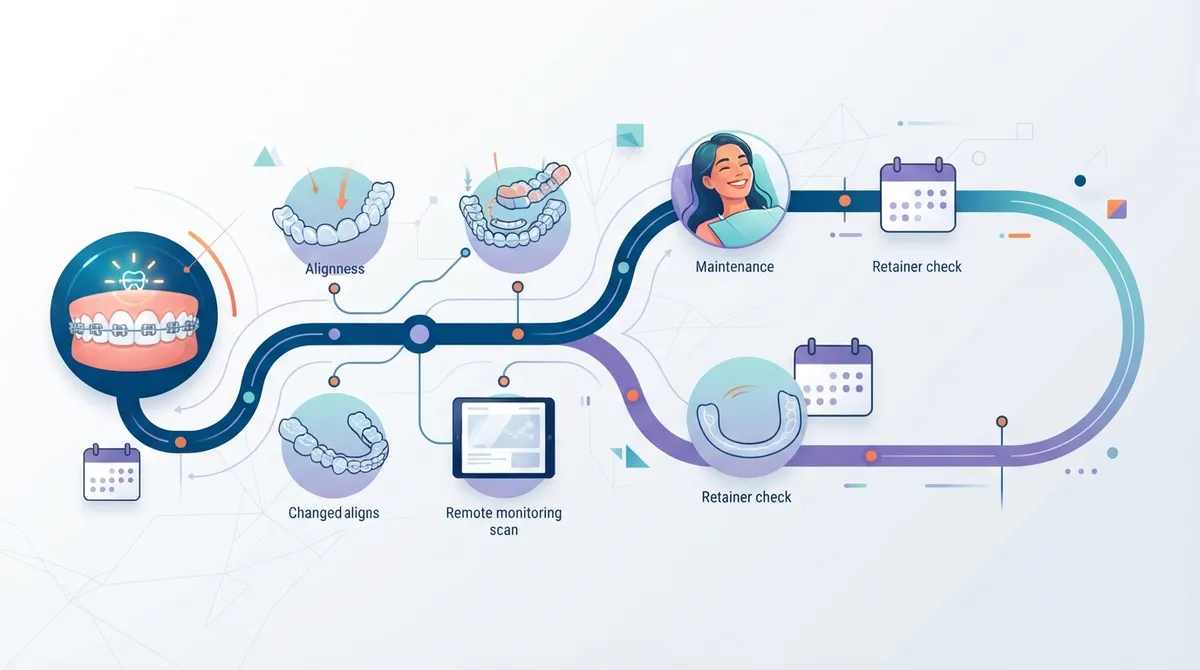
Some practices use remote check-ins between office visits. These can be a handy way to keep an eye on progress, especially if you have a busy schedule. Still, remote monitoring does not create a universal schedule and does not replace in-person care when your orthodontist feels you need it.
Think of it as a bonus tool, not a shortcut. Your orthodontist decides what is best for your treatment.
Tips to Make Every Appointment Count
A little preparation makes each visit smoother and more helpful. Try these ideas:
- Brush and floss before you arrive so your orthodontist can see clearly.
- Write down questions as they come up at home.
- Bring your retainer or aligner case if your plan includes them.
- Tell the team about any sore spots or loose parts.
- Book your next visit before you leave to keep your schedule on track.
For more ideas, check out how to prepare for braces adjustment visits with ease.
How Chacon Orthodontics Plans Your Visits
At Chacon Orthodontics, Dr. Omar Chacon builds a plan around you. As a board-certified orthodontist, he uses advanced technology like 3D digital imaging to track progress, and the bilingual team in English and Spanish makes sure every family feels comfortable asking questions. Whether you visit our Westchase office or our Brandon location, you will leave each appointment knowing what comes next.
Want to hear from real patients? You can visit us on Google — Chacon Orthodontics Brandon to see what neighbors say about their experience. You can also follow along with smile stories on Instagram, join the community on Facebook, or connect with Dr. Chacon on LinkedIn.
Ready to Plan Your Smile Journey?
Understanding braces appointment frequency takes the guesswork out of treatment. Most patients visit every 6 to 8 weeks, but your own schedule can range from 4 to 12 weeks depending on your plan. The best approach is simple: follow your orthodontist’s schedule, keep up with your daily care, and call the office if something feels off.
Every smile is different, and your visit plan should be too. If you are ready to learn what your own schedule might look like, take the first step with a free consultation at Chacon Orthodontics. We would love to meet you and help you start your journey to a confident smile!
FAQs
Q: How often do you need appointments with braces?
A: Most people with fixed braces visit about every 6 to 8 weeks. Your orthodontist may schedule you more or less often depending on your treatment plan, so always follow the schedule you are given.
Q: Can braces appointments be more than eight weeks apart?
A: Yes, sometimes! The American Association of Orthodontists notes adjustment visits can range from every 4 to 12 weeks depending on the treatment stage. Only your orthodontist can decide what spacing is right for you.
Q: What should I do if a bracket breaks between appointments?
A: Do not wait for your next visit. Call your orthodontic office, describe what happened, and follow their instructions for comfort and care. They will let you know if you need to come in sooner.
Q: Do I still need regular dental cleanings while wearing braces?
A: Absolutely! Braces visits do not replace preventive care from your general dentist. Keep up with your routine checkups and cleanings to protect your teeth and gums during treatment.
Q: Can remote monitoring reduce in-person orthodontic appointments?
A: For some patients, remote check-ins can support care between visits. They do not replace in-person care when your orthodontist feels it is needed, so ask your provider if it is an option for you.