
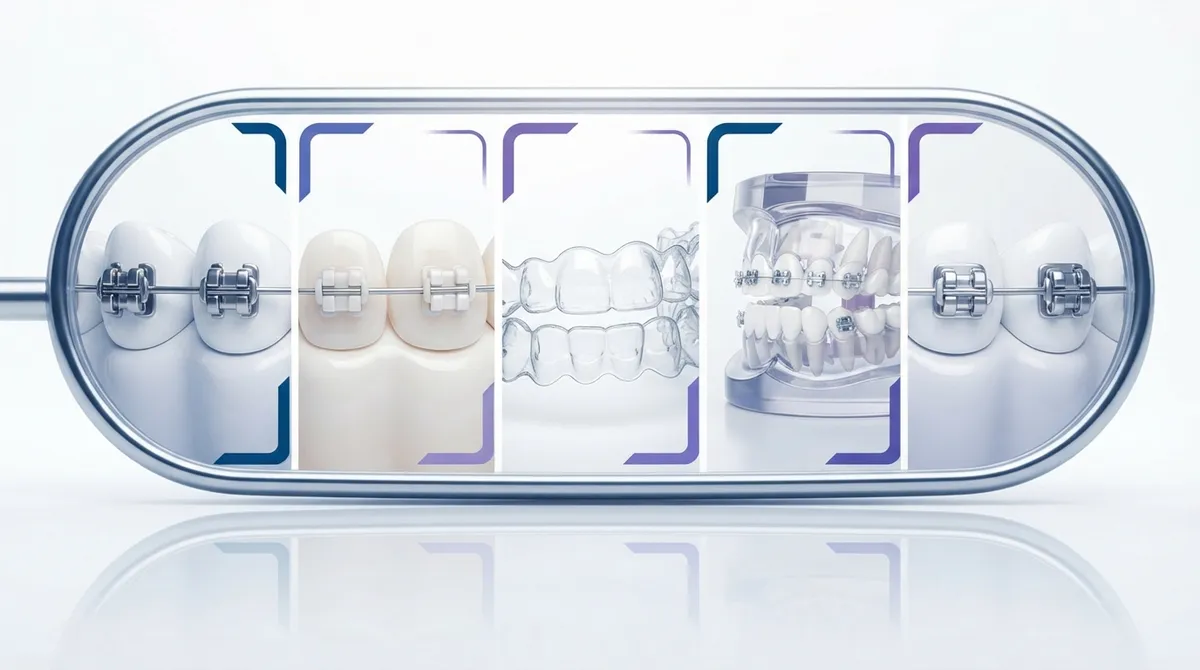
Key Takeaways
-
Metal braces remain the most budget-friendly and durable fixed-brace option, capable of handling almost any bite or crowding issue with decades of proven clinical research backing their effectiveness.
-
Recent 2025 research found no consistent proof that self-ligating braces finish treatment faster, hurt less, or produce better results compared to conventional braces, despite marketing claims.
-
Clear aligners require 22 hours daily wear commitment to be effective and work best for mild to moderate misalignment; skipping hours significantly extends treatment timelines.
-
Lingual braces are completely invisible from the front but cost the most, require specialized orthodontist training, and can be difficult to clean since brackets sit on the back of teeth.
-
Ceramic braces offer a middle ground for visibility but are bulkier and more fragile than metal, prone to staining with dark foods/drinks, and typically cost more than metal options.
-
Board-certified orthodontists personalize brace selection based on specific bite problems, jaw development, gum health, lifestyle factors, and budget rather than recommending one universal 'best' type.
Staring at a orthodontist’s treatment menu can feel a little overwhelming. Metal, ceramic, self-ligating, lingual, clear aligners… how do you even begin to choose? Take a breath, because you’re in good company. Whether you’re a parent trying to help your child through their first orthodontic visit, a teen who wants a smile upgrade without feeling self-conscious, or an adult professional ready to finally fix that crowding you’ve lived with for years, understanding the different types of braces is the first step toward a confident new smile.
At Chacon Orthodontics, Dr. Omar Chacon and his team help families across Westchase and Brandon, Florida sort through these choices every single day. This guide breaks down each option in plain language, so you can walk into your consultation feeling informed, not intimidated.

Why Knowing Your Options Matters
Choosing braces isn’t about picking whatever looks trendiest on social media. It’s about matching the right appliance to your bite, your lifestyle, and your budget. The American Association of Orthodontists estimates roughly 6.66 million patients were in active orthodontic treatment across the U.S. and Canada recently, and adult patients alone made up close to 1.91 million of that group—a jump of about 16% from just two years earlier. People of every age are investing in their smiles, and the options available today are better than ever.
Every type of brace uses the same basic idea: gentle, steady pressure moves teeth into better positions over time. What changes is the material, the way the wire attaches, and where the brackets sit. Let’s walk through each one.
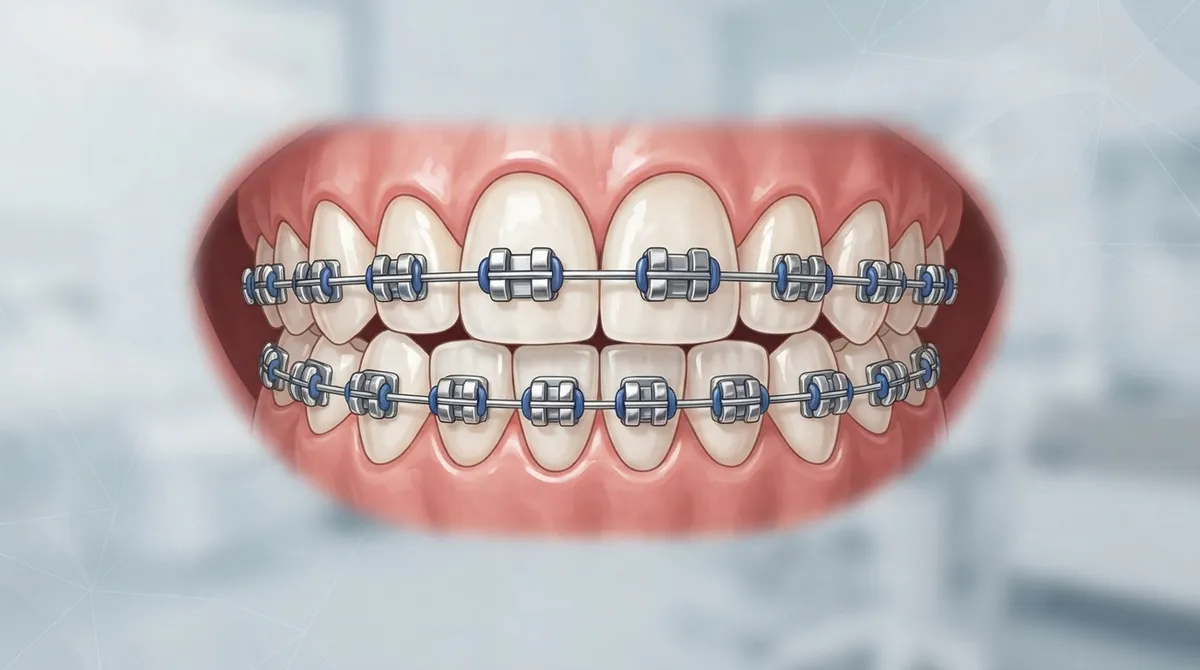
Traditional Metal Braces
Metal braces are the classic option most people picture when they hear the word “braces.” They use small stainless-steel brackets bonded to the front of each tooth, connected by an archwire and held in place with tiny elastic ties or metal ligatures.
- Highly durable and able to handle almost any bite or crowding issue
- Typically the most budget-friendly fixed-brace option
- Available in fun colored ties, which many kids and teens love picking out at each visit
- Backed by decades of clinical research and predictable results
Don’t let the word “traditional” fool you into thinking these are old-fashioned. Today’s metal brackets are smaller, smoother, and more comfortable than the braces older generations wore. For families watching their budget, metal braces remain one of the most reliable, affordable ways to straighten teeth. You can learn more about how metal braces remain a top choice for patients of all ages.
Ceramic Braces
Ceramic braces work just like metal braces, but the brackets are made from a tooth-colored or clear material. This makes them far less noticeable, which is a big draw for teens heading into school photos or adults who spend their days in client meetings.
That said, ceramic isn’t perfect for everyone. The brackets are bulkier and more fragile than metal, and they can stain if you’re not diligent about oral hygiene or if you enjoy dark-colored foods and drinks like coffee or berries. Ceramic braces also tend to cost more than metal. Still, for the right patient, they offer a nice middle ground between visibility and effectiveness. Check out this comparison of clear versus metal braces to see which fits your needs.
Self-Ligating Braces
Self-ligating braces skip the elastic ties altogether. Instead, the brackets have small built-in doors or clips that hold the archwire in place. This design can make some appointments a bit quicker since there’s less to adjust.
Here’s an important, honest fact: a 2025 narrative review comparing self-ligating and conventional brackets found no consistent proof that self-ligating braces finish treatment faster, hurt less, or produce better results. They may reduce chairside time for certain steps, but they aren’t a guaranteed shortcut. Your orthodontist will recommend this option based on your specific bite, not because it’s automatically superior.
Lingual Braces
Lingual braces are custom-made brackets bonded to the back of your teeth, facing your tongue instead of facing outward. From the front, nobody can tell you’re wearing braces at all.
This near-invisibility comes with trade-offs. Lingual braces generally cost more, require an orthodontist with specialized training, and can be trickier to clean since you can’t see the brackets easily. Some patients notice temporary speech changes or tongue irritation while they adjust. Lingual braces can treat many of the same issues as traditional braces, but they’re not always the right fit for complex cases.
Clear Aligners: The Removable Alternative
Technically, clear aligners aren’t “braces” in the fixed-appliance sense, but most people compare them side by side when weighing their options. These clear, custom-fitted trays gradually shift teeth and can be popped out for eating, brushing, and special occasions.
The catch is commitment. The AAO recommends wearing aligners about 22 hours a day for the best results. Skip too many hours, and your treatment timeline stretches out. Aligners also aren’t always the best choice for more complex tooth movements or bite corrections. If you’re curious whether removable clear trays could work for your smile, a consultation is the best way to find out. Many of our adult patients love the discreet nature of aligners, especially those balancing careers and social lives—read more about why adults are choosing orthodontic treatment later in life.
Comparing the Types of Braces at a Glance
| Brace Type | Visibility | Typical Cost | Best For |
|---|---|---|---|
| Metal Braces | Most visible | Lowest | Broad range of bite issues, budget-conscious families |
| Ceramic Braces | Low visibility | Moderate to high | Teens and adults wanting a subtle look |
| Self-Ligating Braces | Similar to metal or ceramic | Moderate | Patients wanting fewer wire-tie adjustments |
| Lingual Braces | Hidden from front view | Highest | Image-conscious patients, complex cases with expert provider |
| Clear Aligners | Nearly invisible | Moderate to high | Compliant patients with mild to moderate misalignment |
How Your Orthodontist Decides What’s Right for You
Picking the perfect brace isn’t a guessing game. Dr. Chacon and other board-certified orthodontists look at several factors before making a recommendation:
- The specific bite problem, whether it’s crowding, an overbite, underbite, or crossbite
- Your jaw development and whether growth is still happening (especially important for kids)
- Your gum and tooth health, since periodontal issues can affect treatment choices
- Your lifestyle, including sports, instruments, or a job that involves a lot of public speaking
- Your budget and insurance coverage
- How well you can commit to hygiene routines or wearing removable trays consistently
This is exactly why a personalized consultation matters so much. Marketing claims about “the fastest braces” or “the most comfortable option” should always be weighed against your actual diagnosis, not just advertising. To understand your teeth positioning and alignment issues, a professional exam is the best starting point.
What About Kids and Early Treatment?
Parents often wonder when it’s time to bring their child in for an evaluation. The AAO generally suggests a first orthodontic check-up around age 7, even if it doesn’t lead to treatment right away. Catching issues early can sometimes mean simpler treatment down the road. If you’re noticing crowding, an unusual bite, or your child breathing through their mouth, it may be worth reviewing these early signs that braces might be needed.
Caring for Your Braces, Whichever Type You Choose
No matter which appliance you and your orthodontist decide on, good habits at home make a huge difference. Here’s a quick list to keep in mind:
- Brush after every meal, especially around brackets and wires
- Use interdental brushes or floss threaders to clean between teeth and wires
- Rinse with fluoride mouthwash to help prevent white-spot lesions
- Avoid sticky, hard, or overly sugary foods that can damage brackets
- Keep up with regular dental cleanings alongside your orthodontic visits
Plaque buildup around brackets can lead to decay or gum irritation, so these habits aren’t just suggestions—they protect your investment in your smile. For more tips, see our guide on cleaning your teeth with braces every day.
Treatment Timelines and What to Expect
Research reviewing fixed-appliance studies found an average treatment time of about 19.9 months. That said, this is a historical average, not a promise. Your timeline depends on the severity of your case, your appliance type, and how well you follow instructions like wearing rubber bands or aligners as directed.
Some patients with mild crowding finish in under a year, while more complex bite corrections may take longer. Your orthodontist will give you a realistic estimate based on your unique smile, not a one-size-fits-all number.
Serving Bilingual Families in Brandon and Westchase
At Chacon Orthodontics, care is offered in both English and Spanish, making it easier for bilingual families to ask questions and fully understand their treatment plan. Dr. Chacon, originally from Puerto Rico and trained in New York City, brings both technical expertise and genuine cultural understanding to every visit. You can follow along with patient stories and smile transformations on Instagram or connect with the practice on Facebook. Dr. Chacon’s professional background is also available on LinkedIn.
If you’re in the Brandon area and want to see what real patients are saying, feel free to visit us on Google — Chacon Orthodontics Brandon and read through their experiences firsthand.
Making Your Final Decision
Here’s the honest truth: there’s no universal “best” type of braces. The best choice is the one that matches your specific bite, your comfort level, and your everyday life. A teenager juggling band practice and football might lean toward durable metal braces, while a working professional heading into client meetings might prefer ceramic or clear aligners. A parent bringing in a seven-year-old for their first check might not need braces yet at all, just a watchful eye on development.
This is why sitting down with a board-certified orthodontist matters so much more than any online chart or article, including this one. Every smile tells a different story, and yours deserves a plan built just for you.
Ready to Find Your Perfect Fit?
Choosing among the many types of braces doesn’t have to feel stressful. With the right guidance, you can feel confident walking into treatment knowing you made an informed choice. Dr. Omar Chacon and the team at Chacon Orthodontics are here to walk you through every option, answer your questions in English or Spanish, and help you find the path that fits your life. Ready to get started? Schedule your free consultation today and take the first step toward a smile you’ll love showing off.
FAQs
Q: What are the main types of braces available today?
A: The main types include traditional metal braces, ceramic braces, self-ligating braces, and lingual braces, plus clear aligners as a removable alternative. Each option works a little differently, so the best pick depends on your bite, budget, and lifestyle. A quick chat with your orthodontist will help narrow it down fast!
Q: Are ceramic braces more expensive than metal braces?
A: Yes, ceramic braces typically cost more than metal braces because of the tooth-colored material and extra care needed during production. They’re a great choice if blending in matters to you, but metal braces remain the more budget-friendly option for many families.
Q: Do self-ligating braces really work faster than traditional braces?
A: Not necessarily! Recent research reviews show no consistent proof that self-ligating braces finish treatment faster or hurt less than conventional braces. They may save a little chair time during adjustments, but your overall treatment length depends more on your specific case.
Q: Are lingual braces completely invisible?
A: Lingual braces are hidden from the front since they’re bonded to the back of your teeth, so most people won’t notice them at all. Keep in mind they can be trickier to clean and may take a little getting used to for speech, but many patients love the discreet result.
Q: How do I know if clear aligners or traditional braces are better for me?
A: It really comes down to your bite complexity and how disciplined you can be about wearing aligners around 22 hours a day. Traditional braces work well for more complex cases, while aligners shine for patients who want something removable and low-profile. Your orthodontist can help you weigh both options honestly during a consultation.





