Key Takeaways
-
Braces treat a wider range of orthodontic problems, while Invisalign is generally best for mild to moderate cases, so your bite and treatment needs should guide the choice most.
-
Invisalign requires wearing aligners about 20 to 22 hours a day, so it depends heavily on your discipline; braces work around the clock without relying on your habits.
-
Aligners are removable, so you can brush and floss as usual and eat freely, while braces need extra cleaning around brackets and wires and avoidance of hard or sticky foods.
-
A 2024 systematic review found low-certainty evidence that treatment time is similar for aligners and braces in mild to moderate crowding, so neither is clearly faster.
-
Retainers are generally needed after active treatment with either option, since skipping them can let teeth drift back to their original positions.
-
Ask your orthodontist about your candidacy, expected treatment length, total cost and payment plans, what happens if you miss aligner wear time, and which retainer you'll need.
Standing at the crossroads of a straighter smile can feel a little overwhelming. You’ve probably heard friends rave about clear aligners, while your cousin swears by her braces. So which one is right for you? The honest answer is that the braces vs Invisalign choice is personal, and it depends on your teeth, your bite, and your daily life.
Here’s the good news: both options work well when they match the right patient. In this friendly guide, we’ll walk you through how to compare them step by step. You’ll learn how each one works, who it suits best, and what questions to bring to your orthodontist. Whether you’re a parent helping a child, a teen juggling sports and school, or an adult professional with a busy calendar, you’ll leave with a clear plan. Let’s get started!
How Braces and Invisalign Actually Work
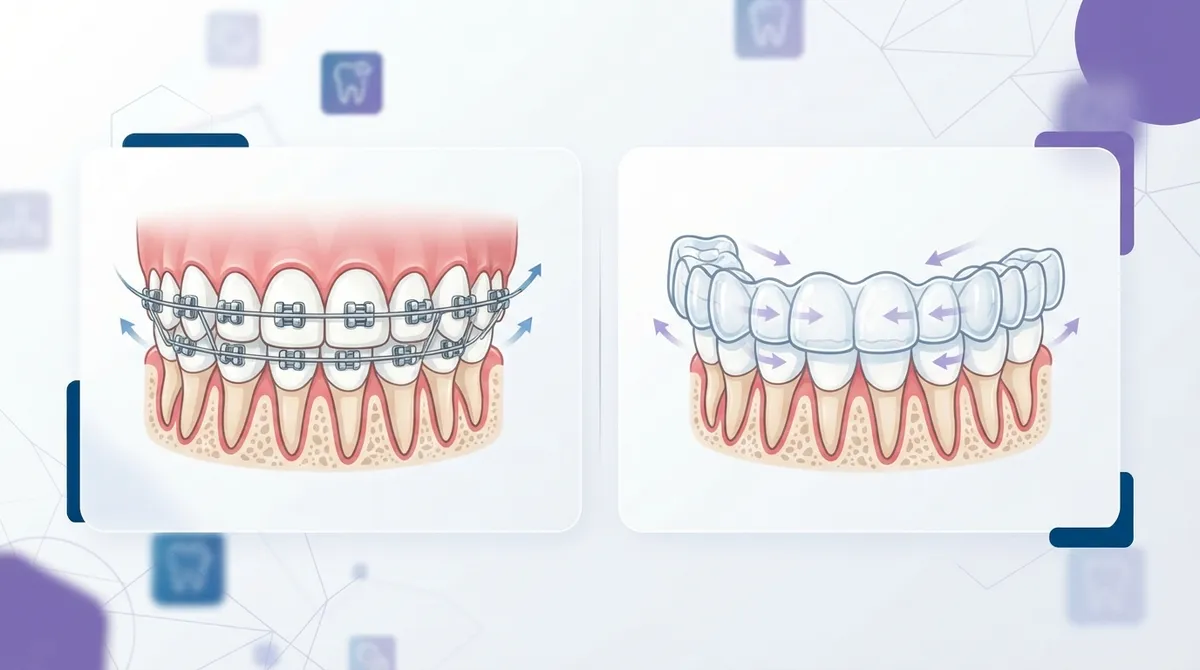
Before you compare, it helps to know the basics. Both treatments move teeth with gentle, steady pressure. They just go about it in different ways.
How Braces Work
Braces use small brackets bonded to your teeth. A thin wire runs through the brackets. Your orthodontist adjusts the wire over time to guide teeth into place. Because braces stay on the whole time, they work around the clock. Curious about the different styles? Check out this guide to types of braces and which option fits your smile best.
How Invisalign Works
Invisalign is a brand of clear aligners. You get a series of custom-made, removable trays. Each tray moves your teeth a tiny bit. You switch to a new tray every so often until your smile reaches the goal. If you want a deeper look, read about how clear trays straighten your smile.
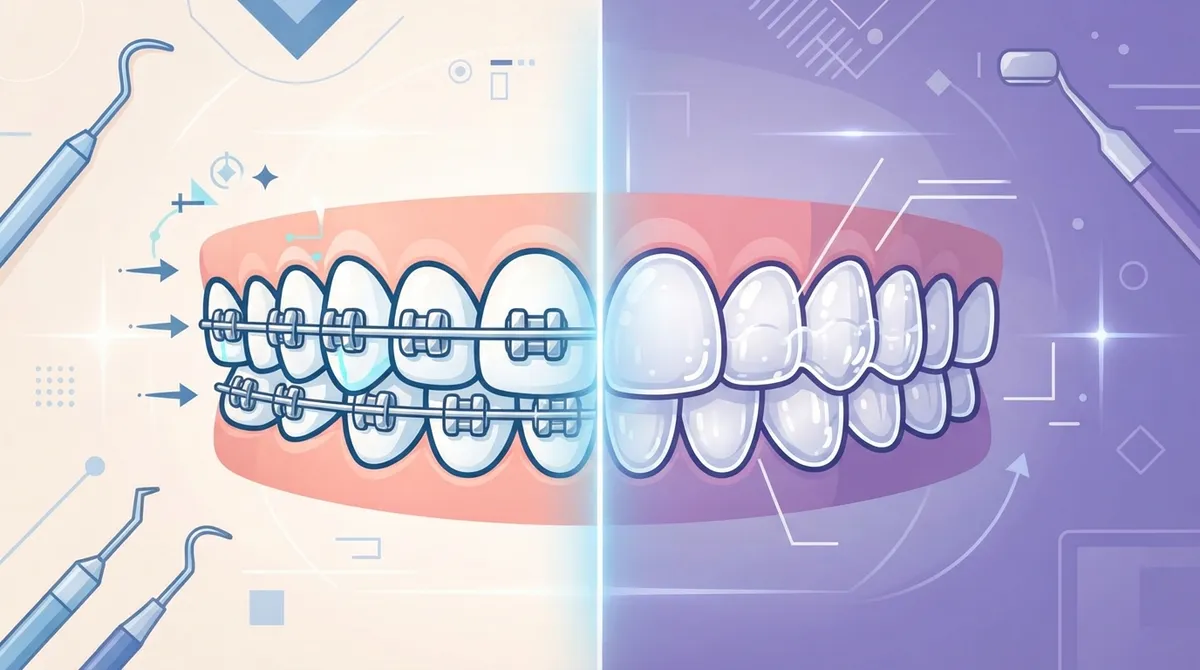
Braces vs Invisalign: Side-by-Side Comparison
Sometimes a simple chart says it all. Here is how the two options stack up on the things people ask about most.
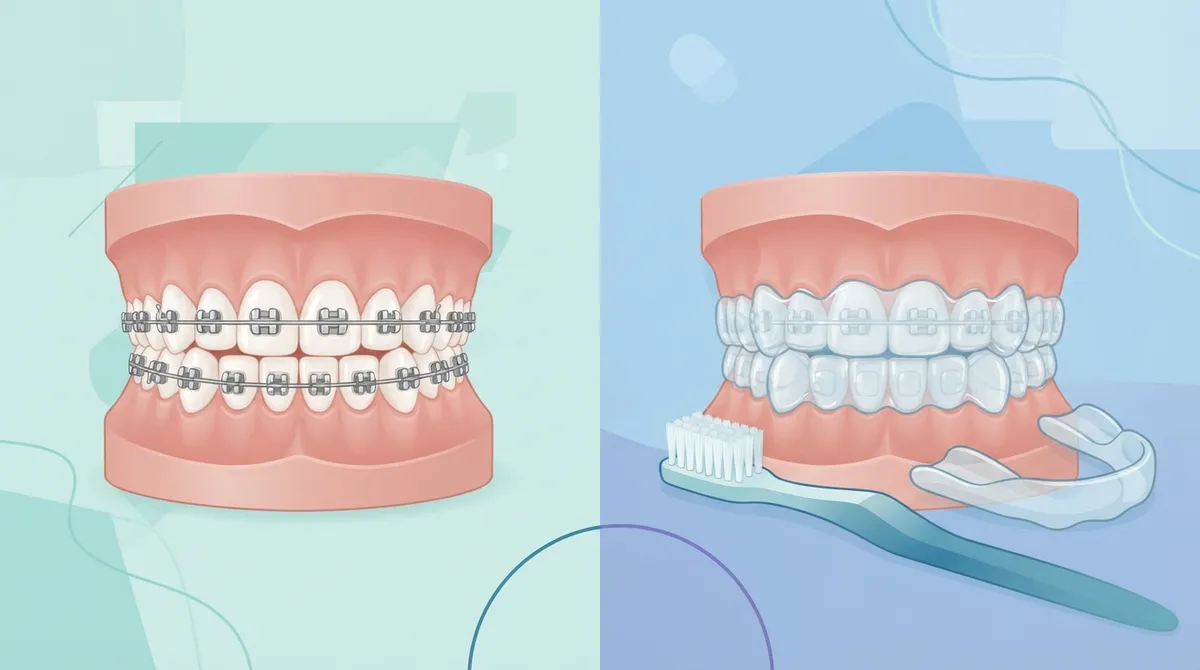
| Feature | Braces | Invisalign Clear Aligners |
|---|---|---|
| How they work | Brackets and wires fixed to teeth | Removable, custom-made clear trays |
| Visibility | More noticeable | Much less noticeable |
| Removable? | No, stays on 24/7 | Yes, for meals and cleaning |
| Daily wear | Always on | About 20 to 22 hours a day |
| Case range | Wider range of problems | Often mild to moderate cases |
| Eating | Avoid hard and sticky foods | Remove aligners to eat |
| Cleaning | Extra care around brackets and wires | Brush and floss as usual |
| Relies on patient habits? | Less so | Very much so |
Keep in mind that this chart is a general guide. Your own mouth is one of a kind, so your orthodontist’s opinion matters most.
Step 1: Understand Your Bite and Treatment Needs
This is the biggest factor, and it’s the one many people skip. The American Association of Orthodontists notes that braces can address a wider range of orthodontic problems. Clear aligners are generally a good fit for a narrower range, often mild to moderate cases.
So what does that mean for you? If your teeth need complex movements, braces may give your orthodontist more control. If your needs are simpler, aligners could be a great match. Common issues include:
- Crowded or overlapping teeth
- Gaps between teeth
- Overbite, underbite, or crossbite
- Teeth that are rotated or tilted
Not sure what you have? Learn more about teeth positioning and alignment issues. If you’re dealing with a tricky bite, our guide on what fixes severe tooth crowding best may also help.
Step 2: Think About Your Lifestyle and Habits
Here’s where honesty pays off. Ask yourself a few friendly, no-judgment questions.
- Can I wear aligners 20 to 22 hours a day? Invisalign’s own guidance recommends this much wear. If you often forget things, fixed braces may be easier.
- Will I remember my aligner case? Aligners can be misplaced, especially at restaurants or school cafeterias.
- Do I play sports or an instrument? Both options need a plan, so talk with your orthodontist about mouthguards and comfort.
- Do I snack all day? Aligners come out for meals, which means brushing before putting them back in.
If you answered “no” to the first two, braces might keep you on track with less effort. If you love the idea of taking your appliance out for dinner, aligners may feel more freeing.
Step 3: Weigh Looks, Comfort, and Confidence
Let’s talk about appearance, because it matters. Clear aligners are less noticeable and many people love that. Braces are more visible, but today’s options come in many styles, and some teens enjoy picking fun colors. You can explore that in 11 colored braces facts every smile should know. Prefer something subtler? Here are facts on metal braces vs ceramic braces.
Comfort is part of the picture too. Braces may irritate the cheeks or lips at first. Either treatment can cause temporary soreness as teeth begin to move. That’s normal, and it fades. For quick relief, see 8 ways to ease braces discomfort fast.
Step 4: Compare Daily Care and Eating
Day-to-day life looks a little different with each option. Here’s what to expect.
Life With Braces
- Avoid hard or sticky foods that could damage the brackets or wires
- Spend extra time cleaning around brackets and wires
- Use tools like floss threaders and interdental brushes
Need a refresher? Read how to brush with braces and these braces diet restrictions that protect your smile.
Life With Invisalign
- Take aligners out to eat and to drink anything besides water
- Brush and floss before putting the trays back in
- Keep trays in their case, never wrapped in a napkin
Both paths are very doable. Braces ask more of your cleaning routine, while aligners ask more of your discipline.
Step 5: Look at Treatment Time
Everyone wants to know how long this will take. The truth is that it depends on your case and how well you follow the plan. A 2024 systematic review looked at 3,537 records and included 10 studies, six of them randomized controlled trials. It found low-certainty evidence that treatment time was similar for clear aligners and fixed braces in mild to moderate crowding. The research was limited, especially for severe cases.
In plain words, there’s no clear winner on speed. Your orthodontist can give you a realistic estimate after an exam. For general timelines, see how long braces treatment takes. Adults can also check how long adult braces take.
Step 6: Compare Cost and Payment Options
Cost varies from person to person, so a one-size price doesn’t exist. Your total depends on the length of treatment, the type of appliance, and your specific needs. Many families are happy to learn there are flexible ways to pay.
Here are a few resources to help you plan:
- Braces cost in 2026: what to expect and how to save
- How orthodontist payment plans actually work
- Braces insurance coverage facts to know
Step 7: Plan for Life After Treatment
Here’s something many people forget. Neither option ends the moment your teeth look great. Retainers are generally needed after active treatment to help keep your results in place. Skipping them can let teeth drift back.
Want to understand your options? Explore braces retainers tips to keep your smile straight. And if you’re curious about the big reveal, here’s the braces removal process.
Which Option Fits Which Person?
Every smile is different, but here are some common patterns we see.
- Parents of children: Early evaluation helps you know when to act. Fixed braces can be a reliable choice for growing mouths. See when your child should really get braces.
- Teens: Teens often love the freedom of aligners, but they need to wear them consistently. Braces can be a worry-free option for busy schedules. Read how to choose braces for teenagers.
- Adult professionals: Many adults want something low-profile. Explore braces for adults options.
- Image-conscious smile seekers: If looks drive your decision, ask about discreet options during your visit.
Step 8: Book an Expert Assessment
Reading is helpful, but nothing beats a real exam. An orthodontist can study your bite, explain the benefits and limits of each option, and build a plan just for you. Not every dentist offers this level of care, which is why it helps to see a specialist. Learn more in 10 facts: orthodontist vs dentist for braces.
At Chacon Orthodontics, Dr. Omar Chacon is a board-certified orthodontist who offers both custom braces and clear aligners for children, teens, and adults. We use advanced technology, including 3D digital imaging, and we proudly offer bilingual care in English and Spanish for families in Westchase and Brandon. Prefer to hear from real patients? Read what our Chacon Orthodontics West Chase patients say on Google.
You can also follow our team on Instagram and Facebook for smile stories, or connect with Dr. Chacon on LinkedIn. Not sure what to expect at your first appointment? Try how to prepare for your first orthodontist appointment.
Questions to Ask at Your Consultation
Bring a short list so you don’t forget anything. Good questions include:
- Am I a good candidate for clear aligners, braces, or both?
- How long will my treatment likely take?
- What will my total cost and payment plan look like?
- What happens if I miss wear time with aligners?
- What kind of retainer will I need afterward?
For more ideas, see how to ask your orthodontist the right questions.
Final Thoughts: There’s No Wrong Door to a Great Smile
When it comes to braces vs Invisalign, neither one is better for everyone. The best choice fits your bite, your habits, and your life. Braces offer wide treatment range and don’t rely on you remembering to put them in. Invisalign offers a discreet, removable option that suits many mild to moderate cases. With the right guidance, you can feel confident about either path.
Ready to find your fit? Take the first step with a free consultation at Chacon Orthodontics. We’ll look at your smile, answer your questions, and help you choose with confidence. You can also contact us anytime. We can’t wait to meet you!
FAQs
Q: Are braces or Invisalign better for my teeth and bite?
A: It depends on your bite and what your teeth need. Braces can treat a wider range of problems, while Invisalign often suits mild to moderate cases. An orthodontist can look at your mouth and tell you which one fits best.
Q: How many hours a day do I need to wear Invisalign?
A: Invisalign’s guidance recommends about 20 to 22 hours a day. You take the aligners out only to eat, drink anything besides water, and brush or floss. Wearing them less can slow your progress, so consistency is key!
Q: Which is easier to keep clean, braces or Invisalign?
A: Aligners are usually simpler because you can remove them and brush and floss like normal. Braces need extra care around the brackets and wires. Either way, a good daily routine keeps your smile healthy.
Q: Can I eat and drink normally with braces or clear aligners?
A: With aligners, you remove them to eat, so food choices are more flexible. With braces, it’s best to avoid hard and sticky foods that could damage the wires or brackets. Your orthodontist will share a handy food list.
Q: Do I need a retainer after braces or Invisalign?
A: Yes, retainers are generally needed after active treatment to help keep your teeth in their new spots. Without one, teeth can slowly drift back. Your orthodontist will recommend the best type for you.