Key Takeaways
-
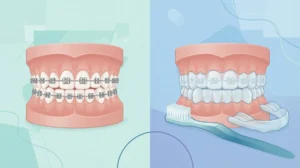
Braces trap plaque around brackets and wires, which can cause cavities, swollen gums, and permanent white marks on enamel, so a daily hygiene toolkit is essential during treatment.
-
Use fluoride toothpaste and skip whitening formulas during treatment, and spit out extra foam without rinsing so fluoride stays on your teeth.
-
Interdental brushes and floss threaders are key for cleaning under archwires and between teeth, where a regular toothbrush cannot reach.
-
Angle the brush at about 45 degrees toward the gumline, brush above and below each bracket, and brush for about two minutes after meals and at bedtime.
-
Replace manual toothbrushes every three months or sooner if bristles fray, since braces can wear bristles out faster than normal.
-
Water flossers help flush out debris but should complement, not replace, brushing and interdental cleaning; avoid forcing oversized interdental brushes, which can hurt gums or bend wires.
Getting braces is exciting. You are on your way to a straighter, more confident smile. But let’s be honest: all that metal and wire creates a lot of tiny hiding spots for food and plaque. That is why the right braces hygiene products matter so much.
The good news? You do not need a bathroom full of gadgets. A few smart tools, used the right way, can keep your teeth clean and healthy until the big reveal. Whether you are a parent helping a child, a teen juggling school and sports, or an adult with a busy work schedule, this guide will walk you through what to buy and how to use it.
Here at Chacon Orthodontics, we love seeing patients finish treatment with healthy gums and bright, spotless enamel. Let’s build your cleaning toolkit together, one simple step at a time.
Why Braces Hygiene Products Matter
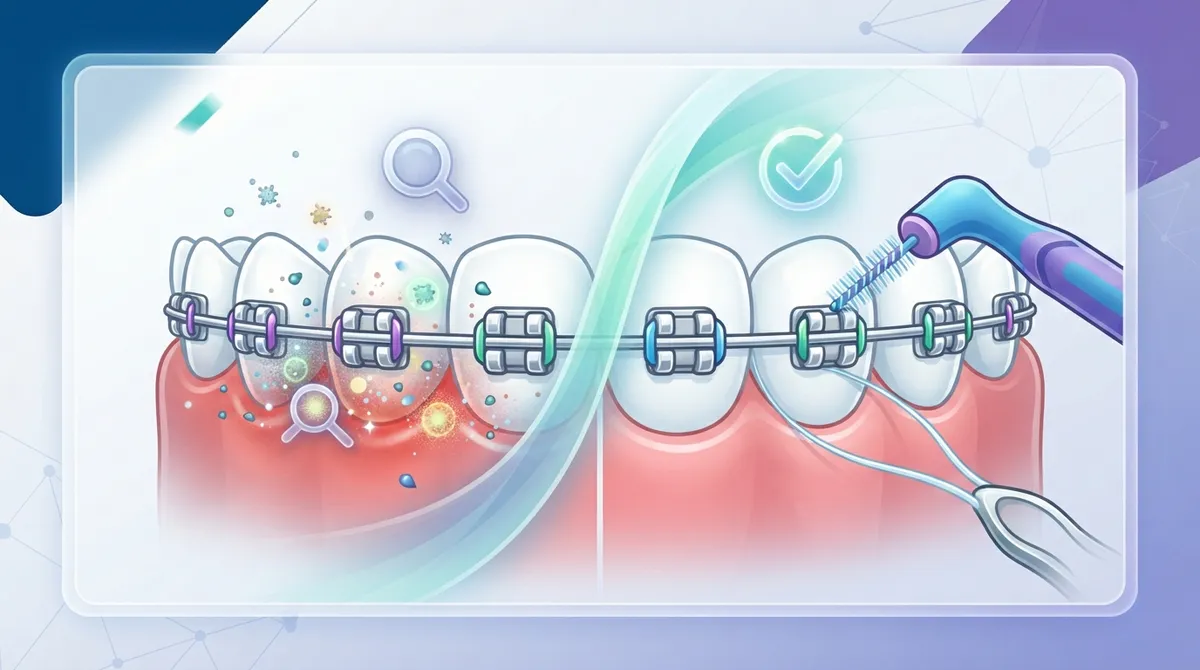
Braces add extra surfaces to your mouth. Brackets, bands, and archwires all trap plaque and food. If you do not clean well, you may face cavities, swollen gums, bad breath, and even permanent white marks on your enamel.
Those white marks are the one most patients worry about. They show up when plaque sits around a bracket for too long. Once the braces come off, you can see a ghost outline where each bracket used to be. The right braces hygiene products help you avoid that outcome.
Think of it like cleaning around a fence. A regular broom works for open ground, but you need a smaller tool to get between the posts. Your teeth work the same way.
The Essential Braces Hygiene Products Checklist
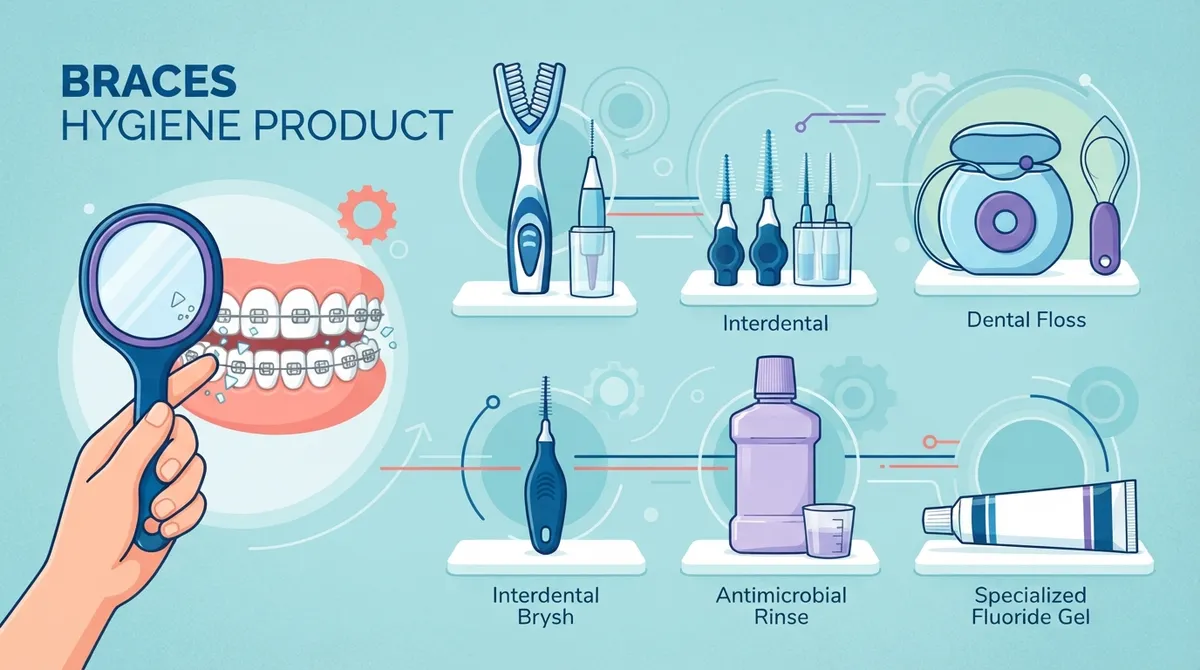
Here is a quick look at the core tools most orthodontic patients need. Your orthodontist may adjust this list based on your treatment and your cavity risk.
| Product | What It Does | Best For |
|---|---|---|
| Fluoride toothpaste | Strengthens enamel and fights decay | Everyone with braces |
| Soft, small-headed toothbrush | Cleans around brackets and gumline | Daily brushing |
| Electric toothbrush | Gives steady, consistent cleaning | Patients who rush or struggle with technique |
| Interdental (interspace) brushes | Cleans under wires and around brackets | Daily cleaning of tight spots |
| Floss threaders or orthodontic floss | Slides floss under the archwire | Cleaning between teeth |
| Water flosser | Flushes out food and loose debris | Extra help around fixed appliances |
| Fluoride mouth rinse | Adds enamel protection | Higher-risk patients, when recommended |
| Orthodontic wax | Covers sharp or rubbing hardware | Sore cheeks and lips |
| Disclosing tablets | Shows plaque you missed | Kids, teens, and anyone learning technique |
How to Pick the Right Toothpaste
Toothpaste is your first line of defense, so pick a good one. Look for a fluoride toothpaste. Health guidance from the NHS advises adults to use toothpaste with at least 1,350 ppm fluoride, and some orthodontic patient guides suggest 1,350 to 1,500 ppm.
Do not worry too much about fancy whitening formulas while you wear braces. Whitening toothpaste can leave uneven shades around brackets. Save the whitening for after treatment, when your smile is ready for it.
One small tip: spit out the extra foam after brushing, but do not rinse with water right away. That way, a thin layer of fluoride stays on your teeth and keeps working.
Choosing a Toothbrush: Manual or Electric?
Both options can work well with braces. The best brush is the one you will use properly every single day.
Manual Toothbrush Tips
- Pick a soft-bristled brush with a small head so it fits around brackets.
- Replace it every three months, or sooner if the bristles look bent or frayed.
- Braces can wear out bristles faster than normal, so check often.
Electric Toothbrush Tips
- Electric brushes do not damage braces when used as directed.
- Many have built-in timers that help you brush for a full two minutes.
- Guide the brush slowly from tooth to tooth instead of scrubbing hard.
If you want a step-by-step refresher on technique, take a look at how to brush with braces for a cleaner, healthier smile.
Step-by-Step: How to Brush Around Brackets and Wires
Great tools only help if you use them well. Follow these steps to get a thorough clean.
- Rinse first. Swish a little water to loosen food bits.
- Add fluoride toothpaste. A pea-sized amount is plenty.
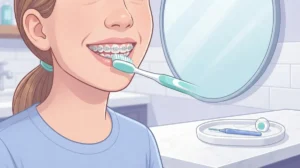
- Angle toward the gumline. Tilt the bristles at about 45 degrees and brush gently along the gums.
- Brush above the brackets. Point the bristles downward to clean the top edge of each bracket.
- Brush below the brackets. Point the bristles upward to clean the lower edge.
- Clean the biting and inner surfaces. Do not forget the backs of your teeth.
- Brush your tongue. This helps freshen your breath.
- Spit, do not rinse. Let the fluoride do its job.
Aim for about two minutes each time. Orthodontic guidance from the American Association of Orthodontists suggests brushing after meals or snacks and again at bedtime. Your orthodontist may give you a slightly different plan, so always follow their advice.
Interdental Brushes: Your Secret Weapon
Interdental brushes, also called interspace brushes, look like tiny bottle brushes. They are made to slide under your archwire and around brackets, where a regular toothbrush cannot reach.
Here is how to use one well:
- Choose a size that fits without forcing it. A snug but comfortable fit is the goal.
- Slide it gently under the wire and between the brackets.
- Move it in and out a few times, then repeat on each tooth.
- Rinse the brush after use and replace it when the bristles bend.
Not sure which size to buy? Ask your orthodontic team. They can show you the right fit and demonstrate safe technique during your visit.
Flossing Made Easier
Flossing with braces can feel like threading a needle in the dark. But it is still one of the most important habits you can build. Daily cleaning between teeth removes plaque that brushing alone cannot reach.
Here are three tools that make flossing simpler:
- Floss threaders: These are small, flexible loops that pull regular floss under the archwire.
- Orthodontic flossers: These have a stiff end that slides under the wire for you.
- Water flossers: These use a gentle stream of water to flush out food and debris.
A water flosser is a wonderful helper, but it should not automatically replace every other tool. Many orthodontists recommend using it along with brushing and interdental cleaning. For more practical pointers, check out these 14 easy tips for flossing with braces.
Do You Need a Fluoride Mouth Rinse?
Sometimes. A fluoride rinse adds another layer of enamel protection, and it may be especially helpful if you are prone to cavities or white spots. But it is not always needed for every patient.
If your orthodontist recommends one, follow the label or their instructions. NHS guidance suggests using mouthwash at a different time from brushing, so it does not wash away the fluoride from your toothpaste. A good time might be after lunch at school or work.
Also, keep in mind that younger children may swallow rinse by accident. Parents should check that the product is right for their child’s age.
Helpful Extras Worth Having
These smaller items will not replace brushing or interdental cleaning. But they can make life with braces a lot more comfortable.
- Orthodontic wax: Roll a small piece into a ball and press it over any bracket or wire that rubs your cheek or lip. If you are dealing with soreness, here is how to ease braces soreness fast.
- Travel toothbrush and toothpaste: Keep a kit in your backpack, desk drawer, or gym bag so you can brush after lunch.
- Disclosing tablets: Chew one and the dye shows any plaque you missed. Kids and teens often find this fun, almost like a game.
- A small mirror and good lighting: You cannot clean what you cannot see.
A Simple Daily Routine You Can Follow
Here is an easy routine that fits most schedules. Your orthodontist may adjust it, so treat this as a starting point.
- Morning: Brush with fluoride toothpaste, then use an interdental brush on any spots that feel trapped.
- After meals and snacks: Rinse with water or do a quick brush if you can. A travel kit makes this easy.
- Evening: Floss with a threader or orthodontic flosser, use a water flosser if you have one, then brush for two full minutes.
- Bedtime: Spit out the extra paste and skip the water rinse so the fluoride lingers.
AAO guidance also recommends flossing at least once daily and visiting for professional cleanings at least every six months during treatment, or more often if your dental team advises it. Want a deeper dive into everyday habits? These braces oral hygiene habits are a great next read.
Tips for Different Family Members
For Parents of Children
Younger kids often need help. Brush together, use a timer or a favorite song, and try disclosing tablets to make plaque spotting feel like a science experiment. Praise their effort and keep it light.
For Teens
Between school, sports, and social plans, brushing can slip. Keep a small hygiene kit in your bag and set a phone reminder after lunch. A clean smile pays off when the braces come off.
For Adult Professionals
Busy workdays make it easy to skip midday cleaning. Keep a travel toothbrush and a pack of interdental brushes at your desk. A two-minute routine after lunch can protect your teeth and your confidence in meetings.
Common Mistakes to Avoid
- Brushing too hard. Heavy pressure can irritate gums and wear down enamel. Gentle and thorough wins.
- Skipping interdental cleaning. Brushing alone misses the spaces under the wire.
- Forcing a too-large interdental brush. This can hurt your gums or bend your wire.
- Using whitening products during treatment. They can lead to uneven shades. Save whitening for later, such as the cosmetic teeth whitening options after braces.
- Rinsing right after brushing. It washes away protective fluoride.
When to Call Your Orthodontist
Reach out if you notice bleeding gums that do not improve, a loose bracket, a poking wire, or white spots forming on your teeth. These are all signs to get checked early. Quick action usually means easier fixes. If something breaks, this guide on braces emergency care steps can help you know what to do first.
You can also follow our team on Instagram for smile tips and updates, and connect with us on Facebook or LinkedIn to learn more about Dr. Omar Chacon and our practice.
Keep Your Smile Healthy All the Way to the Finish Line
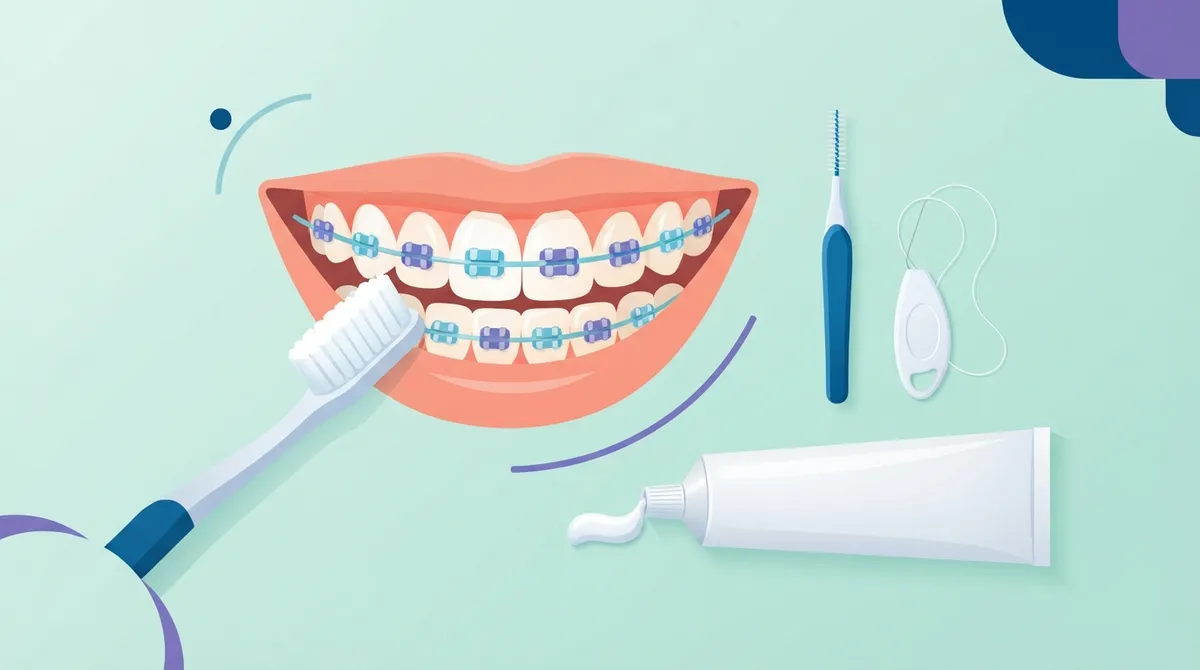
The best braces hygiene products are the ones you use every day. Start with fluoride toothpaste, a gentle toothbrush, and a good interdental brush. Add floss threaders or a water flosser, and bring in a fluoride rinse if your orthodontist recommends it. Small habits add up to big results.
At Chacon Orthodontics, we serve families in Westchase and Brandon with bilingual care in English and Spanish. Dr. Chacon and our team are always happy to show you the right tools and techniques. You can see what our patients say when you visit us on Google — Chacon Orthodontics Brandon.
Ready to talk about your treatment or ask questions about your cleaning routine? Schedule your free consultation today, or simply contact us and we will help you take the next step toward a healthy, confident smile.
FAQs
Q: What are the best hygiene products for cleaning teeth with braces?
A: A good starter kit includes fluoride toothpaste, a soft small-headed toothbrush (manual or electric), interdental brushes, and floss threaders or a water flosser. Your orthodontist may also suggest a fluoride rinse and orthodontic wax. Ask your team to help you pick the right sizes and types for your mouth.
Q: Are electric toothbrushes safe to use with braces?
A: Yes, they are! Electric toothbrushes do not damage braces when you use them as directed. Just guide the brush slowly around each bracket instead of pressing hard, and let the bristles do the work.
Q: How often should I brush and floss with braces?
A: Most orthodontic guidance recommends brushing for two minutes after meals or snacks and at bedtime, plus cleaning between your teeth at least once a day. Every patient is a little different, so follow the plan your orthodontist gives you.
Q: Should I use fluoride mouthwash while wearing braces?
A: It can be a helpful extra, especially if you are prone to cavities or white spots. Use it at a different time from brushing so it does not rinse away your toothpaste fluoride, and check with your orthodontist to see if it is right for you.
Q: Can a water flosser replace regular flossing with braces?
A: A water flosser is a great helper for flushing out food around brackets and wires, but it should not automatically replace all interdental cleaning. Many patients get the best results by combining it with brushing and floss threaders or interdental brushes.