
Key Takeaways
-
Most teens wear braces for 12-24 months (median 22 months per AAO 2025 survey), with treatment length depending on case complexity and following orthodontist directions like wearing rubber bands on time.
-
Orthodontists offer three main options: metal braces for complex cases, ceramic braces for less visibility, and clear aligners for mild-moderate cases requiring 20-22 hours daily wear and strong responsibility.
-
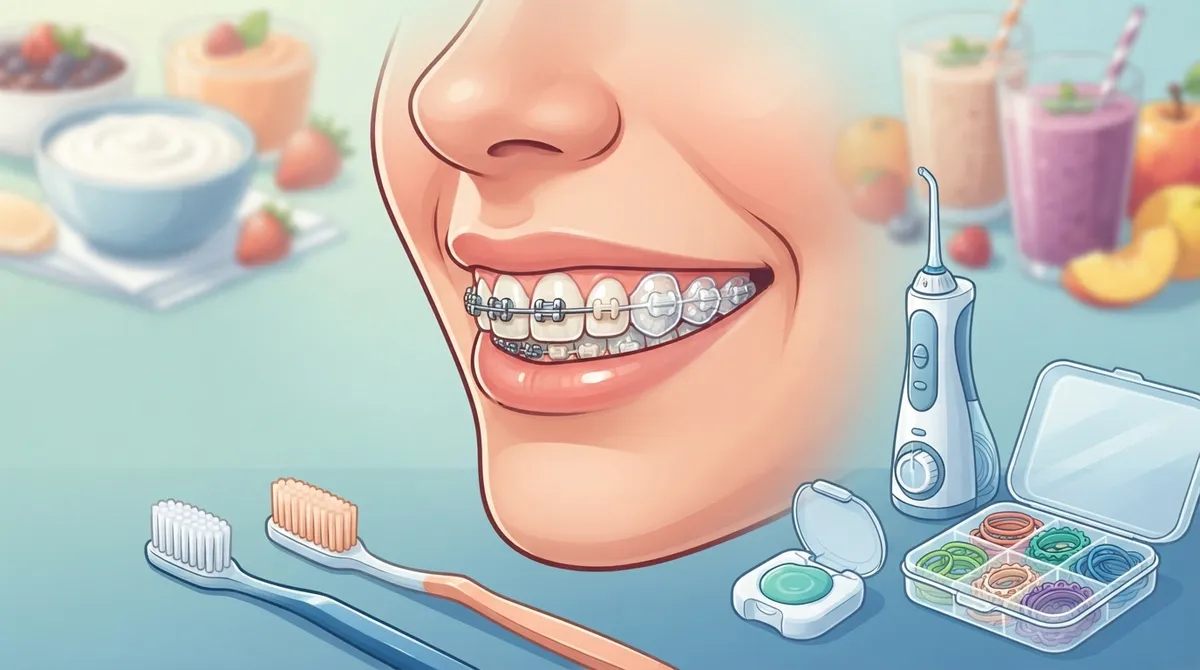
Daily cleaning is critical with braces—brush after meals, use floss threaders or water flossers, and avoid hard/sticky foods like popcorn and candy that can break brackets or bend wires.
-
Average monthly financing payments were $211 in 2024 (not total cost); explore insurance coverage, flexible spending accounts, and payment plans with smaller down payments to manage expenses.
-
Soreness typically lasts a few days after placement and adjustments; soft foods, cold treats, orthodontic wax, and pain relief help, and a custom mouthguard protects teeth during contact sports.
-
Retainers are essential after braces come off—they prevent teeth from shifting back and protect all treatment progress, requiring consistent wear as directed by your orthodontist.
Watching your teen’s smile change is a big deal. Maybe you noticed crowded teeth in the school photo. Maybe your teen asked, “Can I get braces?” Either way, you probably have a lot of questions. What kind of braces work best? How long will they take? Will it hurt?
Good news: you are not alone, and this is very doable. Millions of young people go through orthodontic care every year. According to the American Association of Orthodontists (AAO), its U.S. members treated an estimated 3.77 million patients ages 8 to 17 in 2024. That is a lot of teens smiling with confidence!
This friendly guide walks you through how to choose braces for teenagers step by step. You will learn how to know if your teen needs treatment, how to compare options, what to expect day to day, and how to keep teeth healthy along the way. Let’s get started.
Step 1: Figure Out Whether Your Teen Needs Braces
The first step is simple. Find out if braces are even needed. Age alone does not decide this. Your teen’s teeth, bite, and growth all matter.
The AAO recommends an orthodontic check-up by age 7. That is a screening, not a promise of braces. Many teens start active treatment later, once enough permanent teeth have come in. If your teen is already in middle or high school, it is not too late. Teen years are a very common time to start.
Common Signs Your Teen May Need Braces
Look for these clues:
- Crowded or overlapping teeth
- Gaps between teeth
- An overbite (upper teeth stick out over the lower teeth)
- An underbite (lower teeth sit in front of the upper teeth)
- A crossbite (some upper teeth bite inside the lower teeth)
- Trouble chewing or biting
- Jaws that shift or make sounds
Not sure what you are seeing? Our guide on the early signs you need braces can help you spot the clues. You can also learn how teeth positioning works and how to fix alignment issues.
Step 2: Book an Orthodontic Evaluation
Only an orthodontist can tell you for sure. An evaluation looks at your teen’s teeth, bite, jaw, and growth. Your orthodontist may take photos, X-rays, and digital scans.
At Chacon Orthodontics, Dr. Omar Chacon is a board-certified orthodontist who serves families in Westchase and Brandon. He uses advanced tools like 3D digital imaging to plan treatment. He also speaks English and Spanish, so your whole family can feel comfortable asking questions.
Wondering what happens at that first visit? Take a peek at what to expect at your child’s first visit. Want to talk to us? Our free consultation is a low-pressure way to get answers.
Questions to Bring With You
- What is causing my teen’s alignment or bite problem?
- Does my teen need treatment now, or can we wait?
- Which type of appliance fits my teen best?
- How long will treatment likely take?
- What will it cost, and what payment options are there?
Step 3: Compare Your Braces Options
Today’s teens have choices. The best pick depends on the orthodontic problem, your teen’s lifestyle, and how well they can follow instructions. Here is a quick side-by-side look.
| Option | How It Works | Best For | Things to Consider |
|---|---|---|---|
| Metal braces | Metal brackets and wires stay on the teeth | Many bite and alignment issues, including complex cases | Most visible; fun colored bands available |
| Ceramic braces | Tooth-colored or clear brackets with wires | Teens who want a less noticeable look | Need careful cleaning; may stain if not cared for |
| Clear aligners | Removable clear trays worn about 20-22 hours a day | Mild to moderate cases and responsible teens | Must be worn consistently and removed for eating and cleaning |
Metal Braces
Metal braces are the classic choice, and they work very well. They can handle many types of problems, including tougher cases. Teens can even pick colored bands to show off their style. Learn more about why metal braces are still a top choice and how they compare in our guide on metal vs. ceramic braces.
Ceramic Braces
Ceramic braces use tooth-colored brackets, so they blend in more. They are a nice fit for teens who feel shy about their braces showing. They work in a similar way to metal braces, but they need extra care to keep them clean.
Clear Aligners
Clear aligners are nearly invisible trays that you can take out. Teens like them for photos, sports, and music or band practice. But they only work if they are worn. Your teen needs to keep them in about 20 to 22 hours a day and remove them to eat and clean. If your teen is forgetful, fixed braces may be the smarter choice.
Not sure which way to go? Read our friendly guide on braces vs. clear aligners for your teen. You can also explore teen-friendly clear aligners in Brandon and see our full guide to types of braces.
Step 4: Understand Timing and Appointments
Let’s talk time. Every smile is different, so no two treatment plans look the same. Still, research gives us a helpful picture.
| Topic | What the Research Says |
|---|---|
| Typical treatment length | Often 12 to 24 months; many sources cite about 18 to 24 months |
| Median treatment time (AAO 2025 survey) | 22 months |
| Visits for braces (AAO 2025 survey) | About every 6 weeks (median) |
| Visits for aligners (AAO 2025 survey) | About every 10 weeks (median) |
Some cases take longer, and that is okay. Treatment time depends on how complex the case is and how well your teen follows the plan. Wearing rubber bands on time, keeping appointments, and wearing aligners as directed can all help keep things on track.
Curious how to fit braces into your busy life? Check out how to plan your life around braces treatment duration and our deeper look at how long braces take.
Step 5: Plan for the Cost
Braces are an investment in your teen’s health and confidence. Costs vary by location, treatment type, and your insurance plan, so there is no single price for everyone.
Here is one helpful number. The AAO’s 2025 survey found that patients who financed treatment paid an average of $211 per month in 2024. Keep in mind this is a monthly payment, not the total price. Your orthodontist can explain the full cost for your teen’s plan.
Ways to Make Braces Fit Your Budget
- Ask about monthly payment plans
- Check your dental insurance for orthodontic benefits
- Ask about flexible spending or health savings accounts
- Ask whether a payment plan can start with a smaller down payment
Our team can walk you through the details. Learn more about how dental insurance covers orthodontic treatment, browse braces financing options, or see a clear pricing guide for 2026.
Step 6: Learn Daily Care for Braces
This part is where teens really shine, with a little coaching. Brackets and wires make cleaning harder, so good habits matter a lot. Food can get trapped, and that can lead to cavities and swollen gums.
A Simple Daily Cleaning Routine
- Brush after meals and before bed with fluoride toothpaste.
- Angle the brush to clean above and below the brackets.
- Clean around the wires and between teeth every day, using floss threaders, interdental brushes, or a water flosser.
- Rinse well and check your smile in the mirror for leftover food.
- Keep regular dental checkups in addition to orthodontic visits.
Want more tips? See how to clean teeth with braces every day and how to brush and floss with braces effectively.
Foods to Skip (and Snacks to Enjoy)
Hard, sticky, and crunchy foods can bend wires or pop off brackets. Try to limit these:
- Hard candy, ice, and popcorn kernels
- Chewy or sticky candy like taffy and caramel
- Whole raw apples or carrots (cut them into small pieces instead)
- Sugary drinks like soda and sports drinks
Don’t worry, there is plenty your teen can eat! Soft fruits, yogurt, pasta, eggs, and smoothies are all great picks. Our foods to avoid with braces guide and list of braces-friendly snacks make grocery trips easier.
Step 7: Get Ready for Soreness and Sports
Let’s be honest. Braces can feel sore, especially after they go on and after adjustments. The soreness usually eases within a few days. Soft foods, cold treats, and over-the-counter pain relief (as your orthodontist or doctor advises) can help. Orthodontic wax can protect cheeks from rubbing on brackets.
Find out more in Dr. Chacon’s take on braces pain and tips for easing discomfort fast.
Does your teen play soccer, basketball, or another contact sport? Ask your orthodontist about a mouthguard made to fit over braces. It protects both teeth and lips. If a wire pokes or a bracket breaks, read up on orthodontic emergencies and when to call.
Step 8: Plan for Retainers After Braces
Here is a secret many families miss. Getting braces off is not the finish line. After active treatment, retainers help keep teeth from shifting back. Your teen will need to wear them as directed, and that habit protects all the hard work.
Learn more about why you need a retainer and explore different retainer types. If you live nearby, see how retainers in Westchase help your smile stay straight.
Step 9: Choose the Right Orthodontist for Your Teen
The person behind the braces matters just as much as the braces themselves. Look for an orthodontist who listens, explains things clearly, and makes your teen feel comfortable.
Here is a quick checklist:
- Board certification and specialty training in orthodontics
- Clear communication with both parents and teens
- Modern technology, such as digital scans and imaging
- Flexible payment options
- Convenient office hours and locations
- Bilingual support if your family prefers Spanish
Chacon Orthodontics checks these boxes. We are proud to serve teens and families in Brandon and Westchase, and our team loves helping young patients feel proud of their smiles. Read the top benefits of choosing Chacon Orthodontics for teen braces, or learn about teen braces in Brandon. You can also see why a board-certified orthodontist makes a difference.
Want to hear from real families? Visit us on Google — Chacon Orthodontics Brandon to see what patients say. You can also follow our smiles on Instagram and Facebook, or connect with Dr. Chacon on LinkedIn.
Tips to Help Your Teen Feel Confident
Braces are as much about feelings as teeth. Some teens feel nervous at first, and that is completely normal. A few gentle ideas can help:
- Let your teen help pick the type of braces or the band colors.
- Keep a small “braces kit” in the backpack with a travel toothbrush, floss picks, wax, and a case for aligners or retainers.
- Celebrate small wins, like the first month done or the first adjustment.
- Take a “before” photo so your teen can look back on progress. Our before-and-after transformations show what is possible.
Remember, the goal is a healthy bite and a smile your teen loves. You are helping build that, one appointment at a time.
Ready to Take the Next Step?
Choosing braces for teenagers does not have to feel overwhelming. Start with an evaluation, compare your options, plan for cost and daily care, and pick an orthodontist you trust. Your teen’s future smile is worth the effort, and you have got this.
Ready to talk with a friendly team? Book your free consultation at Chacon Orthodontics today, or contact us with any questions. We would love to meet you and your teen in Brandon or Westchase!
FAQs
Q: What age should a teenager get braces?
A: There is no single perfect age. Many teens start braces once most of their permanent teeth have come in, but the right timing depends on each teen’s teeth, bite, and growth. The AAO suggests a first check-up by age 7, and an orthodontist can tell you when to begin.
Q: How long do braces take for teenagers?
A: Most teens wear braces for about 12 to 24 months, and many sources say around 18 to 24 months. The AAO’s 2025 survey found a median treatment time of 22 months. Some cases take longer, and following your orthodontist’s directions helps keep things on schedule.
Q: Do braces hurt, and what can teens do about soreness?
A: Braces can feel sore for a few days after they go on and after adjustments, but the ache usually fades quickly. Soft foods, cold treats, orthodontic wax, and over-the-counter pain relief (as advised by your provider) can help your teen feel more comfortable.
Q: What foods should teenagers avoid with braces?
A: Skip hard, sticky, and crunchy foods like ice, hard candy, taffy, caramel, and popcorn kernels, since they can bend wires or break brackets. Cut firm fruits and veggies into small pieces, and limit sugary drinks to protect teeth from cavities.
Q: How much do braces cost for teenagers, and does insurance help?
A: Costs vary by treatment type, location, and insurance plan, so a personal quote is best. Many families use monthly payment plans, and some dental plans cover part of orthodontic care. The AAO’s 2025 survey reported an average financing payment of $211 per month in 2024, but that is not the total price.





