Key Takeaways
-
There is no single winner: braces and clear aligners both straighten teeth, and the right choice depends on your bite, goals, daily routine, and your orthodontist's exam.
-
Braces stay fixed and work around the clock, making them better suited for moderate to severe crowding, complex bite problems, and significant tooth movement.
-
Clear aligners are removable and nearly invisible, but they must be worn at least 22 hours a day, so they only work well for patients committed to consistent wear.
-
Research is mixed: a 2025 meta-analysis found no clear aligner advantage for straightforward non-extraction cases, while braces may offer more predictable control for tricky movements.
-
With aligners, always brush and clean teeth before reinserting trays, since trapping food or plaque against teeth can cause cavities and gum problems.
-
A personal orthodontic exam, including tools like 3D imaging, is the best way to determine which option fits your specific case, and retainers are usually needed afterward either way.
Choosing between braces and clear aligners can feel like picking a path on a map with no signs. You want straighter teeth. You want a smile you love. But which tool should get you there? If you have been asking yourself braces vs clear aligners, you are in good company.
Here is the friendly truth: there is no single winner for everyone. Both options gently move teeth into better positions. Both can give you a healthy, confident smile. The right pick depends on your bite, your goals, your daily routine, and what your orthodontist finds during your exam.
In this guide, we will walk through how each option works, where each one shines, and what daily life looks like with both. Whether you are a parent planning for your child, a teen juggling sports and school, or an adult who wants a low-profile option, you will find clear answers here. Let’s dive in together!
How Do Braces and Clear Aligners Actually Work?
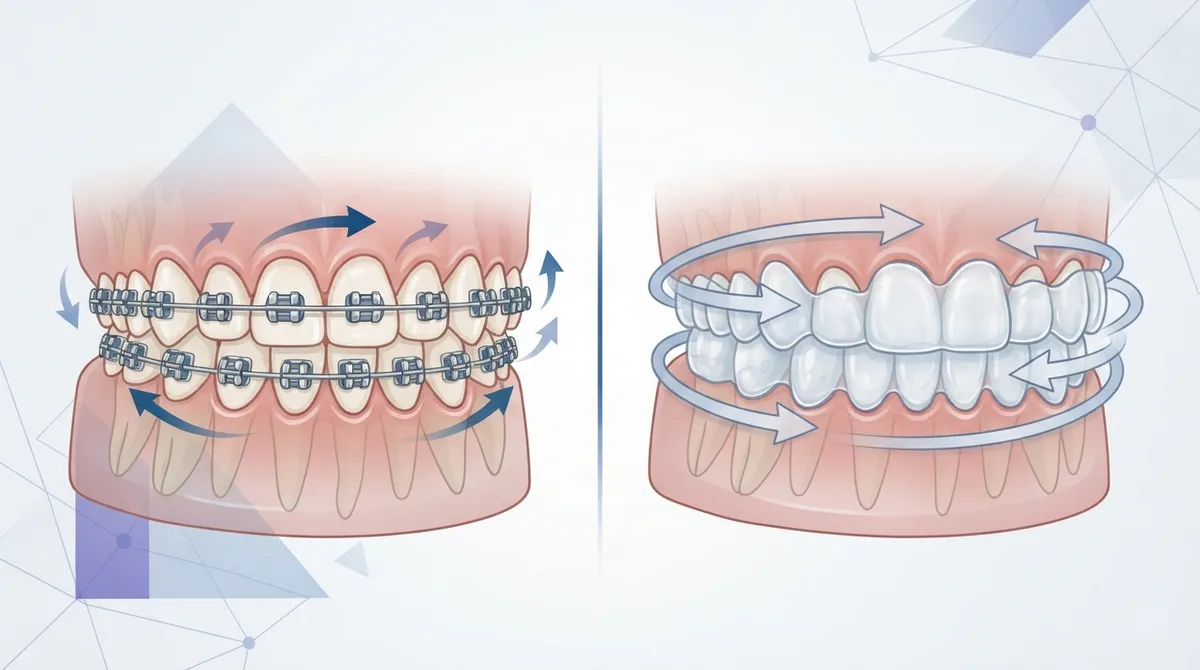
Both treatments use gentle, steady pressure to move teeth. The difference is how that pressure is delivered.
How Braces Work
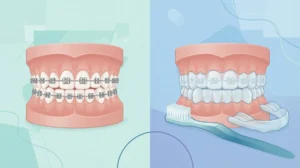
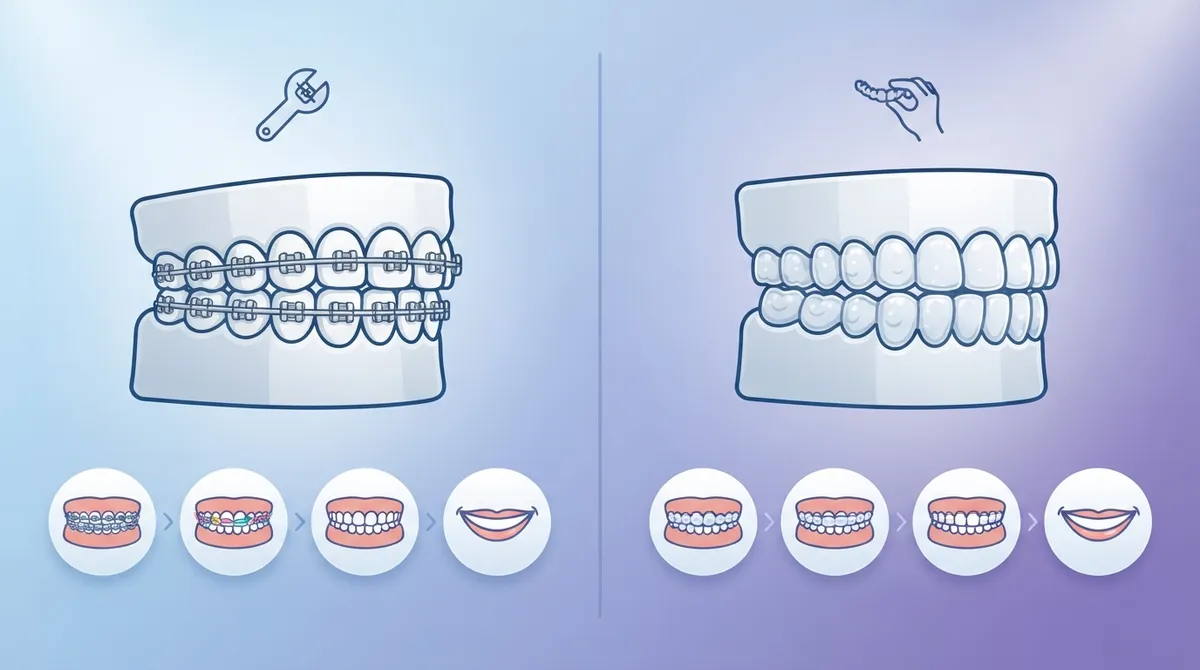
Braces use small brackets and wires that stay fixed on your teeth. The wire guides your teeth along a planned path. Your orthodontist adjusts the wire over time to keep things moving. Because braces stay on all day, they work around the clock without any extra effort from you. Want the basics from start to finish? Our guide to braces treatment steps from start to finish walks you through it.
How Clear Aligners Work
Clear aligners are custom-made, see-through trays. Each tray fits snugly over your teeth and moves them a tiny bit. Every so often, you switch to the next tray in the series. Aligners are removable, which means you take them out to eat and brush. If you want to learn more about how the trays work, check out removable aligners and how clear trays straighten your smile.
Braces vs Clear Aligners: A Quick Side-by-Side Look
Sometimes a simple chart says it best. Here is how the two options compare in everyday terms.
| Feature | Braces | Clear Aligners |
|---|---|---|
| How they attach | Brackets and wires fixed to teeth | Removable, custom-made trays |
| Visibility | Visible (metal, ceramic, or colored options) | Nearly invisible |
| Eating | Avoid hard, sticky, chewy foods | Remove trays to eat |
| Cleaning | Brush and floss around hardware | Remove trays to brush and floss |
| Wear time | Always on | Typically at least 22 hours a day |
| Case range | Broad range of bite and alignment issues | Often mild to moderate; case-dependent |
| Compliance needed | Low, since they stay on | High, since you control wear time |
Keep in mind that this table is a general guide. Your own mouth is unique, and your orthodontist will tell you what fits best.
What Can Braces Treat?
Braces are known for handling a wide range of orthodontic problems. That includes simple crowding and gaps, but also more complex bite concerns. Because the brackets and wires stay fixed, your orthodontist has strong control over how each tooth moves.
Braces are often a great fit for:
- Moderate to severe crowding
- Bite problems like overbites, underbites, and crossbites
- Teeth that need significant turning or shifting
- Patients who may struggle to wear removable trays consistently
There are also several styles to choose from. Curious about your options? Our guide to types of braces breaks them down, and you can compare metal braces vs ceramic braces if you want a lower-profile look.
What Can Clear Aligners Treat?
Clear aligners are popular for a reason. They are discreet, removable, and comfortable for many people. They are commonly used for mild to moderate alignment concerns, like minor crowding or small gaps.
Can aligners handle bigger problems? Sometimes, yes. But it really depends on the case. Complex bite issues or big rotations may call for a different approach. That is why your orthodontist’s exam matters more than any general rule you read online.
Research backs up this careful view. A 2024 systematic review of clear-aligner accuracy and stability looked at six studies. It found good evidence for selected movements and mild crowding. It also noted small sample sizes and limited long-term follow-up. In plain words: aligners can work well, especially for the right cases, and we still have more to learn.
What Does the Research Say?
You might wonder if science has crowned a champion. The honest answer is no. The research is mixed, and many studies are limited by quality and by differences in case difficulty.
- A 2025 systematic review and meta-analysis looked at 21 randomized controlled trials with 970 participants. It found no clear aligner advantage for straightforward non-extraction cases. It also noted possible benefits in pain, treatment time, and number of visits, but the evidence quality was limited.
- A 2024 review in the Journal of Orthodontic Science included five studies. It reported average Objective Grading System scores of 17 for braces and 12 for aligners, with no clinically significant difference noted. The authors called for more research.
The takeaway? Both tools can deliver great results in skilled hands. Fixed braces may give more predictable control for some tricky movements. Aligners can be a wonderful choice for selected cases. Treatment time cannot be guessed from the appliance alone.
Daily Life: Eating, Cleaning, and Comfort
Let’s talk about what really matters day to day. How will each option feel in real life?
Eating and Drinking
With braces, you will skip hard, sticky, and chewy foods that can bend wires or pop brackets. Think caramel, hard candy, and whole raw apples. Not sure what to avoid? Our list of braces diet restrictions makes it easy.
With aligners, you pop the trays out for meals. The American Association of Orthodontists (AAO) advises wearing them at least 22 hours a day. While the trays are in, stick to plain water. After eating, brush your teeth before putting the trays back in.
Keeping Teeth Clean
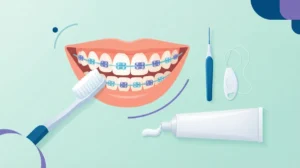
Good hygiene matters with either option. Brackets and wires can make brushing and flossing trickier, so it takes a little extra care. Our tips on how to brush with braces and flossing with braces can help.
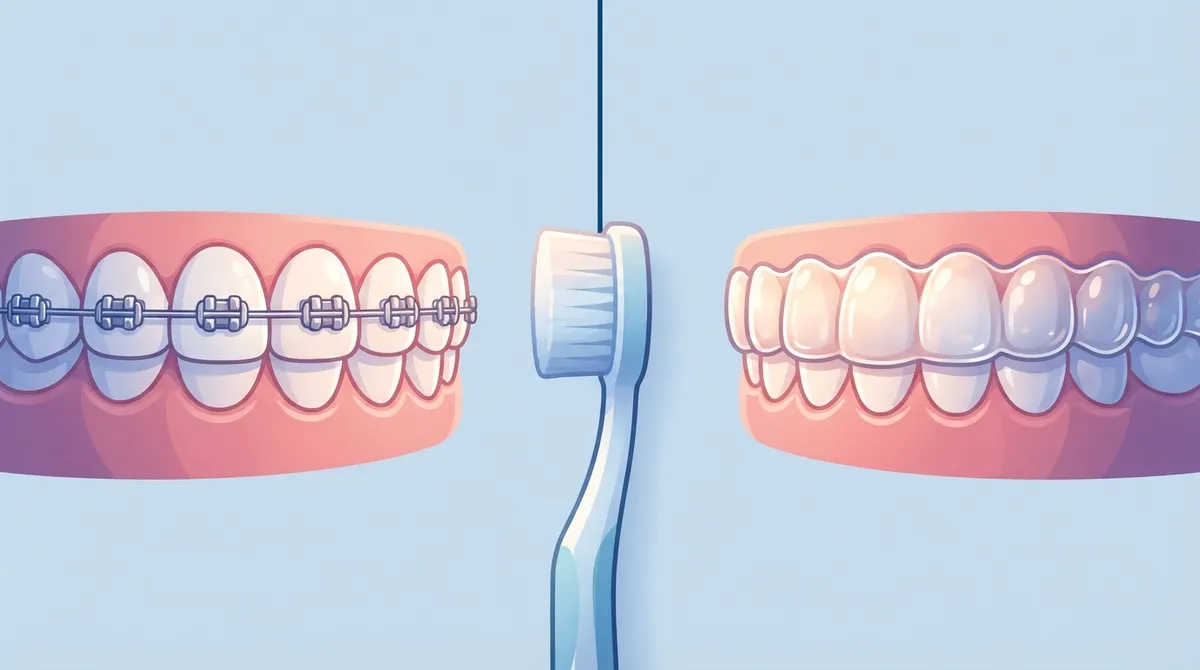
Aligners come out for cleaning, which is a nice perk. But here is a catch: wearing trays over teeth that still have food or plaque on them can lead to cavities or gum problems. Clean teeth first, then trays go back in.
Pain and Soreness
Good news and honest news. Both options can cause some pressure or soreness as teeth move. Braces may also rub the cheeks or lips. Aligners can feel snug when you start a fresh tray. Everyone’s experience is different, and most people find the feeling fades within a few days. If you want quick relief ideas, see how to ease braces soreness fast.
Which Option Fits Which Person?
Every smile story is different. Here are a few common situations and how each option might fit in.
For Parents of Children
Younger kids are still growing, so timing matters. An early evaluation helps you know when to start. Braces are often chosen for kids because they stay on and do not rely on a child remembering to wear trays. Still, your orthodontist will recommend what suits your child’s bite. Learn more in when should your child really get braces.
For Teens
Teens have busy lives, with school, sports, friends, and photos. Aligners can feel appealing for their low-profile look. But they only work if worn about 22 hours a day. If that sounds tough, braces might be a smoother path. Some teens even love picking colored bands! Our guide on how to choose braces for teenagers can help families decide together.
For Adult Professionals
Adults often want treatment that does not get in the way of work and meetings. Clear aligners can be a great match when the case allows. Braces are still a strong choice, too, especially for tougher bite problems. Many adults are surprised to learn how many options exist. Explore braces for adults options or see why adults need a braces specialist.
For Image-Conscious Smile Seekers
If looks matter most to you, you have choices. Aligners are nearly invisible. Ceramic braces blend in with the teeth. The best part is that your orthodontist can help you weigh looks against your treatment needs, so you do not have to guess.
5 Questions to Ask Yourself Before You Decide
Not sure where you land? Try these questions. They can help you get ready for your consultation.
- How complex is my bite? Bigger bite problems may need the control that braces offer.
- Can I wear trays about 22 hours a day? Be honest. Aligners only work if you wear them.
- How do I feel about food limits? Braces mean skipping certain foods. Aligners mean taking trays out at meals.
- How important is a discreet look? This may push you toward aligners or ceramic braces.
- What is my budget and timeline? Costs vary by case. See our braces cost guide and learn how to find braces financing that fits.
Want even more help? Check out 5 ways to choose between clear aligners vs braces and how to choose between braces vs Invisalign.
Do You Still Need a Retainer?
Yes, in most cases. After active treatment ends, retainers help keep your teeth where your orthodontist moved them. This is true whether you had braces or aligners. Your orthodontist will set the best retention plan for you. Find tips in braces retainers tips to keep your smile straight.
Why an Orthodontist’s Exam Matters Most
Here is the heart of it. Articles like this one can guide you, but they cannot see your teeth. Only an exam can tell you whether braces, aligners, or another plan makes the most sense.
A board-certified orthodontist has extra years of training in moving teeth and guiding jaws. At Chacon Orthodontics, Dr. Omar Chacon uses advanced tools like 3D digital imaging to plan treatment that is personal to you. He is fluent in English and Spanish, so families can talk through their options in the language they feel most comfortable with. If you are comparing providers, see orthodontist vs dentist for braces for helpful context.
Curious what other families think? You can visit us on Google — Chacon Orthodontics West Chase to see reviews from patients in the Westchase area. You can also follow our smile stories on Instagram and Facebook, or connect with Dr. Chacon on LinkedIn.
Ready to Find Your Best Fit?
The braces vs clear aligners debate does not have to be stressful. Both options are proven ways to straighten teeth. Braces offer wide-ranging control and work around the clock. Aligners offer a discreet, removable choice for selected cases and rely on your steady wear.
The best next step is a personal evaluation. Our team serves families in Westchase and Brandon with caring, bilingual service. Take the first step by booking your free consultation, or contact us with any questions. We would love to help you find the path to a smile you are proud to share!
FAQs
Q: Are braces or clear aligners better for my teeth?
A: Neither one is better for everyone! The best choice depends on your bite, your goals, and your orthodontist’s exam. Braces handle a very wide range of cases, while aligners can be a great discreet option for selected ones.
Q: How many hours a day do I need to wear clear aligners?
A: The American Association of Orthodontists advises wearing aligners at least 22 hours a day. You will take them out for meals and brushing. Your orthodontist will also set how often you switch to a new tray.
Q: Can clear aligners fix an overbite, underbite, or severe crowding?
A: Sometimes, but it depends on the case. Aligners are most commonly used for mild to moderate issues, and complex bite problems or big rotations may need braces. Your orthodontist can tell you what is realistic for your smile.
Q: Which is more painful: braces or clear aligners?
A: Both can cause some temporary pressure or soreness as teeth move. Braces may also rub the cheeks or lips, and aligners can feel tight with each new tray. Most people feel better within a few days.
Q: Do I need a retainer after braces or clear aligners?
A: Yes, in general. Retainers help keep your teeth in their new positions after treatment, no matter which option you used. Your orthodontist will create the best retention plan for you.