
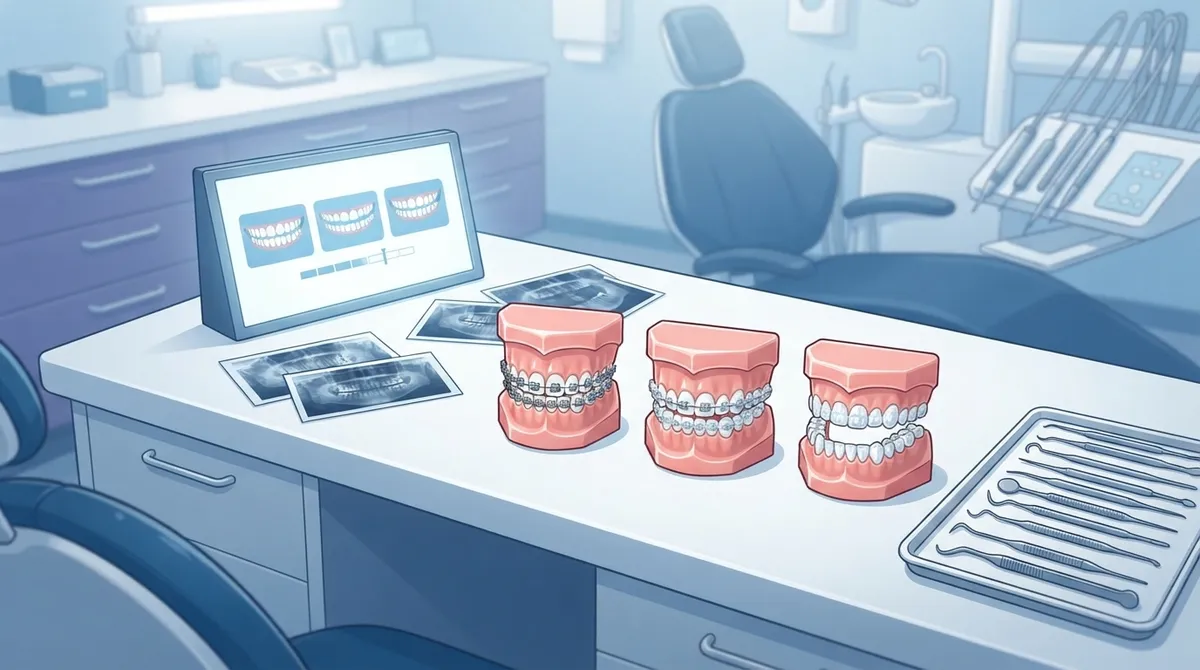
Key Takeaways
-
Verify credentials: Look for a licensed dentist with accredited orthodontic residency training (2-3 years beyond dental school) and board certification, plus specific experience treating your case type.
-
Demand objective outcome measurement: Ask if the practice uses standardized systems like PAR or ABO-OGS to track bite function and tooth positioning, not just before-and-after photos.
-
Get honest communication during consultation: Avoid providers who rush you, promise guaranteed results, or recommend only one treatment option; compare answers from 2-3 orthodontists side by side.
-
Understand your treatment options realistically: Braces typically deliver more predictable results for complex cases, while aligners work better for mild-to-moderate issues requiring high patient compliance.
-
Commit to a solid retention plan: Ask about retainer type, wear schedule, and replacement policy before finishing treatment, since teeth naturally shift over time without consistent retention.
-
Compare reviews and practices wisely: Look for patterns across multiple reviews mentioning communication and follow-up care rather than cherry-picked testimonials; verify case examples match your situation.
Searching for an “orthodontist with best results” can feel confusing. Every website shows perfect smiles. Every review sounds glowing. But how do you really know who delivers lasting, healthy outcomes and not just a pretty photo? The truth is, the best results come from more than straight-looking teeth. They come from a healthy bite, stable roots, happy gums, and a smile that stays put for years to come.
Whether you’re a parent watching your child’s teeth come in crooked, a teen who wants a confident smile for prom photos, or a busy professional considering clear aligners, this guide will help you cut through the marketing noise. We’ll walk through exactly what to look for, what questions to ask, and how real orthodontic outcomes get measured. By the end, you’ll feel ready to choose a provider with confidence, whether that’s a practice near Brandon, Westchase, or anywhere else in Florida.
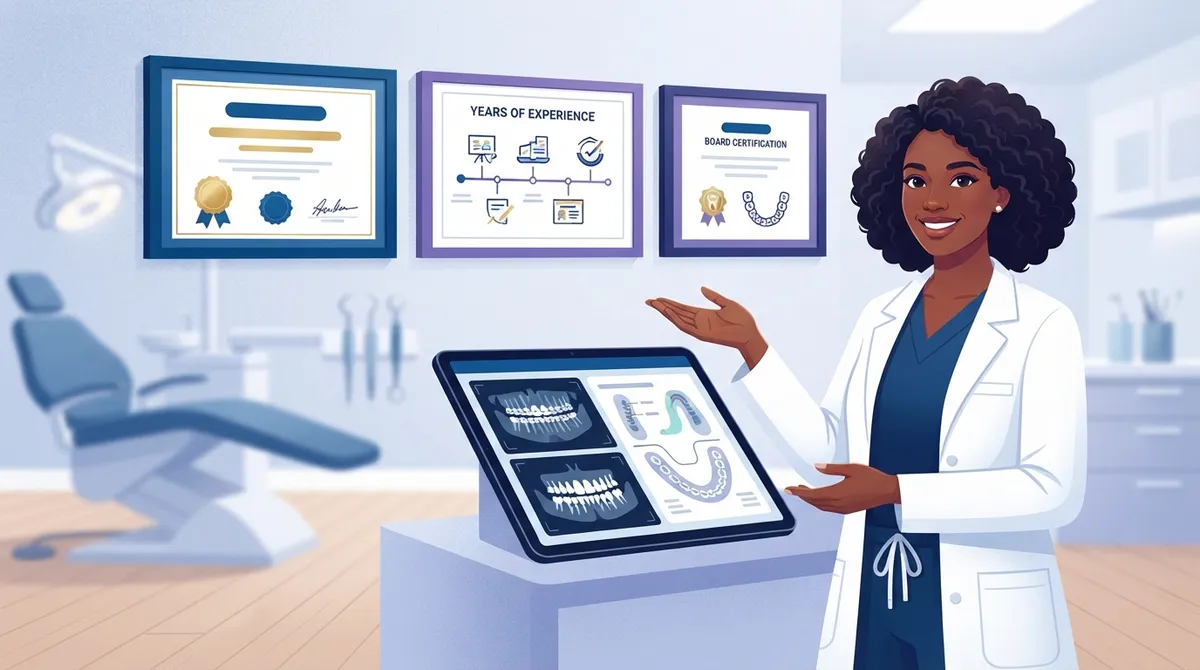
1. They Have the Right Credentials and Real Experience
The first sign of an orthodontist with best results is proper training. This might sound obvious, but it’s easy to overlook when a practice has beautiful marketing and a friendly smile in every photo.
What Credentials Actually Matter
Look for a provider who is a licensed dentist with additional, accredited postgraduate training specifically in orthodontics. This extra schooling usually takes two to three years beyond dental school. Board certification is another strong signal of quality, though it’s not the only one worth considering.
- Licensed dentist with accredited orthodontic residency training
- Board certification or specialist recognition (an added quality signal)
- Experience treating your specific type of case, such as severe crowding or a bad bite
- Membership in professional orthodontic associations
- A track record you can verify through reviews, before-and-after cases, or referrals
Dr. Omar Chacon of Chacon Orthodontics is a board-certified orthodontist with more than a decade of experience treating children, teens, and adults. You can learn more about his background on the Dr. Omar Chacon page, or read about why board-certified orthodontist status matters before booking your first visit.
Ask About Experience With Your Specific Case
Not all malocclusions are created equal. Some cases involve simple spacing issues. Others involve jaw alignment problems, severe crowding, or a mix of concerns. An orthodontist with the best results will happily explain their experience with cases similar to yours. If they seem vague or rushed when answering, that’s worth noting.
| Credential or Signal | Why It Matters |
|---|---|
| Accredited orthodontic residency | Confirms specialized training beyond general dentistry |
| Board certification | Shows ongoing commitment to quality standards |
| Case-specific experience | Ensures familiarity with your exact type of bite or alignment issue |
| Bilingual communication | Reduces misunderstandings and builds patient trust |

2. They Measure Results With Real Data, Not Just Photos
Before-and-after photos are fun to look at, but they don’t tell the whole story. A smile can look straight in a photo while the bite underneath is still off. This is where objective measurement tools come in.
Understanding Objective Grading Systems
Orthodontists can use standardized systems like the Peer Assessment Rating (PAR) and the American Board of Orthodontics Objective Grading System (ABO-OGS) to measure treatment quality. These tools look at things like tooth alignment, bite contacts, overjet, overbite, and root positioning.
A 2024 systematic review looking at 20 trials and 1,470 patients treated with fixed braces found an average PAR reduction of 82.6%, meaning most patients saw dramatic improvement in bite and alignment. This kind of data matters more than a single flattering photo because it reflects function, not just looks.
What the Research Says About Outcomes
A 2020 systematic review published in the European Journal of Orthodontics compared aligner treatment to fixed braces across 11 studies and 887 patients. It found aligner treatment was associated with a lower ABO-OGS score on average, with a mean difference of 9.9 points. Patients treated with aligners in that review were also more likely to have an unacceptable result based on the study’s criteria, with a relative risk of 1.6.
This doesn’t mean aligners are a poor choice. It means results depend heavily on case complexity, patient compliance, and the orthodontist’s skill with that particular tool. A good provider will tell you honestly whether your case is a strong match for aligners or if braces might get you a more predictable outcome.
- Ask if the practice tracks outcomes using objective scoring systems
- Request to see comparable before-and-after case examples, not just cherry-picked photos
- Ask how they measure whether a bite is functionally correct, not just visually straight
- Find out how they handle cases that don’t progress as expected
3. They Provide Thorough Consultations and Honest Communication
The consultation is where you really get to see how an orthodontist operates. A high-quality visit should never feel rushed or vague.
What a Great Consultation Includes
During a proper evaluation, expect a clinical exam, photographs, and possibly x-rays or digital scans. The orthodontist should walk you through a diagnosis, explain your treatment options, and give you a realistic timeline and cost estimate. You can learn more about this process on the what happens during an orthodontic exam page.
- A full clinical exam with photos and imaging
- A clear diagnosis explained in plain language
- Discussion of all reasonable treatment alternatives, not just one option
- Estimated treatment duration and total cost
- Explanation of risks and what “success” looks like for your case
Be cautious of any provider who promises a guaranteed, identical result. Every mouth is different, and biology doesn’t always follow a script. A trustworthy orthodontist will set realistic expectations rather than making big promises just to win your business.
Questions to Ask During Every Consultation
If you’re comparing two or three orthodontists (which we highly recommend), ask each one the same set of questions. This makes it much easier to compare answers side by side.
- What is your diagnosis, and what caused this issue?
- What treatment options do you recommend, and why this one over the alternatives?
- How will you measure whether treatment was successful?
- What happens if my results don’t turn out as expected?
- What does the retention plan look like after treatment ends?
Practices offering a Free Consultation make this comparison process easier and more affordable. It’s a great way to meet the team, ask your questions, and see if the office feels like the right fit for your family.
Choosing Between Aligners and Braces for the Best Outcome
One of the most common questions patients ask is whether clear aligners or traditional braces will give them the best result. The honest answer is: it depends on your case.
| Factor | Clear Aligners | Traditional Braces |
|---|---|---|
| Best for | Mild to moderate spacing and alignment issues | Complex movements, severe crowding, extraction cases |
| Visibility | Nearly invisible | Visible, though ceramic options exist |
| Compliance needed | High — must wear 20-22 hours daily | Lower — appliance is fixed in place |
| Control over tooth movement | Good for selected cases | Generally greater precision for complex cases |
You can read more about this comparison in our guide on traditional braces vs clear aligners. For many teens and adults, removable aligners offer a discreet path to a straighter smile, especially for those with busy social calendars or professional appearances to maintain.
Why Retention Is Part of “Best Results”
Here’s something many patients don’t realize: finishing treatment isn’t the finish line. Teeth naturally want to shift over time, so a solid retention plan is essential for keeping your results.
The 2023 Cochrane review on orthodontic retention found the certainty of evidence for different retainer approaches was low or very low. This means there isn’t one proven “best” retainer schedule for everyone. What matters most is that your orthodontist gives you clear instructions, a realistic wear schedule, and a plan for repairs or replacements if needed.
- Ask what type of retainer you’ll receive (clear, wire, or both)
- Ask how long you’ll need to wear it, and whether that changes over time
- Find out the replacement policy if a retainer is lost or damaged
- Understand that some retention may be needed indefinitely to protect your investment
Our retainer guide for Westchase patients covers this topic in more detail if you want to dig deeper.
How to Compare Reviews and Photos the Smart Way
Online reviews and photo galleries are useful, but they have limits. A five-star review tells you about someone’s experience in the waiting room. It doesn’t tell you whether their bite is functioning well two years later.
Tips for Reading Reviews Wisely
- Look for patterns across many reviews, not just one glowing testimonial
- Pay attention to comments about communication and follow-up care
- Notice if reviewers mention specific case types similar to yours
- Remember that photos may show selected, best-case examples
You can check out real patient experiences by visiting our Patient Testimonials page, or see what our Chacon Orthodontics Brandon community says by visiting our Google Business Profile for Chacon Orthodontics Brandon. Following practices on platforms like Instagram or Facebook can also give you a sense of everyday patient interactions and community involvement.
A Simple Checklist Before You Choose
Feeling a little overwhelmed? That’s totally normal. Here’s a simple checklist to keep things manageable.
- Confirm credentials and specialized training
- Schedule two or three consultations to compare
- Ask about objective outcome tracking, not just photos
- Discuss retention plans before you commit
- Trust your gut about communication and comfort level
Bilingual families in the Westchase and Brandon areas often appreciate providers who communicate clearly in both English and Spanish. This reduces confusion and builds trust every step of the way, especially when discussing treatment options for children or teens.
Bringing It All Together
Finding an orthodontist with the best results isn’t about chasing the flashiest Instagram photo or the cheapest price. It’s about finding a provider with real credentials, honest communication, data-driven treatment planning, and a solid retention strategy. Whether you’re exploring options for your child’s first evaluation, considering aligners as a busy professional, or simply want a smile you’ll love for years, taking time to compare providers pays off.
Dr. Omar Chacon and the team at Chacon Orthodontics bring board-certified expertise, bilingual care, and advanced technology to families throughout Westchase and Brandon, Florida. You can learn more about his professional background on LinkedIn. If you’re ready to see what personalized, results-focused orthodontic care looks like, we’d love to meet you. Schedule Your Free Consultation today and take the first step toward a smile you’ll be proud to share.
FAQs
Q: How do I find an orthodontist with the best results near me?
A: Start by checking credentials, then schedule a couple of consultations to compare communication style and treatment planning. Ask each provider how they measure success and whether they track objective outcomes like bite function and stability, not just how straight teeth look in photos.
Q: Are clear aligners or braces more likely to produce the best results?
A: It really depends on your specific case. Research shows braces may offer more predictable outcomes for complex movements, while aligners work great for milder cases, so the best choice comes down to your diagnosis and your orthodontist’s recommendation.
Q: Can an orthodontist guarantee my treatment result?
A: No responsible orthodontist can guarantee an identical or perfect result, since every mouth responds differently to treatment. Instead, look for a provider who sets realistic expectations and explains what could happen if results need adjustment along the way.
Q: How long do orthodontic results last after braces or Invisalign?
A: Results can last a lifetime, but only with consistent retainer wear, since teeth naturally want to shift back over time. Your orthodontist should give you a clear, personalized retention plan and follow-up schedule to help protect your smile long after treatment ends.
Q: What questions should I ask during an orthodontic consultation?
A: Great questions include asking about your diagnosis, treatment alternatives, expected timeline, and how success will be measured. It’s also smart to ask what happens if the results don’t turn out as planned, since this shows how the practice handles unexpected situations.