
Key Takeaways
-
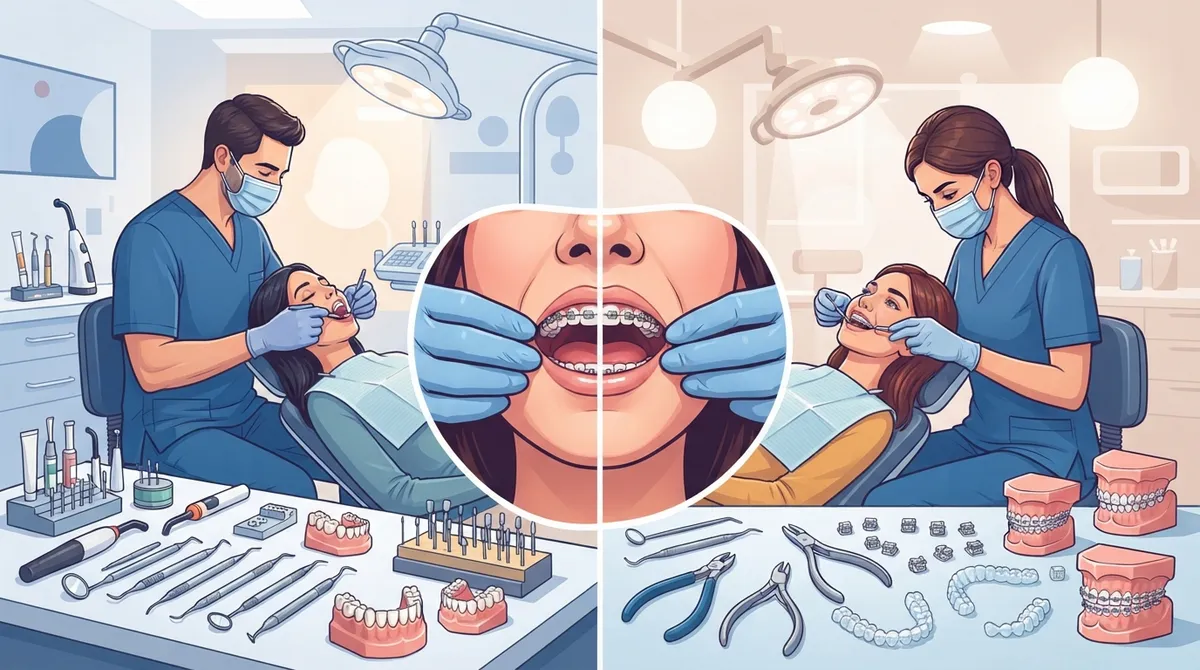
Specialist orthodontists complete 2-3 years of accredited residency training (3,700+ hours) focused entirely on tooth movement and bite correction, whereas general dentists learn orthodontics as part of broader dental education covering fillings, crowns, and gum care.
-
Placing braces or aligners doesn't automatically make someone an orthodontist; ask providers directly if they completed an accredited residency, are board-certified, and how many years they've focused specifically on orthodontic cases.
-
Complex cases involving significant bite issues, impacted teeth, jaw growth concerns, or failed prior treatment almost always need specialist care, while simple crowding cases may be handled by trained general dentists.
-
General dentists play a valuable early detection role by spotting orthodontic problems during routine checkups and referring patients to specialists, creating a beneficial teamwork approach for patient care.
-
Cost depends on case complexity, treatment type, provider experience, and insurance coverage rather than credentials alone; many practices offer flexible payment plans to make specialist treatment more accessible.
-
A team approach combining regular general dental care with specialist orthodontic treatment produces better results, as general dentists maintain oral hygiene and gum health while orthodontists focus on alignment and bite correction.
Choosing who straightens your teeth is a big decision. Should you see a general dentist or a specialist orthodontist? Many families in Westchase and Brandon ask us this exact question every week. The truth is, both types of providers play important roles in your smile journey, but they are not the same thing.
Here’s the short answer: a specialist orthodontist has years of extra training focused only on tooth movement and bite correction. A general dentist handles overall oral health and may offer basic orthodontic services too. Knowing the difference helps you pick the right provider for your specific needs, whether you’re a parent watching your child’s growing smile, a teen who wants discreet treatment, or an adult ready to finally fix that shifting bite.
In this guide, we’ll break down six key facts about specialist orthodontist vs general dentist care. We’ll cover training, treatment complexity, costs, and how to know when you need extra expertise. Let’s get started so you can make a confident, informed choice for your smile.

1. Specialist Orthodontists Complete Years of Extra Training
A general dentist finishes dental school and can start practicing right away. A specialist orthodontist takes a different path. After dental school, they spend an additional two to three years in an accredited orthodontic residency program.
According to the American Association of Orthodontists, this specialty training includes about 3,700 hours focused entirely on tooth movement, jaw growth, facial development, and bite relationships. That’s a lot of extra classroom and hands-on learning just for orthodontics.
This deep focus means specialists spend years studying only how teeth and jaws move and grow. General dentists, on the other hand, learn a little about orthodontics as part of a much broader dental education that also covers fillings, crowns, gum care, and more.
Why This Training Gap Matters
Think of it like this: a general dentist is like a family doctor who handles overall health. A specialist orthodontist is like a cardiologist who focuses only on the heart. Both are valuable, but you’d want the heart specialist for a complex heart issue.
If you want to learn more about what makes a provider a true specialist, check out our article on why board-certified orthodontist status matters.
2. Placing Braces Doesn’t Automatically Make Someone an Orthodontist
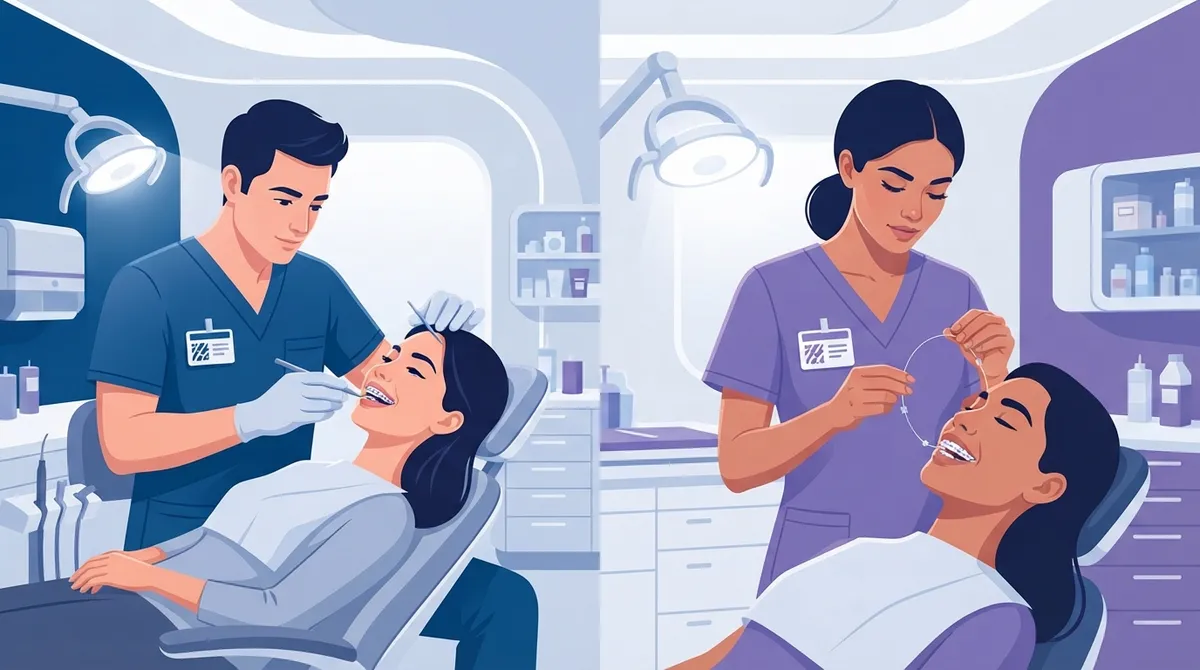
Here’s something many patients don’t realize. In many places, a general dentist can legally offer braces or clear aligners without completing specialist training. This means the appliance being used doesn’t tell you who is treating you.
The real distinction comes down to specialization, not just what tools are used. A dentist who places braces occasionally is different from an orthodontist who does it every single day, all day, for years.
Before starting treatment, ask your provider these simple questions:
- Did you complete an accredited orthodontic residency program?
- Are you listed on a recognized specialist register or board?
- How many years have you focused specifically on orthodontic cases?
- What happens if my case becomes more complex than expected?
These questions help you understand exactly who is guiding your treatment plan. For a deeper look at credentials, read our guide on how to choose the right orthodontist near you for braces or aligners.
3. General Dentists Are Often the First to Spot Problems
Your general dentist plays a valuable role too. During routine checkups, they often notice early signs of crowding, overbite, crossbite, or jaw development issues. This is one of the biggest strengths of general dental care.
Many parents learn about their child’s orthodontic needs during a regular dental cleaning. The dentist spots something unusual and suggests a referral. This teamwork between general dentists and specialists benefits patients enormously.
Common signs a general dentist might catch include:
- Crowded or overlapping teeth
- Noticeable gaps between teeth
- Teeth that don’t meet correctly when biting down
- Jaw that shifts to one side
- Teeth coming in at odd angles
- Difficulty chewing or speaking clearly
If your dentist spots any of these signs, it’s smart to follow up. Our article on early signs you need braces covers this topic in more detail for parents.
4. Complex Cases Really Do Need a Specialist
Not every orthodontic case is the same. Some are simple and straightforward. Others involve serious jaw growth issues, impacted teeth, or bite problems that affect the whole face. This is where specialist orthodontists truly shine.
Here’s a simple table comparing when each provider type is typically most appropriate:
| Case Type | General Dentist | Specialist Orthodontist |
|---|---|---|
| Mild crowding or spacing | Sometimes appropriate | Also appropriate |
| Moderate to severe crowding | Usually referred out | Recommended |
| Impacted teeth | Referral needed | Recommended |
| Jaw growth or skeletal issues | Referral needed | Recommended |
| Relapse after prior treatment | Referral needed | Recommended |
| Cases needing surgery coordination | Referral needed | Recommended |
The clinical difficulty of your case should guide your choice, not simply whether you want braces or clear aligners. For a closer look at how bite issues are assessed, see our post on understanding teeth positioning and fixing alignment issues.
Situations That Almost Always Call for a Specialist
Certain conditions are complex enough that specialist care is generally the safer path. These include:
- Significant overbite, underbite, or crossbite
- Impacted or unerupted teeth
- Jaw growth concerns in growing children
- Cases requiring coordination with oral surgery
- Treatment that didn’t work well previously
- Uncertain or unclear diagnosis
Learn more about specific bite concerns in our guide on overbite vs underbite: understanding bite problems.
5. Cost and Access Depend on More Than Just Credentials
Many patients wonder if seeing a specialist automatically costs more than treatment from a general dentist. The answer isn’t always simple. Pricing depends on your specific case, the technology used, your location, and your insurance coverage.
In many healthcare systems, you don’t need a referral to book a private consultation with an orthodontist. That said, general dentists commonly refer patients when a case looks like it needs specialist attention. Public healthcare eligibility rules vary widely by region, so what applies in one area may not apply in another.
Here are a few factors that affect your total treatment cost:
| Factor | Impact on Cost |
|---|---|
| Case complexity | More complex cases often require more visits |
| Treatment type (braces vs aligners) | Varies by material and technology used |
| Provider experience | Specialists may charge based on focused expertise |
| Insurance coverage | Plans differ on what’s included |
| Payment plan options | Monthly plans can make treatment more accessible |
At Chacon Orthodontics, we offer flexible payment plans and work with many insurance providers to make treatment more affordable for families in Westchase and Brandon. You can also explore our Free Consultation to get clear pricing before committing to anything.
6. A Team Approach Often Gives the Best Results
The good news is you don’t have to choose sides. Many patients benefit from both a general dentist and a specialist orthodontist working together. Your dentist keeps your teeth and gums healthy while your orthodontist focuses on straightening and bite correction.
Treatment should generally be postponed until active tooth decay or gum disease is under control. This is why your general dentist’s role in oral hygiene matters so much, even during orthodontic treatment. A healthy mouth is a stable foundation for any orthodontic work.
Here’s how the teamwork typically works:
- Your general dentist performs routine checkups and cleanings
- They notice a potential orthodontic concern
- You get referred to a specialist orthodontist for evaluation
- The orthodontist takes scans, X-rays, and creates a treatment plan
- Treatment begins, often with regular dental visits continuing alongside
- After treatment, retainers keep your smile stable long-term
This teamwork approach is something we value deeply at Chacon Orthodontics. Dr. Omar Chacon, a board-certified orthodontist with over 10 years of experience, works closely with local dentists in Westchase and Brandon to give patients smooth, well-coordinated care. Learn more about his background on his LinkedIn profile.
What to Expect at a Specialist Consultation
Even if a general dentist is providing your treatment, a specialist consultation can add real value. During this visit, you should expect:
- A full review of your dental and jaw health history
- Digital scans or X-rays to assess root and bone health
- A clear discussion of your treatment goals
- An honest answer about whether your case is simple or complex
- A plan for monitoring progress and handling any complications
Curious what your first visit will look like? Read our post on what to expect at your first visit to an orthodontist in Westchase.
How to Verify a Provider’s Specialist Credentials
Before starting treatment, it’s smart to check credentials yourself. Here are simple steps you can take:
- Ask directly if the provider completed an accredited orthodontic residency
- Check if they’re listed on a professional specialist register or board
- Look for board certification status, which shows extra commitment to the field
- Read reviews and patient testimonials for real experiences
- Ask how many years they’ve focused specifically on orthodontic treatment
You can also see real patient experiences by checking our patient testimonials page, or by following us on Instagram and Facebook for smile transformations and patient stories from our community.
Bilingual Care Makes the Choice Easier for Local Families
For many families in our community, communication is just as important as credentials. Chacon Orthodontics proudly offers bilingual care in English and Spanish, making it easier for families throughout Westchase and Brandon to fully understand their treatment options.
Whether you’re a parent asking questions about your child’s growing smile, a teen wanting discreet clear aligners, or a working adult exploring low-profile treatment options, having clear communication in your preferred language builds trust and confidence every step of the way.
Want to see what real patients say about their experience? You can visit us on Google — Chacon Orthodontics West Chase to read honest reviews from our neighbors.
Making the Right Choice for Your Smile
So, should you see a specialist orthodontist or a general dentist? The honest answer depends on your specific situation. Simple cases with minor crowding might be handled well by a trained general dentist. But moderate to severe bite issues, jaw growth concerns, or complicated cases deserve a specialist’s focused expertise.
Remember these key takeaways:
- Specialists complete years of extra, focused training beyond dental school
- Placing braces alone doesn’t make someone a specialist
- General dentists are valuable partners who often catch problems early
- Complex cases benefit most from specialist-level care
- A team approach between both providers often works best
- Always verify credentials before starting treatment
At Chacon Orthodontics, we combine board-certified specialist expertise with warm, personalized care for patients of all ages. Whether you’re exploring braces, clear aligners, retainers, or teeth whitening, our Westchase and Brandon team is here to guide you with honesty and heart.
Ready to find out which treatment path is right for you or your child? Schedule your free consultation today and take the first confident step toward your best smile.
FAQs
Q: What is the main difference between a specialist orthodontist and a general dentist?
A: A specialist orthodontist completes two to three extra years of focused training in tooth movement and bite correction after dental school. A general dentist provides broad oral healthcare and may offer limited orthodontic treatment, but without that concentrated specialty training.
Q: Can a general dentist provide braces or clear aligners?
A: Yes, depending on local rules, a general dentist may offer braces or aligners even without specialist credentials. That said, complex cases usually benefit from the deeper training and experience a specialist orthodontist brings to the table.
Q: Do I need a referral to see an orthodontist?
A: In many cases, no referral is needed to book a private consultation with an orthodontist. However, general dentists often refer patients when they notice signs that a case needs specialist-level care.
Q: How can I verify if someone is a qualified orthodontic specialist?
A: Simply ask if they completed an accredited orthodontic residency program and check if they’re listed on a recognized specialist register. You can also look into board certification status, which reflects extra commitment to the field.
Q: Should my child see an orthodontist before all their permanent teeth come in?
A: Not every child needs treatment right away, but an early evaluation can help catch developing jaw or bite issues sooner. Timing really depends on your child’s growth pattern and specific dental needs, so a consultation is a great first step.