Key Takeaways
-
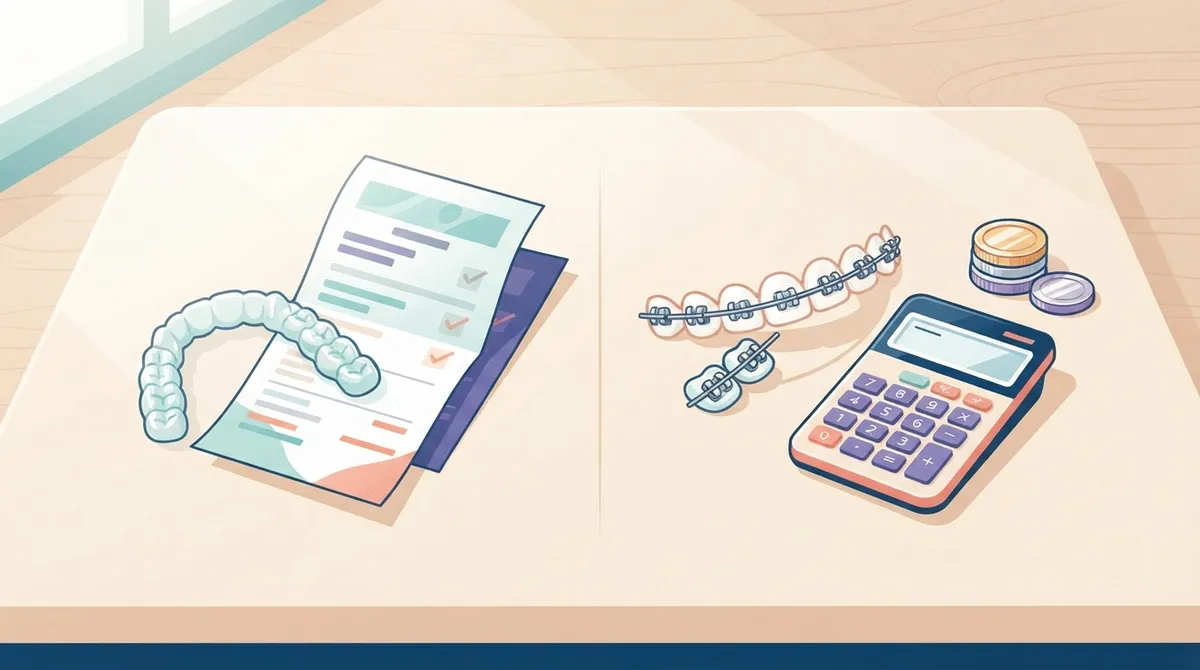
Invisalign and braces often cost about the same, but there is no fixed national price; your bite complexity, treatment length, provider, and location determine your final quote.
-
Manufacturer data reports that 53.5% of surveyed orthodontists and dentists said Invisalign cases cost the same as or less than braces, so aligners are not automatically more expensive.
-
Always get an itemized quote that shows whether records, scans, refinements, retainers, and emergency visits are included, so you compare total out-of-pocket costs rather than starting prices.
-
Insurance coverage varies by policy, with some plans paying a percentage and others setting a lifetime orthodontic maximum; verify your remaining benefits, age limits, and waiting periods before committing.
-
HSA or FSA funds can often be used for qualified orthodontic expenses, and monthly payment plans can spread costs out, so check your account rules and payment options early.
-
Choose based on lifestyle as well as price: aligners are removable but require consistent daily wear, while braces are fixed and work around the clock but require avoiding sticky or hard foods.
Let’s be honest. When you start thinking about straightening your teeth, one question pops up before almost any other: what is this going to cost me? If you have been searching for invisalign cost vs braces, you are in good company. Parents, teens, and busy adults ask us this all the time.
Here is the friendly truth. For many patients, the total price of clear aligners and braces ends up being quite close. But there is no single price tag that fits everyone. Your bite, your goals, and your treatment time all play a part.
In this guide, we break down three real differences that shape the cost, so you can compare quotes with confidence. We will keep it simple, honest, and jargon-free. Whether you are a parent planning for a child, a teen who wants a discreet look, or an adult juggling a career, you will leave knowing what to ask and what to expect in 2026.
Difference 1: What Drives the Price Tag
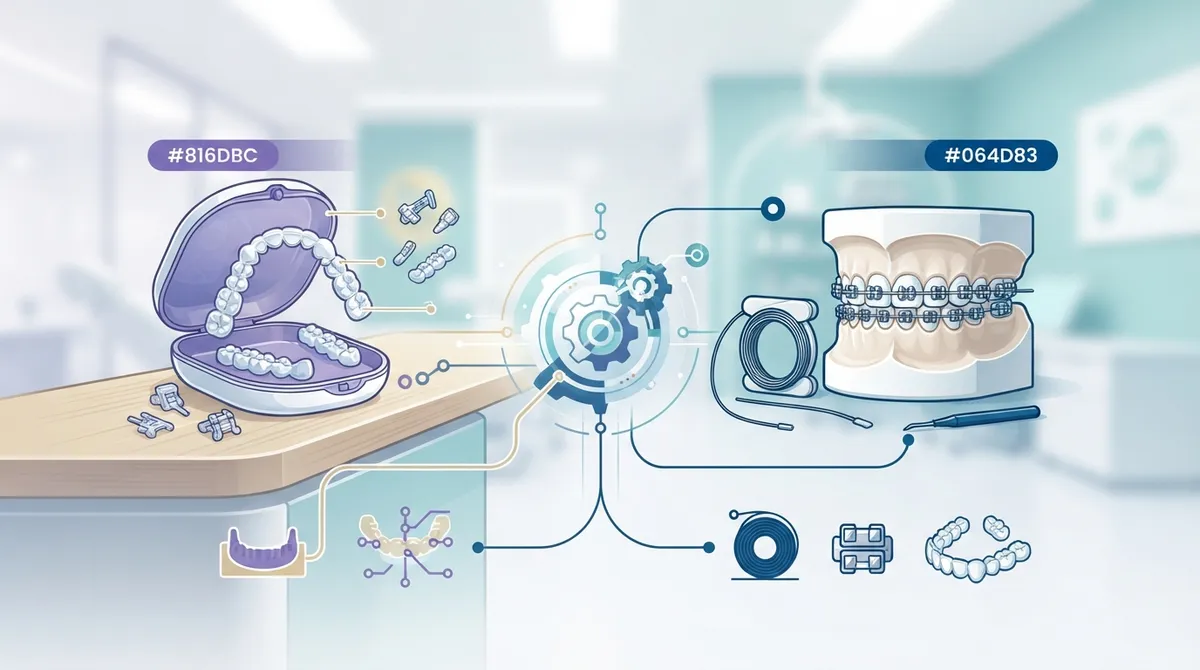
The first big difference is not really about the product. It is about you. Both options are priced based on the work your smile needs. That is why one neighbor can pay a very different amount than another, even with the same treatment type.
The Main Cost Drivers
Orthodontic fees come from a handful of key factors. Here is what shapes your final number:
- Complexity: Mild crowding costs less to fix than a tough bite problem.
- Treatment length: Longer treatment usually means more visits, more aligners, or more adjustments.
- Provider and location: Fees vary from one orthodontic office to another and from one city to the next.
- Type of appliance: Metal braces, ceramic braces, and clear aligners can each be priced differently.
Clear aligner maker Invisalign says the treating doctor sets the fee. That means there is no fixed national price. The company’s own published guidance for braces ranges from about $3,000 to $7,500 on one page and $3,000 to $10,000 on another. These are manufacturer-published estimates, not a national price survey, so treat them as a starting point only.
Why a Personal Exam Matters
The only way to get a reliable number is an in-person exam. During a visit, your orthodontist checks your teeth, your bite, and your goals. Then you get a quote that fits your real situation. Our team offers a free consultation so you can get answers without any pressure.
If you want to dig into the fine print of braces pricing, our guide on 7 braces price range factors that shape your cost is a great next read.
Difference 2: Side-by-Side Cost and Lifestyle Comparison
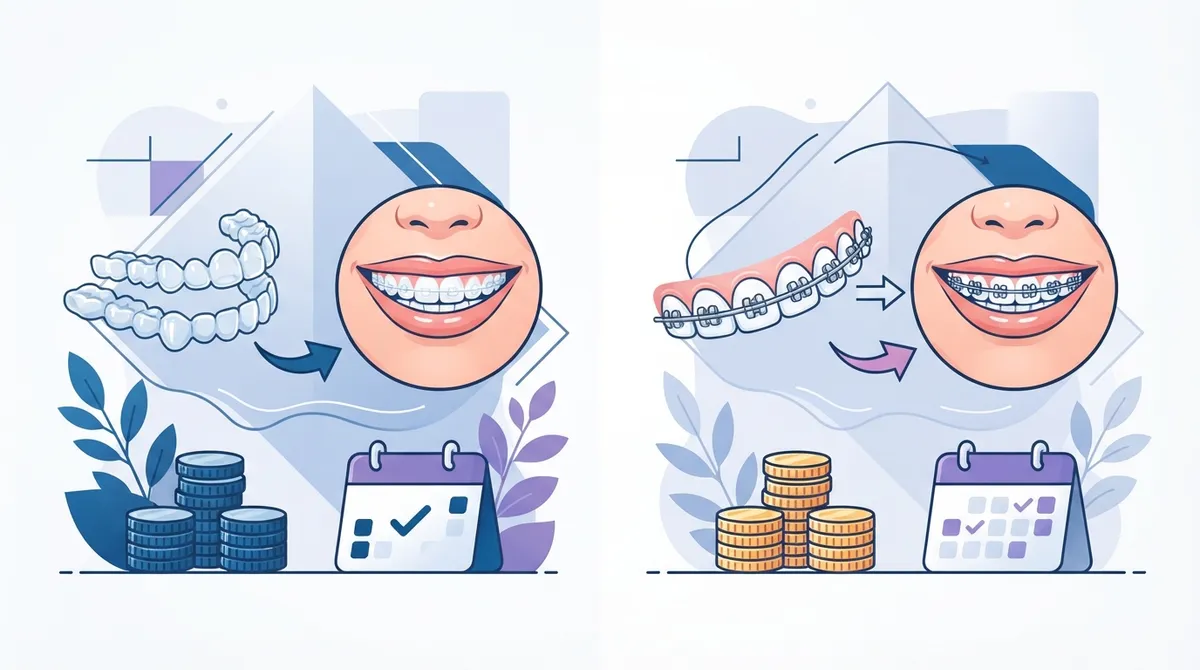
The second difference is how each option fits into daily life, because lifestyle can quietly affect your total spend. Think about meals, sports, work meetings, and school photos. Both choices can create a beautiful result. They just ask different things from you.
Quick Comparison Table
Here is a simple look at how the options stack up. Remember, costs depend on your individual case, so use this as a guide for conversation, not a final price.
| Feature | Clear Aligners | Traditional Metal Braces | Ceramic Braces |
|---|---|---|---|
| Typical cost vs. braces | Often comparable | Baseline option | Often priced a bit higher |
| Look | Nearly invisible | Visible metal | Tooth-colored, subtle |
| Removable | Yes, for meals and cleaning | No, fixed | No, fixed |
| Food limits | Few, if removed to eat | Some foods to avoid | Some foods to avoid |
| Compliance needed | High, steady daily wear | Lower, always working | Lower, always working |
| Broad case range | Many cases, not all | Very broad range | Very broad range |
The Honest Cost Picture
Here is a stat worth knowing. Invisalign reports a survey of more than 300 active U.S. orthodontists and general dentists. In it, 53.5% said their Invisalign cases cost the same as or less than braces. That is manufacturer-reported data, so it may not match every provider or market. Still, it shows that aligners are not automatically the pricier choice.
The real answer comes from your own quote. If you are weighing both options, our post on braces vs clear aligners and which fits your smile best walks through the pros and cons in a friendly way.
Who Tends to Choose What?
Every smile is different, but here are a few common patterns we see:
- Teens: Many love the discreet look of aligners, but need to be reliable about wearing them. Colored braces are also a fun pick. Our guide to braces for teenagers can help.
- Adult professionals: Many prefer low-profile options that keep them camera-ready. See our take on braces for adults options.
- Parents of younger kids: Fixed braces can be a steady choice for growing smiles that need guidance.
If you want a deeper decision framework, check out how to choose between braces vs Invisalign in 2026.
Difference 3: How You Pay (Insurance, HSA, and Plans)
The third difference is one many people overlook: how you actually pay. The sticker price is only half the story. Your out-of-pocket cost depends on insurance, savings accounts, and payment plans.
Insurance Coverage
Good news here. Many dental plans cover clear aligners in a similar way to braces. But it depends entirely on your policy. Some plans pay a percentage. Others offer a fixed lifetime orthodontic maximum. Age limits, waiting periods, and exclusions can also come into play.
Invisalign cites data from OrthoFi for 2021, covering 112,243 insured U.S. patients. In that dataset, the average orthodontic insurance coverage was $1,772. Also, 92% qualified for up to $3,000 in coverage, and 77% qualified for up to $2,000. These numbers describe that group only. They are not a promise for your plan, so always verify your own benefits and remaining maximum before you start.
Need help understanding your plan? Our insurance page and our guide on braces insurance coverage facts can point you in the right direction.
HSA, FSA, and Payment Plans
Here are a few ways families stretch their budget:
- Use HSA or FSA funds. Eligible patients may use these accounts for qualified orthodontic expenses. Confirm your account rules first.
- Ask about monthly payment plans. Many orthodontic offices spread the cost into smaller payments.
- Check your insurance maximum. Find out how much is left before you commit.
- Compare itemized quotes. Look at the full out-of-pocket number, not only the starting price.
You can learn how it all works in how orthodontist payment plans actually work or explore our payment plans page. For more ideas, see how to find braces financing that fits.
What to Ask Before You Compare Quotes
A low advertised price can be tempting. But it may not include everything. To compare fairly, you want the total out-of-pocket estimate. Think of it like comparing car prices. The base price rarely tells the whole story.
Questions That Save You Money
Bring this list to your appointment. It helps you spot hidden costs:
- Are records, scans, or X-rays included in the price?
- Are all appointments and adjustments covered?
- Are refinements included if my teeth need a little extra tweaking?
- Are retainers part of the quote, and how many?
- What happens if I lose an aligner or break a bracket?
- Are emergency visits included?
Retainers are a big one. They protect your investment after treatment ends. Learn more in our post on braces retainers tips to keep your smile straight.
Get It in Writing
Ask for an itemized quote. When two offices give you numbers, you can line them up and see what is really included. If you want help getting organized, our article on what orthodontist prices really include is a handy checklist.
Which Option Is Right for Your Smile?
Cost matters, but it should not be the only thing guiding your choice. The best treatment is the one that fixes your specific bite problem and fits your life.
Aligners: A Few Things to Know
Clear aligners are removable, so you can eat normally and brush and floss as usual. That freedom is a big perk. But it comes with a responsibility. You need to wear them consistently each day for the plan to work. If you tend to forget, that is worth knowing about yourself.
Braces: A Few Things to Know
Braces are fixed in place, so they work around the clock. They can treat a broad range of alignment problems. They also ask you to be mindful of sticky or hard foods. Our list of foods to avoid with braces makes it easy to plan.
Your orthodontist should recommend the right option after a careful exam. That is why a specialist matters. If you are curious about the difference, read orthodontist vs dentist for braces.
Treatment Time and Cost
Longer treatment can raise the price, since it may mean more visits or more aligners. Want a sense of timing? Our braces treatment timeline gives a helpful overview.
Get a Real Quote Near Brandon
Online ranges are useful, but a local quote is better. At Chacon Orthodontics, Dr. Omar Chacon is a board-certified orthodontist who offers clear aligners, custom braces, retainers, and teeth whitening. We serve families in Westchase and Brandon, Florida, with friendly bilingual care in English and Spanish. We use advanced technology like 3D digital imaging to plan your care.
Want to see what neighbors think? Visit us on Google — Chacon Orthodontics Brandon to read reviews from local patients. You can also follow along with smile stories on Instagram and Facebook, or connect with Dr. Chacon on LinkedIn.
If you live near Brandon, our guide to braces close to 33511 is a helpful local read. And for a look at what to expect, see how to prepare for your first orthodontist appointment.
The Bottom Line on Invisalign Cost vs Braces
So, what did we learn? The invisalign cost vs braces question has no one-size-fits-all answer. Three differences matter most. First, your own needs drive the price. Second, lifestyle and appliance type shape how each option feels day to day. Third, how you pay, through insurance, HSA or FSA funds, and payment plans, can change your real out-of-pocket cost.
The smartest move is simple. Get an itemized quote, confirm your insurance, and ask what is included. Then choose the path that fits your smile and your budget.
Ready to see your real numbers? Book your free consultation with Chacon Orthodontics, or contact us with any questions. We would love to help you smile with confidence.
FAQs
Q: How much does Invisalign cost compared with braces?
A: For many patients, the total cost is quite similar. The exact price depends on your bite, your treatment length, your provider, and your location. The best way to know for sure is to get an itemized quote after an exam.
Q: Does dental insurance cover Invisalign and braces equally?
A: Many plans cover clear aligners much like braces, but it truly depends on your policy. Some pay a percentage, while others set a lifetime orthodontic maximum. Always check your age limits, waiting periods, and remaining benefits before starting.
Q: Can I use an HSA or FSA to pay for Invisalign or braces?
A: Yes, eligible patients may use HSA or FSA funds for qualified orthodontic expenses. Rules differ by account and plan, so confirm the details with your plan administrator first. It can be a great way to stretch your budget.
Q: Are retainers and follow-up visits included in the quoted price?
A: Not always, which is why you should ask. Check whether records, appointments, refinements, retainers, and emergency visits are included. A clear, itemized quote helps you compare offices fairly.
Q: What factors affect the cost of Invisalign treatment?
A: The biggest factors are how complex your case is, how long treatment lasts, and the number of aligners or adjustments needed. Your provider and location matter too. A personal exam gives you the most reliable estimate.