

Key Takeaways
-
Compare the total cost of braces, not just the monthly payment, since longer terms and interest can significantly raise what you pay overall.
-
Deferred-interest promotions can charge interest back to the start date if the balance isn't paid in full by the deadline, so ask exactly what happens if you miss it.
-
Combine options: apply dental insurance benefits first, use HSA or FSA funds for the out-of-pocket balance, then finance only what remains to lower total interest.
-
Get a written treatment estimate that itemizes records, adjustments, retainers, and emergency visits, and confirm insurance coverage with your insurer before starting treatment.
Let’s be honest: the price tag on braces can make anyone gulp. Whether you’re a parent thinking about your child’s first orthodontic visit, a teen dreaming of a confident smile, or an adult ready to finally fix that crooked tooth, cost is often the first question. Here’s the good news. You have far more choices than you might think.
Most families don’t pay for braces all at once. Instead, they mix and match payment tools, like insurance benefits, monthly plans, health account funds, and outside lenders. In 2026, braces financing options are more flexible than ever, but terms vary a lot from one office to the next.
This friendly guide walks you through 12 smart ways to pay for treatment, what to ask before you sign anything, and how to compare the real cost instead of just the monthly payment. Grab a cup of coffee, and let’s make braces feel a lot more doable.

Why Braces Financing Options Matter
One 2025 consumer estimate put braces at roughly $3,000 to $7,000. Your actual fee depends on where you live, the type of treatment, and how complex your case is. Because of that wide range, always get a written estimate from your local orthodontist.
Financing simply means spreading that cost over time, or tapping money you already have set aside. The goal is to make treatment fit your budget without surprise fees later. For a deeper look at pricing, see our guide on how much braces cost in 2026.
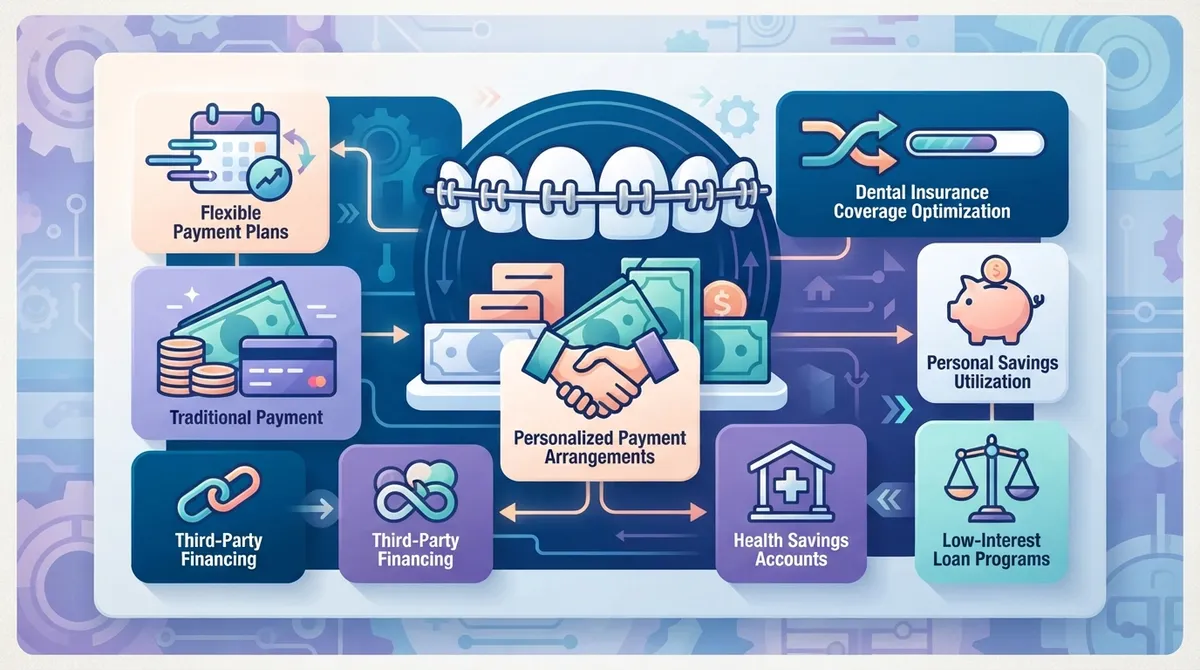
12 Braces Financing Options Worth Considering
1. In-House Orthodontic Payment Plans
Many orthodontic offices split your balance into a down payment plus monthly installments. This is one of the most common braces financing options because it’s simple. You work directly with the office, and there’s no outside lender involved.
Terms vary by practice. Down payment, length, and interest are all different from office to office, so don’t assume a plan is interest-free. Ask directly. Our article on how orthodontist payment plans actually work explains the basics.
2. Orthodontic Dental Insurance Benefits
Some dental plans include orthodontic coverage, often with a separate lifetime maximum. One 2026 insurance overview reported typical lifetime maximums of roughly $1,000 to $3,000 where coverage is offered. That’s not universal, so your policy documents are the final word.
Check for age limits, waiting periods, and exclusions before you start. Learn more in our post on how dental insurance covers orthodontic treatment.
3. Health Savings Accounts (HSA)
IRS rules generally allow HSA funds to pay for qualified orthodontic expenses. A big perk is that HSA money can usually stay in your account from year to year. That makes it a nice long-term tool if you’re planning ahead for braces.
Confirm eligible expenses and paperwork needs with your plan administrator.
4. Flexible Spending Accounts (FSA)
FSAs can often cover orthodontic costs too, and they use pre-tax dollars. The catch is that FSA rules come from your employer’s plan. Elections and reimbursement deadlines can be strict, so plan your timing carefully.
5. Third-Party Healthcare Financing
Outside healthcare credit or personal loans can stretch repayment beyond what an office plan offers. Approval, APR, and fees depend on the lender and on you. Some come with promotional terms, which brings us to a key warning in the next section.
6. Deferred-Interest Promotions
You may see offers like “no interest if paid in full in 12 months.” These can be great if you pay on time. But if a balance remains after the promotional deadline, interest may be charged back to the start date. Always ask exactly what happens if you miss the deadline.
7. Combining Insurance and Payment Plans
You don’t have to pick just one. Many families apply insurance benefits first, then pay the rest through an office plan. This layered approach can lower the amount you finance, which means less interest overall.
8. Using HSA or FSA for the Out-of-Pocket Balance
After insurance pays its share, you can often use HSA or FSA dollars for the remaining qualified costs. Then finance only what’s left. It’s a smart way to shrink your monthly payment.
9. Larger Down Payments
A bigger down payment means a smaller balance to finance. If you receive a tax refund, a bonus, or have savings set aside, putting that toward your down payment can lower your monthly cost and total interest.
10. Longer Payment Terms
Stretching payments over more months can lower each bill. Just remember that a longer term may cost more in interest. Compare the total, not just the monthly number.
11. Family or Multi-Patient Arrangements
If more than one child needs braces, ask whether the office can structure payments across family members. Some practices offer flexible options for families. It never hurts to ask what’s possible.
12. Saving Ahead With a Dedicated Plan
If treatment isn’t urgent, building a small braces fund can reduce what you need to finance. Our guide on how to budget for braces offers friendly, practical tips.
Quick Comparison of Braces Financing Options
Here’s a simple side-by-side look at the most common choices. Remember, details vary by provider, so treat this as a starting point.
| Option | Best For | What to Check |
|---|---|---|
| In-house payment plan | Simple, direct monthly payments | Down payment, interest, length |
| Dental insurance | Families with orthodontic coverage | Lifetime maximum, waiting period, age limits |
| HSA | Long-term planners | Eligible expenses, documentation |
| FSA | Employees with a workplace plan | Election limits, deadlines |
| Third-party lender | Longer repayment terms | APR, fees, approval requirements |
| Deferred-interest promo | Those who can pay in full quickly | Back-interest if not paid on time |
What to Ask Before You Commit
A monthly payment can look small while hiding a bigger total cost. Before you say yes, ask these questions:
- What is the total treatment fee, and what does it include?
- Is there a down payment, and how much?
- Is there interest, and what is the APR?
- What happens if I miss a payment or an appointment?
- What if my treatment takes longer than the payment term?
- Are there fees for paying off the balance early?
Getting these answers in writing helps you avoid surprises. A good office will happily walk you through every line.
Make Sure Your Estimate Is Complete
A written treatment estimate should spell out exactly what’s covered. Look for these items:
- Initial records, X-rays, and scans
- Regular adjustment visits
- Retainers after treatment
- Emergency visits
- Costs if your treatment plan changes
Knowing what’s included helps you compare offers fairly. It also keeps you from getting hit with extra charges later.
Financing Tips for Different Patients
For Parents of Children
Early evaluation can help you plan ahead. Learning what’s coming gives you time to save, check insurance, and set up an HSA or FSA. Our guide on early orthodontic treatment shows how planning early can help.
For Teens
Teens often have the same financing tools as younger kids, since parents usually handle payment. Talk through options together so your teen feels included in the process. Check out teen braces costs and options in Brandon for more.
For Adult Professionals
Adults can often use HSA or FSA funds, and some insurance plans cover adult orthodontics. Others may prefer a payment plan that fits a steady paycheck. If this sounds like you, explore orthodontic treatment for adults.
For Bilingual Families
Clear communication matters most when you’re discussing money. At Chacon Orthodontics, our team offers bilingual care in English and Spanish, so you can ask questions and understand every payment detail in the language you’re most comfortable with. Habla con nosotros, and we’ll walk through it together.
Red Flags to Watch For
Most orthodontic offices want to help you succeed. Still, keep an eye out for a few warning signs:
- Pressure to sign right away without a written estimate
- Vague answers about interest or fees
- Promotions that don’t explain what happens after the deadline
- Promises of coverage before the insurer confirms it
If something feels unclear, pause and ask. A trustworthy practice welcomes your questions.
How Chacon Orthodontics Can Help
Dr. Omar Chacon is a board-certified orthodontist who believes cost shouldn’t keep anyone from a confident smile. Chacon Orthodontics offers flexible options and takes time to explain them. You can learn more on our payment plans page, or read about more ways to make treatment affordable.
We also serve families in the Brandon area, where our team loves helping neighbors find a plan that works. You can visit us on Google — Chacon Orthodontics Brandon to see our location and read what patients say. Follow along for smile tips on Instagram and Facebook, or connect with Dr. Chacon on LinkedIn.
Ready to Take the Next Step?
Financing braces doesn’t have to feel overwhelming. When you compare the total cost, understand your insurance, use HSA or FSA funds wisely, and choose a plan with clear terms, you can find a path that fits your life. Remember, you can often combine several braces financing options to land on the payment that feels right.
The best first step is simple. Schedule your free consultation with Chacon Orthodontics, and we’ll review your treatment options, give you a clear written estimate, and help you explore every payment choice. You can also contact us anytime with questions. Your confident smile is closer than you think!
FAQs
Q: Do orthodontists offer monthly payment plans for braces?
A: Yes, many orthodontic offices offer in-house plans that split your balance into a down payment and monthly installments. Terms like interest and plan length vary by practice, so ask about the details before you sign up.
Q: Can I use HSA or FSA money to pay for braces?
A: In most cases, yes! IRS rules generally allow HSA and FSA funds for qualified orthodontic expenses. Check with your plan administrator about eligible costs, deadlines, and the paperwork you’ll need.
Q: Does dental insurance cover braces?
A: It depends on your policy. Some plans cover orthodontics with a separate lifetime maximum, often around $1,000 to $3,000, while others exclude it or limit coverage by age. Call your insurer to confirm your benefits before starting treatment.
Q: What should I check before accepting a deferred-interest offer?
A: Ask what happens if you don’t pay the full balance by the promotional deadline. Some offers charge interest back to the start date, which can raise your cost a lot. Get the terms in writing so there are no surprises.
Q: Can I combine different braces financing options?
A: Absolutely! Many families apply insurance benefits first, use HSA or FSA funds for the out-of-pocket costs, and finance whatever remains through an office plan or lender. Compare your total out-of-pocket cost and any financing charges to find the best fit.





