
Key Takeaways
-
Braces discomfort is mild pressure or tenderness, not severe pain—most patients describe it like post-workout soreness rather than sharp toothache pain, and this sensation peaks around 24 hours then resolves within 3-7 days.
-
Pain follows a predictable timeline: minimal discomfort in the first few hours, peaks at 24 hours (~42.4mm on pain scale), then steadily decreases to near-normal levels by day 5-7, so you can plan ahead knowing the worst passes quickly.
-
Soft foods (yogurt, smoothies, mashed potatoes), orthodontic wax on irritated spots, warm salt water rinses, and approved pain relievers like ibuprofen effectively reduce soreness during the critical first week of treatment.
-
Clear aligners may cause slightly less initial discomfort than traditional braces in the first few days, but pain levels equalize by three months, so the choice should be based on alignment needs and lifestyle rather than comfort alone.
-
Adjustments after initial placement cause less pain than the first appointment and typically resolve within 24-72 hours, making each follow-up visit a manageable reminder that your treatment is progressing rather than a major setback.
-
Contact your orthodontist immediately if you experience severe escalating pain, swelling lasting over a week, very red gums, broken brackets, or facial swelling—these signs indicate a problem beyond normal treatment discomfort requiring professional evaluation.
If you’re wondering how much do braces hurt before your first appointment, take a deep breath. You’re not alone in asking this question, and the honest answer is more reassuring than you might think. Most patients describe braces pain as mild pressure or soreness, not the sharp, scary pain that shows up in movies or old family stories. Understanding what’s actually happening in your mouth can turn nervous energy into calm confidence.
At Chacon Orthodontics, we hear this question every day from parents, teens, and busy adults across Westchase and Brandon, Florida. Whether you’re a parent bringing in your child for the first time, a teen worried about game day, or an adult professional squeezing in an appointment between meetings, knowing what to expect makes everything easier. This guide breaks down exactly how much braces hurt, when discomfort peaks, and simple ways to feel better fast.

1. Braces Discomfort Is Usually Mild, Not Severe
Let’s clear up the biggest myth first: braces do not cause intense, unbearable pain. Most patients describe a dull ache, gentle pressure, or tenderness when biting down. It feels more like the soreness after a workout than a sharp toothache.
This makes sense once you understand what’s happening. Braces work by applying steady pressure to slowly shift your teeth into better positions. Your teeth and the bone around them need time to adjust to that gentle force. That adjustment period is what causes the temporary soreness people talk about.
According to the American Association of Orthodontists, this discomfort is a normal part of the straightening process and a sign that your treatment is working. If you’re curious about the full picture, Dr. Chacon shares what to expect in more detail based on years of patient experience.
What Braces Pain Actually Feels Like
- A dull ache or tightness across several teeth
- Tenderness when chewing or biting into firmer foods
- Mild soreness in the gums near new brackets or wires
- Occasional irritation on the inside of the cheeks or lips
- A general “pressure” feeling rather than sharp pain
Sharp, stabbing, or severe pain is not typical. If you experience that kind of discomfort, it’s worth reaching out to your orthodontist right away.
2. Braces Pain Follows a Predictable Timeline
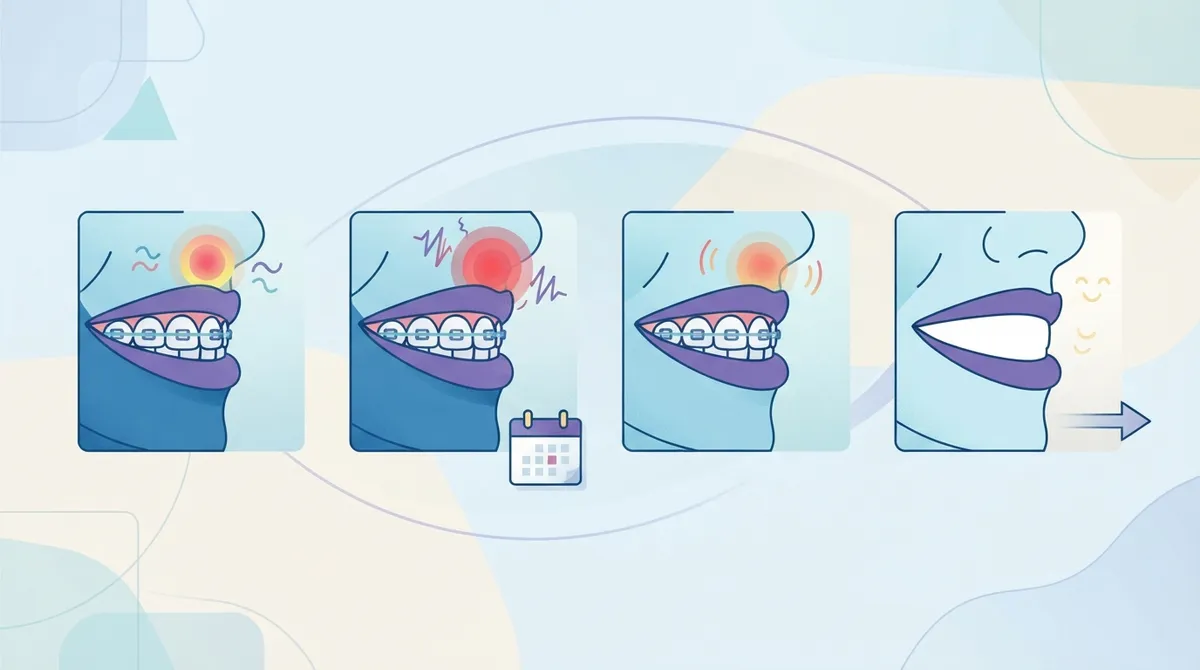
One of the most helpful things to know is that braces pain doesn’t last forever, and it doesn’t hit you immediately. There’s actually a pretty clear pattern backed by research.
A 2023 systematic review of randomized trials found that discomfort typically starts around 4.1 hours after your braces or archwire are placed. It’s not instant. You might even feel totally fine on the car ride home, then notice soreness kick in later that evening.
The Typical Pain Timeline
| Timeframe | What to Expect | Pain Level (0-100 scale) |
|---|---|---|
| First few hours | Little to no discomfort yet | Minimal |
| Around 24 hours | Peak soreness, pressure feeling | ~42.4 mm average |
| Day 2-3 | Discomfort starts easing | Gradually decreasing |
| Day 5-7 | Soreness mostly resolved | ~9.0 mm average |
A separate 2024 study found similar results, with pain intensity peaking at about 33.1 mm on day one, dropping to 29.4 mm by day two, and falling to just 10.3 mm by day seven. In plain terms: the worst is over quickly, and most people feel back to normal within a week.
Do Adjustments Hurt Too?
Yes, but usually less than the initial placement. Every time your orthodontist tightens or adjusts your wires, your teeth feel new pressure. This soreness is typically milder and shorter, often resolving within 24 to 72 hours. Think of it as a quick reminder that your treatment is progressing, not a setback.
Curious about how your teeth actually move during treatment? Check out this helpful guide on how to understand teeth positioning and fix alignment issues for a deeper look.
3. Simple Ways to Ease Braces Soreness
The good news? You have plenty of tools to make those first few days more comfortable. None of these require anything fancy, just a little planning.
Step-by-Step Comfort Plan
- Stick to soft foods for the first few days. Think mashed potatoes, yogurt, smoothies, scrambled eggs, and soup. Chewing tough or crunchy foods puts extra pressure on tender teeth.
- Use orthodontic wax on irritated spots. If brackets or wires rub against your cheeks or lips, a small dab of wax creates a smooth barrier while your mouth adjusts.
- Rinse with warm salt water. This can soothe irritated gums and help any small sores heal faster.
- Take approved pain relief if needed. A systematic review found that ibuprofen can reduce pain at both 6 and 24 hours after archwire placement. Always follow your orthodontist’s guidance and the medication label.
- Keep up with gentle oral hygiene. Brushing and flossing carefully, even when your mouth feels tender, helps prevent additional irritation and keeps your treatment on track.
Want more detailed guidance on eating with braces? Our list of braces-friendly snacks every parent should know is a great resource, and this guide on foods to avoid with braces can help you plan meals with confidence.
Comfort Tips by Age Group
| Patient Type | Best Comfort Strategies |
|---|---|
| Children | Soft foods, distraction activities, parent reassurance, wax for irritation |
| Teens | Prep soft snacks before sports or school events, keep wax in a locker or bag |
| Adults | Schedule adjustments before lighter workdays, plan meals ahead for busy weeks |
4. Clear Aligners May Offer a Gentler Start
If comfort is a top priority, you might be wondering whether clear aligners hurt less than traditional metal braces. Research offers a helpful, nuanced answer.
A systematic review comparing clear aligners with fixed appliances found moderate-certainty evidence that aligners cause less pain during the first few days of treatment. However, this difference tends to fade over time, with pain levels becoming similar between the two options by around three months into treatment.
This doesn’t mean one option is automatically better for everyone. The right choice depends on your specific alignment needs, lifestyle, and goals. For image-conscious teens and adults who want a more discreet option, learning more about removable aligners and how clear trays straighten your smile can help you decide if this path fits your needs.
Braces vs. Clear Aligners: Comfort Comparison
| Factor | Traditional Braces | Clear Aligners |
|---|---|---|
| Initial discomfort | Moderate, peaks around 24 hours | Often milder in first few days |
| Long-term comfort | Soreness after each adjustment | Mild pressure with each new tray |
| Irritation risk | Brackets/wires can rub cheeks | Smooth plastic, less rubbing |
| Discretion | Visible metal or ceramic | Nearly invisible |
Many working professionals appreciate this lower-profile option because it fits seamlessly into daily meetings and social settings. If you’re an adult exploring your options, this article on why adults are choosing orthodontic treatment covers common motivations and outcomes.
When to Call Your Orthodontist
While mild soreness is completely normal, certain signs mean it’s time to reach out for professional advice. Trust your instincts here. You know your body, and your orthodontic team wants to hear from you if something feels off.
- Pain that feels severe or keeps getting worse instead of better
- Discomfort that lasts longer than a week without improvement
- Very red, swollen, or painful gums
- A broken bracket, loose band, or wire poking your cheek
- Facial swelling, fever, or trouble breathing or swallowing (seek urgent care immediately)
The NHS confirms this same advice: contact your orthodontist if pain lasts more than a few days or if you notice unusual swelling. For guidance on what qualifies as an emergency versus normal soreness, this resource on orthodontic emergencies and when to call Dr. Chacon is worth bookmarking.
Why Choosing the Right Orthodontist Makes a Difference
Comfort during treatment isn’t just about ice packs and soft foods. It’s also about working with a skilled, experienced provider who plans your treatment carefully from day one. Precise, well-planned adjustments tend to cause less unnecessary discomfort than rushed or poorly calibrated ones.
Dr. Omar Chacon brings over a decade of board-certified experience to every patient at Chacon Orthodontics, with locations serving families throughout Westchase and Brandon. His bilingual approach in English and Spanish means comfortable, clear communication for every family, no matter which language feels most natural. Learn more about why choosing a board-certified orthodontist makes all the difference for your treatment experience.
Many families also appreciate seeing real patient experiences before starting treatment. You can visit us on Google — Chacon Orthodontics West Chase to read reviews directly from patients in the community. We also share smile updates and behind-the-scenes moments on Instagram and connect with families through Facebook.
Questions to Ask During Your Consultation
- What type of treatment do you recommend for my specific alignment needs?
- How can I best manage discomfort during the first week?
- How often will I need adjustment appointments?
- What should I do if I experience a broken bracket or wire?
- Are there options that might feel more comfortable for my lifestyle?
If you’d like to learn more about Dr. Chacon’s background and approach to patient care, you can connect with him professionally on LinkedIn.
Ready to Start Your Journey with Confidence?
Understanding how much braces hurt takes away most of the mystery and worry. Yes, there’s some temporary soreness, but it’s manageable, predictable, and completely worth it for the smile you’ll gain. Thousands of patients get through this exact process every year feeling completely normal within a week.
Whether you’re a parent considering early treatment for your child, a teen ready for a confident new smile, or an adult professional exploring discreet options, our team at Chacon Orthodontics is here to guide you every step of the way. We proudly serve families throughout Westchase and Brandon with personalized, bilingual care and advanced technology designed for comfort.
Ready to take the next step? Schedule your free consultation today and let’s talk about the treatment plan that fits your life, your comfort level, and your smile goals.
FAQs
Q: How painful are braces when you first get them?
A: Most people feel little to nothing right away since discomfort usually starts about 4 hours after placement. Once it kicks in, expect mild pressure or achiness rather than sharp pain, and it typically peaks around the 24-hour mark before easing up.
Q: How long do braces hurt after they are put on?
A: The soreness usually improves steadily over the first week, with most patients feeling back to normal within 3 to 7 days. Some tenderness might linger a bit longer, but severe or worsening pain isn’t typical and is worth mentioning to your orthodontist.
Q: Do braces hurt more after an adjustment?
A: Adjustments do cause some soreness, but it’s usually milder and shorter than what you feel after your braces are first placed. Most patients find this discomfort fades within 24 to 72 hours, so you’ll be back to your normal routine in no time.
Q: What can I eat when my teeth are sore from braces?
A: Soft foods are your best friend during those first few tender days. Think smoothies, yogurt, mashed potatoes, scrambled eggs, and soup until the soreness fades and chewing feels comfortable again.
Q: Do clear aligners hurt less than traditional braces?
A: Research suggests aligners may feel a bit gentler during the first few days of treatment, but that difference tends to even out over time. Both options are generally manageable, so the best choice really comes down to your treatment needs and personal preferences.