Key Takeaways
-
Clear aligners and self-ligating braces can complete mild-to-moderate cases in 12-24 months, significantly faster than traditional braces which average 23-27 months for adult patients.
-
Accelerated orthodontic techniques can reduce treatment time by up to 30% in selected cases, but require a professional evaluation to determine eligibility since they're not suitable for all patients.
-
Treatment timeline heavily depends on case complexity: mild crowding takes 6-12 months, moderate issues 12-20 months, and complex bite correction 20-30+ months, so realistic expectations start with honest evaluation.
-
Consistency is critical for faster results—aligners require 20-22 hours daily wear, missing appointments adds delays, and communicating early with your orthodontist prevents small issues from extending your timeline.
Thinking about straightening your teeth but worried it will take forever? You’re not alone. So many busy adults tell us the same thing: “I want a straighter smile, but I don’t want braces for years.” The good news is that quick braces for adults are more possible than ever, thanks to smarter technology and treatment planning. Whether you’re prepping for a big presentation, a wedding, or just tired of hiding your smile in photos, there are real options that can move things along faster than you think.
At Chacon Orthodontics, we see adults every day who are ready to invest in themselves. Adults now make up roughly one-third of orthodontic patients nationwide, and many are asking the same question: how fast can this actually go? Let’s walk through seven options and factors that can help you get a confident smile sooner, without cutting corners on quality or safety.
1. Clear Aligners for Faster, Discreet Movement
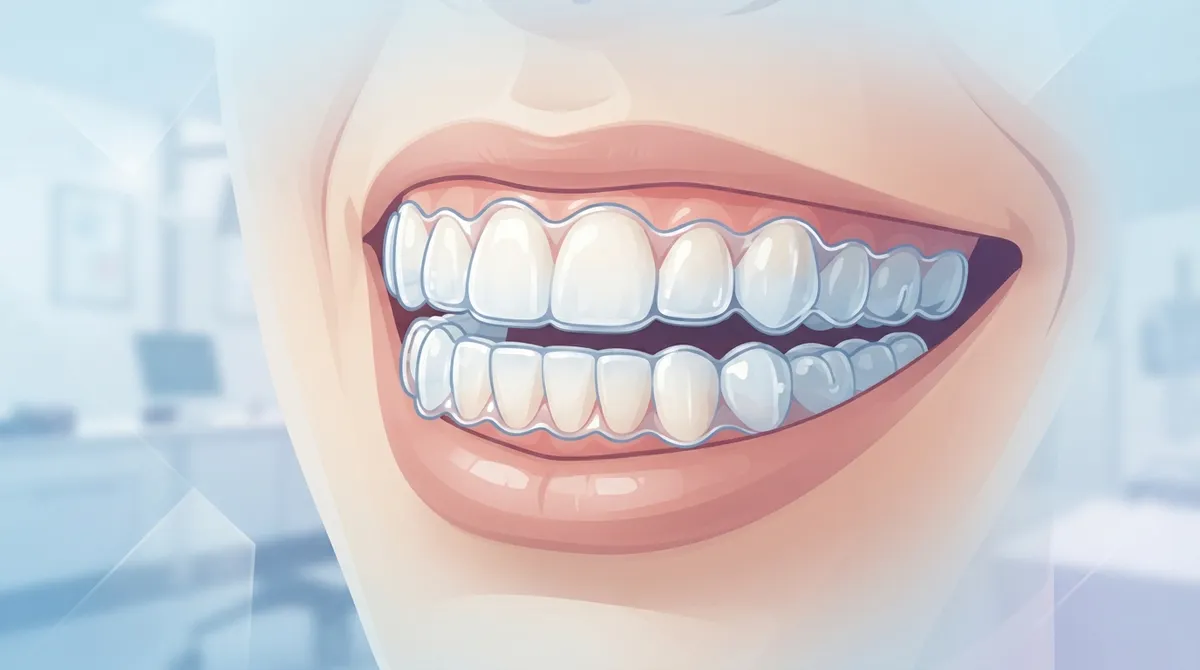
Clear aligners are often the first thing adults ask about when they want speed and subtlety. These removable trays gently shift your teeth over time, and many mild-to-moderate cases wrap up in about 12 to 24 months. Some comparative studies even show aligners averaging around 18 months, a bit faster than traditional metal braces in certain cases.
The catch? Aligners only work fast if you wear them as directed, usually 20 to 22 hours a day. If you’re curious whether removable aligners could fit your lifestyle, it’s worth exploring since they tend to blend into a professional schedule without drawing attention.
Who Benefits Most
- Adults with mild to moderate crowding or spacing
- Professionals who want a low-profile treatment option
- Patients who are disciplined about wearing trays consistently
- Anyone who wants to eat, brush, and floss without brackets in the way
2. Self-Ligating Braces That Move Faster With Fewer Visits
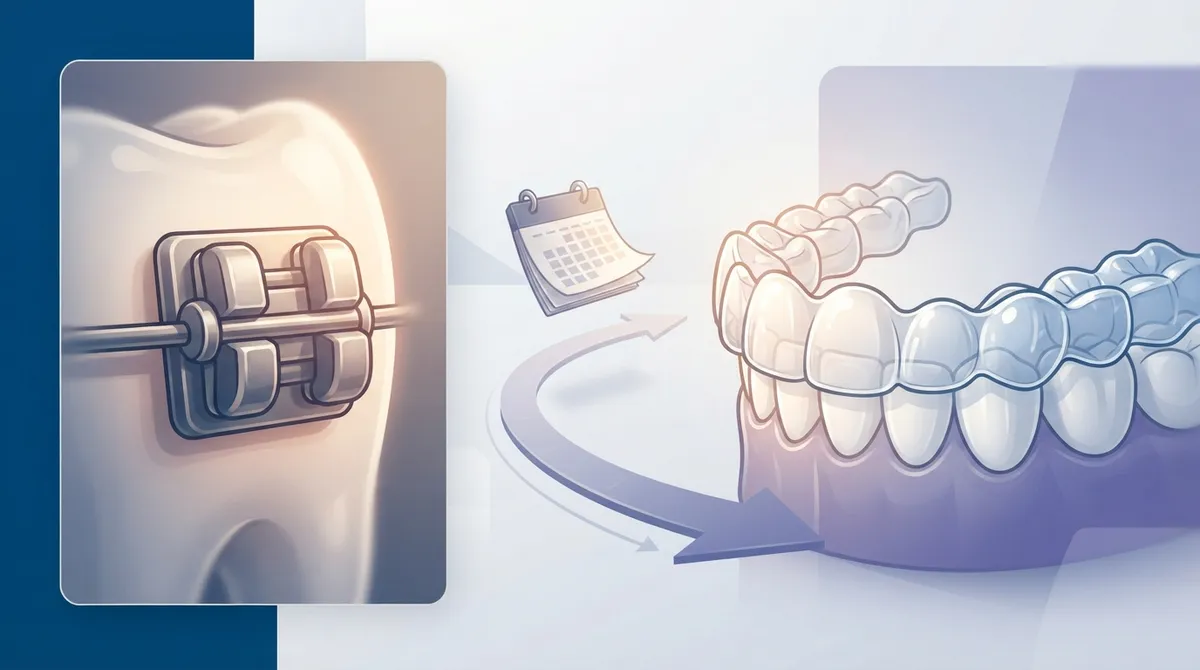
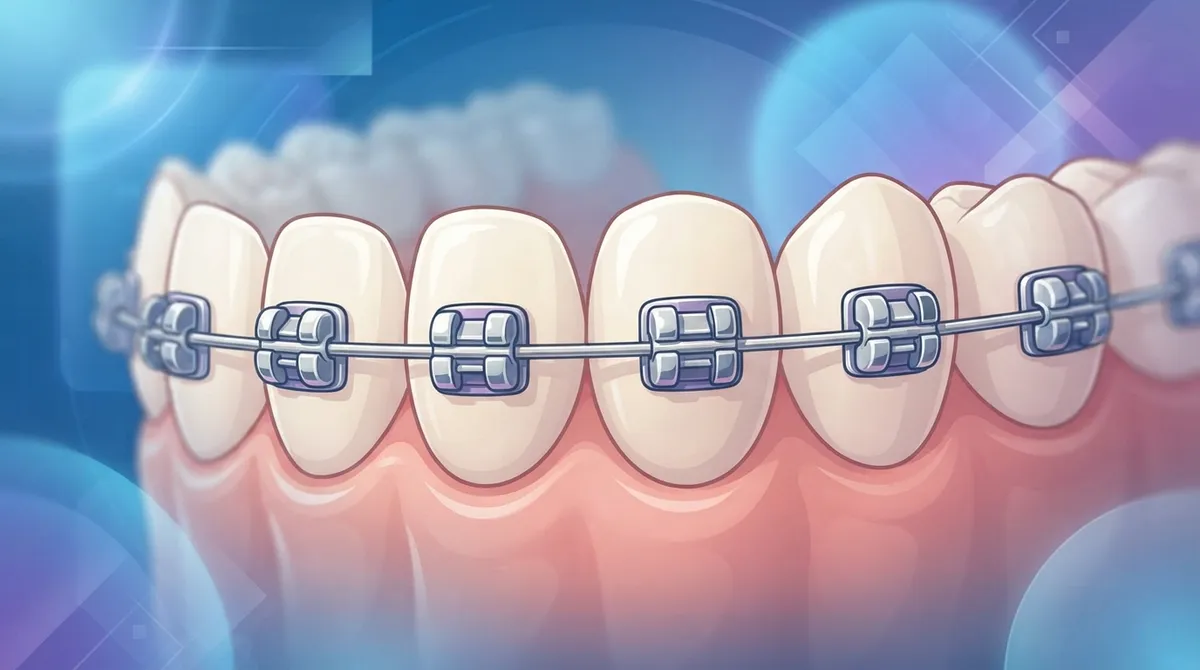
Self-ligating braces use a special clip system instead of tiny rubber bands to hold the wire in place. This design reduces friction, which can help teeth move a bit more efficiently. Many patients also enjoy fewer adjustment visits, which is a nice perk if your calendar is already packed.
These braces still count as custom braces tailored to your bite and goals, so your orthodontist can fine-tune the plan to keep things moving as quickly as safely possible.
3. Accelerated Orthodontic Techniques
For certain cases, accelerated methods can shave time off the overall treatment. Some techniques use gentle stimulation of the bone around the teeth to encourage faster movement, while others rely on specialized appliances. Research summaries suggest these approaches can reduce treatment time by roughly 30% in selected cases.
It’s important to know these methods are not for everyone. A thorough evaluation determines whether your case qualifies, which is why a full consultation matters so much before jumping into any accelerated program.
| Treatment Type | Average Timeline | Best For |
|---|---|---|
| Traditional Metal Braces | ~23 to 27 months | Complex bite and alignment issues |
| Clear Aligners | ~12 to 24 months | Mild to moderate crowding or spacing |
| Self-Ligating Braces | ~18 to 24 months | Faster movement with fewer visits |
| Accelerated Techniques | Up to 30% faster | Select cases meeting eligibility criteria |
4. Limited-Goal Braces for Front Teeth Only
Sometimes you don’t need a full smile overhaul. If your main concern is a few crooked front teeth, limited-treatment braces can focus just on that area. These “fast-acting” options are generally used for cosmetic goals rather than correcting deeper bite problems, so they won’t fix everything, but they can deliver noticeable results in a shorter window.
This approach works well for image-conscious adults who want a quick confidence boost before a big event. Just remember, it’s not a substitute for full orthodontic care if you have bite issues that need long-term correction.
Quick Facts About Limited Treatment
- Typically targets only the visible front teeth
- Does not usually address bite alignment or jaw position
- Often finishes faster than comprehensive treatment
- Best suited for adults with mild cosmetic concerns
5. Staying Consistent With Your Treatment Plan
Here’s something a lot of adults don’t expect: how much your own habits affect your timeline. Removable aligners only work if you actually wear them. Skipping days or losing trays can add weeks or months to your treatment without you even realizing it.
Attending every appointment, following instructions carefully, and communicating with your orthodontist about any discomfort all keep your treatment on track. Think of your orthodontist as your teammate. If something feels off, speak up early so small issues don’t snowball into bigger delays.
6. Choosing the Right Case Complexity for Speed
Not every case can move at lightning speed, and that’s okay. Adult orthodontic treatment commonly takes about 18 to 30 months overall, with a reported range of 14 to 33 months depending on the source and complexity. Simpler cases with mild crowding or spacing may finish in as little as 6 to 12 months.
More involved cases, like significant bite correction or overlapping teeth, naturally take longer no matter which appliance you choose. Understanding your teeth positioning and alignment issues upfront helps set realistic expectations from day one.
| Case Complexity | Estimated Timeline |
|---|---|
| Mild crowding or spacing | 6 to 12 months |
| Moderate alignment issues | 12 to 20 months |
| Complex bite correction | 20 to 30+ months |
7. Getting a Professional Evaluation Before You Commit
The fastest path to a straighter smile always starts with an honest evaluation. A good orthodontist will look at your teeth, bite, and goals before recommending any “quick” option. This step protects you from wasted time and money on a treatment that isn’t right for your case.
Many adults choosing orthodontic treatment in our area appreciate that we take time to explain every option clearly, in English or Spanish, so nothing gets lost in translation. If you’re curious what your own timeline might look like, a Free Consultation is a simple, no-pressure way to find out.
Cost Considerations for Faster Adult Treatment
Cost is often tied to complexity and appliance type rather than speed alone. Limited-treatment braces or aligners can sometimes cost less since they involve fewer months of care. However, accelerated techniques may add cost due to specialized appliances or extra visits.
- Ask about payment plans that spread costs over your treatment period
- Check whether your dental insurance covers part of orthodontic care
- Request a detailed breakdown during your consultation so there are no surprises
- Compare aligners versus braces pricing based on your specific case
Why Location and Communication Matter Too
For families and professionals in the Westchase and Brandon areas, having a nearby, bilingual practice makes the whole process smoother. Our team at Chacon Orthodontics West Chase works with patients from all walks of life, and we know that clear communication builds trust. You can visit us on Google — Chacon Orthodontics West Chase to see how other patients describe their experience firsthand.
We also stay connected with our community through Instagram and Facebook, sharing smile transformations and helpful tips. Dr. Chacon’s professional background is also visible on LinkedIn, where you can learn more about his experience and credentials.
Final Thoughts on Quick Braces for Adults
Quick braces for adults are absolutely possible for the right candidates, whether that means clear aligners, self-ligating braces, or a limited cosmetic treatment plan. The key is matching the right option to your specific smile goals and staying consistent along the way. No two mouths are exactly alike, so what works fast for your coworker may look different for you, and that’s perfectly normal.
If you’re ready to explore your fastest path to a confident smile, our team is here to help you every step of the way. Contact us today to schedule your evaluation and find out which quick treatment option fits your life best.
FAQs
Q: How fast can braces work for adults?
A: It really depends on your case, but many adults with mild to moderate issues see results in about 6 to 12 months. More complex cases can take 18 to 30 months, so a quick chat with your orthodontist will give you the clearest picture.
Q: What type of braces are fastest for adults?
A: Clear aligners and self-ligating braces tend to move things along efficiently for the right candidates. That said, speed always depends on your specific bite and how consistently you follow your treatment plan.
Q: Can adults get braces in 6 months?
A: For very mild cases, like small gaps or slightly crooked front teeth, a 6-month timeline is sometimes possible with limited-treatment options. This isn’t right for everyone, so a full evaluation is the best way to know if you qualify.
Q: Do clear aligners work faster than braces for adults?
A: In some studies, clear aligners averaged around 18 months compared to about 24 months for traditional metal braces. Your results may vary based on how disciplined you are about wearing your aligners as directed.
Q: Are fast braces safe for adults?
A: Yes, when a qualified orthodontist designs your plan, accelerated methods and quick treatment options are considered safe. The key is getting a proper evaluation first, so your teeth and gums are healthy enough for a faster pace.