
Key Takeaways
-
Get a 3D digital imaging exam with a board-certified orthodontist before starting treatment—accurate diagnosis prevents months of wasted time by eliminating guesswork about your specific case.
-
Choose the right appliance (braces or aligners) based on your case complexity, not appearance: mild crowding takes 6-12 months, moderate issues take 12-18 months, and complex bite problems take 18-36+ months.
-
Wear aligners 20-22 hours daily, attend every appointment every 6-8 weeks, and wear all prescribed accessories like rubber bands—consistency is the biggest factor separating patients who finish months apart.
-
Skip accelerated procedures and DIY kits; teeth need to move gradually to protect roots and bone, and most speed-up procedures only save about 2.8 months with low-quality evidence.
Wondering how fast you can finally get that straight, confident smile? You’re not alone. Whether you’re a busy parent in Brandon watching your child’s teeth come in crooked, a teen who wants straight teeth before homecoming, or a working professional who wants results without disrupting your career, speed matters. The good news? There are real, safe ways to straighten teeth faster—and we’re breaking them all down for you today.
Here’s the honest truth: the fastest way to straighten teeth isn’t a single magic appliance. It’s a treatment plan built specifically for your mouth, your bite, and your goals. At Chacon Orthodontics, Dr. Omar Chacon and his team have helped countless families in Westchase and Brandon find the quickest path to a straighter smile, without cutting corners on safety. Let’s walk through the five biggest factors that actually speed up your treatment.

1. Getting an Early, Accurate Diagnosis
The fastest teeth-straightening journeys always start the same way: with a real exam. Dr. Chacon uses 3D digital imaging to map out your teeth, bite, and jaw before recommending anything. Skipping this step is like driving somewhere new without a map. You might get there eventually, but you’ll waste a lot of time.
An accurate diagnosis tells us whether you’re dealing with mild crowding, a bite problem, or something more complex. This single step often saves months of treatment time because it prevents guesswork. If you’re curious about what happens during this process, check out our guide on what happens during an orthodontic exam.
Why Early Evaluation Matters for Kids
Parents, this one’s for you. The American Association of Orthodontists recommends kids get their first orthodontic check-up by age 7. Catching alignment or bite issues early can mean shorter, simpler treatment later. Our article on early signs you need braces can help you know what to watch for at home.
2. Choosing the Right Appliance for Your Case
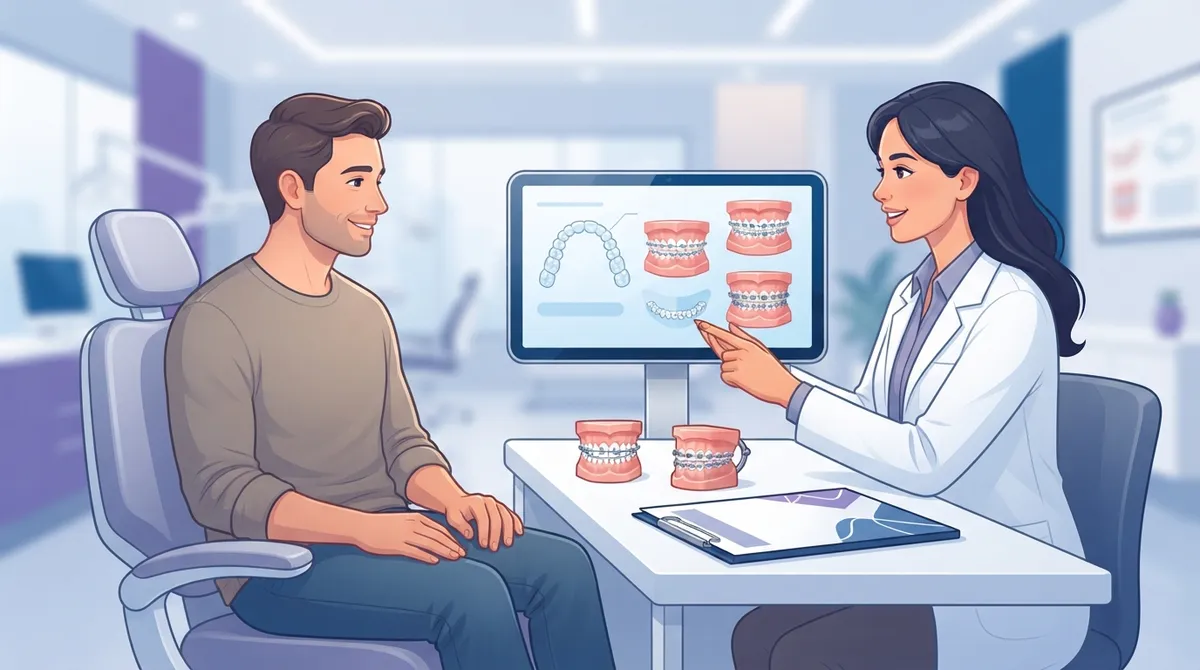
Here’s something that surprises a lot of patients: clear aligners aren’t automatically faster than braces. Speed depends on which appliance actually fits your specific case, not which one looks cooler on Instagram. Both traditional braces and clear aligners can move teeth on similar timelines when they’re the right tool for the job.
- Mild crowding or spacing: Often treatable in about 6-12 months with either aligners or braces
- Moderate alignment issues: Usually takes 12-18 months
- Complex bite problems or severe crowding: May require 18-36 months or longer, especially with jaw discrepancies
- Impacted teeth or extractions needed: Fixed braces often provide more precise, predictable control
Clear aligners shine for patients with mild-to-moderate issues who want something discreet. Teens juggling sports and social lives, plus adult professionals in meetings all day, often love this option. Learn more in our guide to removable aligners and how clear trays straighten your smile.
Fixed braces, on the other hand, tend to win when teeth need very precise, controlled movement. If you’re weighing your options, our comparison on braces vs clear aligners for your teen breaks it down simply.
Comparing Timelines by Treatment Type
| Case Complexity | Typical Timeline | Common Appliance Options |
|---|---|---|
| Mild crowding/spacing | 6-12 months | Clear aligners or braces |
| Moderate misalignment | 12-18 months | Clear aligners or braces |
| Complex bite/jaw issues | 18-36+ months | Braces, sometimes with extractions |
Keep in mind these are estimates, not guarantees. Every mouth is different, and your orthodontist will give you a personalized timeline after your exam.
3. Staying Consistent With Wear and Appointments
This might be the single biggest factor in how fast your teeth actually straighten. We see it all the time: two patients with nearly identical cases finish treatment months apart because one followed instructions perfectly and the other didn’t.
Here’s what consistency looks like in practice:
- Wear aligners 20-22 hours daily. Popping them out for snacks or forgetting them at school adds up fast.
- Attend every appointment. Adjustment visits every 6-8 weeks let your orthodontist track progress and fix small issues before they become big delays.
- Change aligners on schedule. Switching too early, before teeth are ready, can actually undo progress.
- Wear rubber bands or other prescribed accessories exactly as directed. Skipping elastics is one of the most common reasons braces treatment stretches longer than expected.
- Keep your teeth and gums healthy. Gum disease or cavities can pause treatment altogether.
According to the Newcastle Hospitals NHS Foundation Trust, most patients wear braces for roughly 2-3 years, with checkups scheduled every 6-8 weeks. Sticking to that schedule keeps your treatment on the fastest possible track. If you want tips on keeping things on schedule, our article on planning your life around braces treatment duration is a great place to start.
Good Oral Hygiene Habits Speed Things Up
Brushing and flossing well isn’t just about fresh breath. Plaque buildup around brackets or trapped under aligners can slow tooth movement and cause other issues. Check out our simple guide on how to brush and floss with braces effectively to keep things moving smoothly.
4. Considering Accelerated Orthodontic Options (With Realistic Expectations)
You may have heard about procedures that promise to speed up tooth movement, like micro-osteoperforations, corticotomy, or vibration devices. These approaches can offer modest time savings for select patients. A 2019 systematic review found an average reduction of about 2.8 months in treatment time, but researchers rated the evidence as low to very low quality.
What does this mean for you? These options aren’t magic shortcuts. They may help in specific situations, but they don’t replace careful, individualized treatment planning. Dr. Chacon will always recommend what’s genuinely best for your smile rather than pushing an add-on procedure that hasn’t proven consistent results.
We also want to gently warn against DIY teeth straightening kits or unsupervised mail-order aligners. Teeth need to move gradually to protect your roots, gums, and supporting bone. Rushing this process without professional supervision can cause permanent damage. If something sounds too fast and too cheap to be true, it probably comes with hidden risks.
5. Following Through With Retention After Treatment
Here’s a step people often forget when they’re focused on speed: retention. Once your teeth are straight, they want to drift back to their old positions. That’s just biology. Wearing your retainer as prescribed protects all the hard work you just put in.
Think of it this way: getting your teeth straight quickly is only half the win. Keeping them straight for life is the other half. Many orthodontic providers recommend nightly retainer wear indefinitely. Our guide on retainers in Westchase and how to keep your smile straight for life covers everything you need to know.
Common Factors That Slow Treatment Down
Want to avoid delays? Watch out for these common culprits:
- Missed or frequently rescheduled appointments
- Broken brackets or wires from hard, sticky, or crunchy foods
- Forgetting to wear aligners the recommended hours per day
- Skipping prescribed rubber bands or other accessories
- Poor oral hygiene leading to gum inflammation
- Switching aligner trays before your teeth are actually ready
Our article on foods to avoid with braces is a handy reference for keeping your treatment on track, especially for families with kids and teens in braces.
What Makes Chacon Orthodontics Different
Dr. Omar Chacon is a board-certified orthodontist with over 10 years of experience, trained in New York City and fluent in both English and Spanish. This matters for bilingual families in Westchase and Brandon who want clear communication about their treatment timeline without any language barriers.
Every treatment plan at our practice starts with a free consultation, where we use advanced 3D imaging to map out the fastest safe path to your best smile. We also offer virtual consultation options for families who want to get started without an in-office visit right away. Curious what other patients say about their experience? You can see what our Chacon Orthodontics Brandon patients share by visiting our Instagram page, following updates on Facebook, or connecting with Dr. Chacon on LinkedIn.
You can also visit us on Google — Chacon Orthodontics Brandon to read real reviews from families just like yours.
Your Next Step Toward a Faster, Straighter Smile
So, what is the fastest way to straighten teeth? It’s a personalized plan, the right appliance for your case, consistent daily habits, and a trusted orthodontist guiding you the whole way. There’s no universal shortcut, but there is a smart, safe path designed just for you.
Ready to find out your fastest timeline to a confident smile? Contact us today at Chacon Orthodontics, serving families throughout Westchase and Brandon, Florida, and let’s get your smile journey started the right way.
FAQs
Q: What is the fastest way to straighten teeth safely?
A: The fastest safe way is getting a personalized treatment plan from a board-certified orthodontist after a full exam. This usually means clear aligners or braces matched to your specific case, worn consistently as prescribed. There’s no one-size-fits-all shortcut, but the right plan for you can move much faster than guessing on your own.
Q: Are clear aligners faster than traditional braces?
A: Not necessarily! Clear aligners and braces often have similar timelines when both are good options for your case. Aligners tend to work best for mild-to-moderate crowding, while braces are often more predictable for complex movements. The real difference-maker is which appliance actually fits your teeth, not the appliance type itself.
Q: How long does it take to straighten mildly crowded teeth?
A: Mild crowding or spacing can sometimes be treated in about 6 to 12 months, depending on your individual case. Of course, this varies based on your bite, how well you follow instructions, and how your teeth respond to treatment. Your orthodontist can give you a much more specific estimate after your first exam.
Q: Do accelerated orthodontic procedures really work?
A: They can offer modest time savings for some patients, with one review showing an average reduction of about 2.8 months. However, the evidence behind these procedures is still considered low quality by researchers. They’re worth discussing with your orthodontist, but they shouldn’t replace a solid, individualized treatment plan.
Q: Will my teeth stay straight after braces or clear aligners?
A: Yes, as long as you wear your retainer as prescribed! Teeth naturally want to shift back over time, so retainers protect all the progress you made during treatment. Many orthodontists recommend wearing retainers nightly for the long haul, even years after your braces come off.