
Key Takeaways
-
Straighten teeth first, then place implants: this ideal sequence allows orthodontists to create perfect spacing and alignment for the implant, avoiding costly corrections and bite problems later.
-
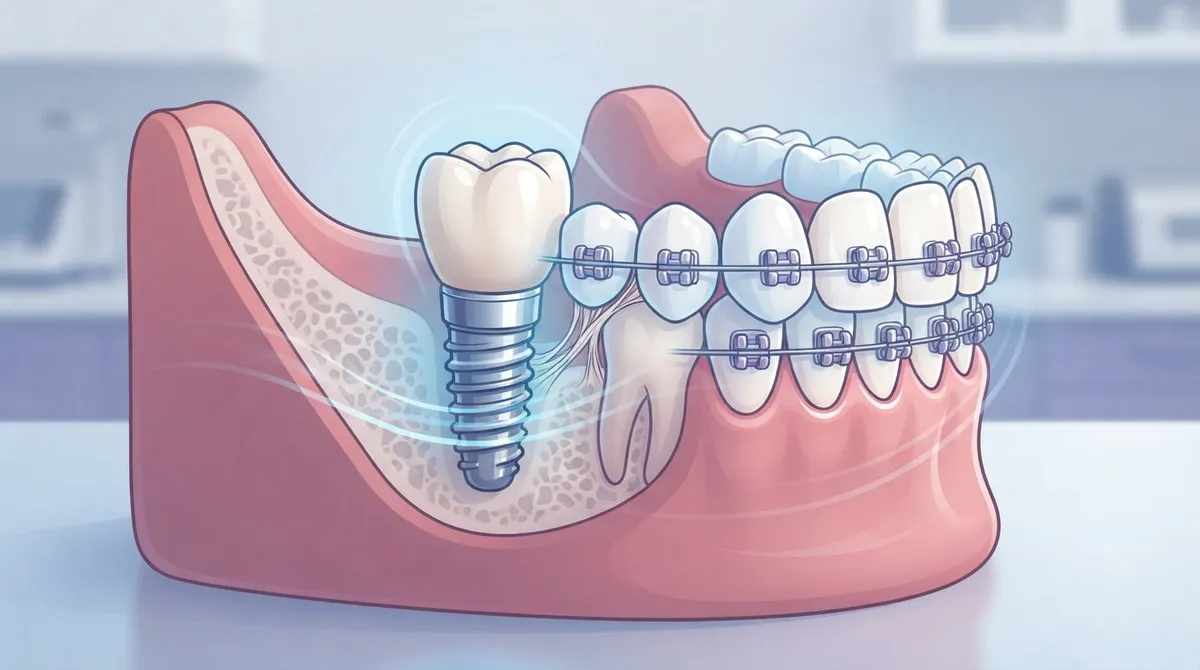
Dental implants cannot move because they fuse directly to jawbone through osseointegration, unlike natural teeth held by stretchy ligaments, so orthodontists must plan tooth movement around the fixed implant.
-
If you already have an implant, braces or clear aligners can still work by moving surrounding natural teeth around the stationary implant using advanced 3D digital imaging for precise planning.
-
Mini-implants (temporary anchorage devices) can serve as powerful anchors during orthodontic treatment to efficiently move teeth in complex cases, then are removed or replaced once treatment completes.
-
Implants protect jawbone health by mimicking natural tooth roots and preventing bone shrinkage, which provides a stronger foundation for both teeth and implants during orthodontic stability.
-
Consult both your orthodontist and implant dentist before any implant surgery to map out treatment sequence, preventing poorly positioned implants that cannot be moved and may require expensive crown reshaping.
Wondering if you can still get braces or clear aligners if you already have a dental implant? You’re not alone. This is one of the most common questions we hear at Chacon Orthodontics, and the good news is that it’s almost always a solvable puzzle. Dental implants and orthodontic treatment can absolutely work together, but they need a smart plan to get the timing and order right.
Whether you’re a parent wondering about your teen’s future smile, an adult professional weighing your options, or someone who’s had an implant for years and just discovered you need braces, this guide will walk you through everything. We’ll cover why implants behave differently than natural teeth, the best order for treatment, and what to expect along the way. Let’s clear up the confusion together.
Why Dental Implants Are Different from Natural Teeth
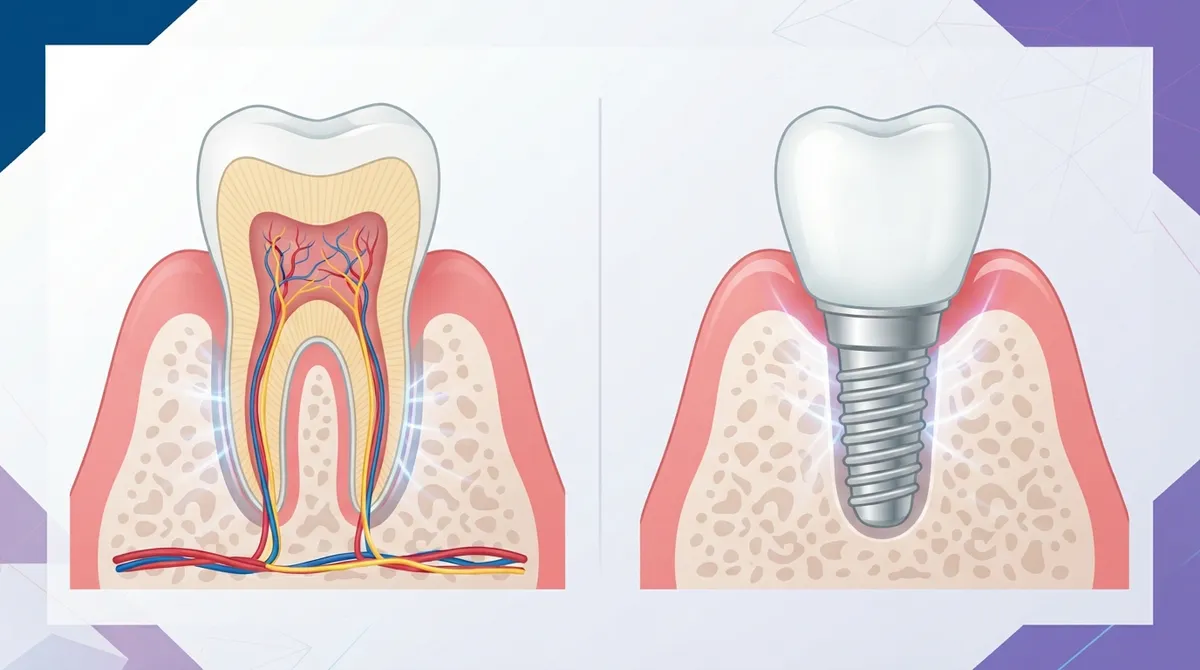
Your natural teeth are held in place by tiny, stretchy fibers called periodontal ligaments. Think of them like little springs. This is exactly why braces and clear aligners work so well. They apply gentle pressure, and your teeth slowly shift into a new, straighter position over time.
Dental implants don’t have these ligaments. Instead, a titanium post is surgically placed into your jawbone. Over several months, the bone actually fuses to the metal in a process called osseointegration. This creates an incredibly strong, stable foundation, similar to how titanium is used in hip and knee replacements.
Here’s the catch: because the implant is fused directly to bone, it simply cannot move. Braces and aligners rely on that natural tooth movement, so an implant acts like a permanent anchor point that just won’t budge, no matter how much pressure is applied.
What This Means for Your Smile
- Implants stay exactly where they are placed, for life
- Surrounding natural teeth can still shift and move normally
- Your orthodontist must plan movement around the implant, not through it
- Implants can last a lifetime with good care, unlike bridges which typically last 7 to 10 years
Can You Get Braces If You Already Have an Implant?
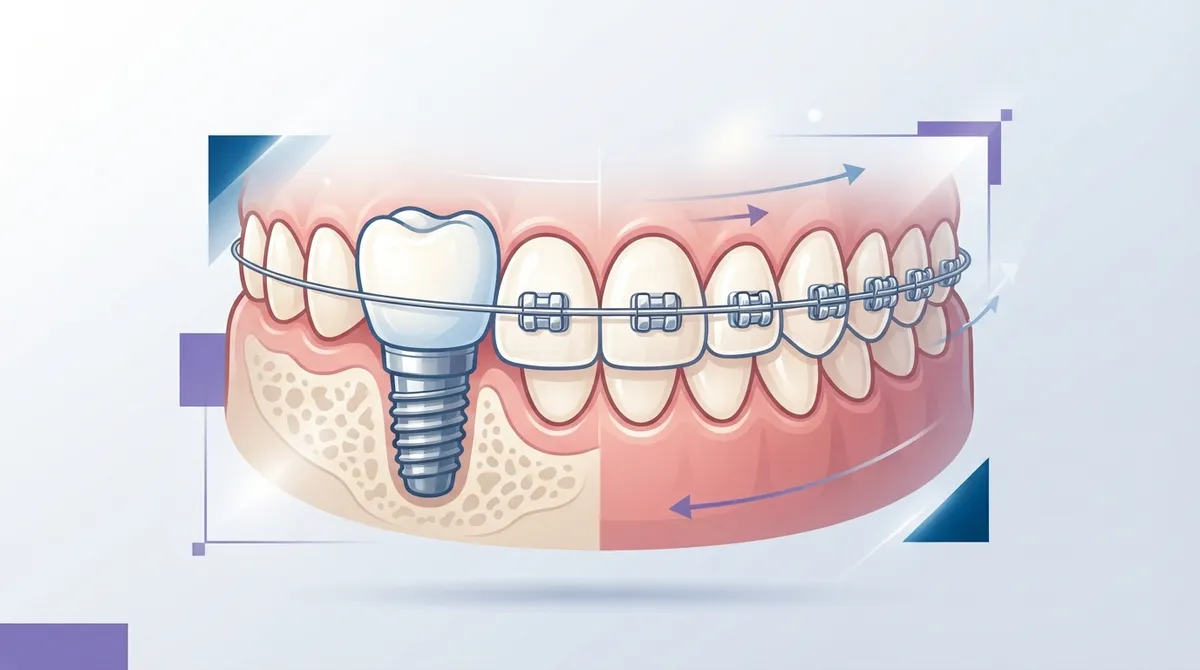
Yes, absolutely! Having an existing implant does not mean orthodontic treatment is off the table. It just means your treatment plan needs a little extra thought and precision.
Your orthodontist will design a plan that moves the teeth around your implant into their ideal positions. The implant itself stays put, acting like a stationary landmark, while everything else shifts to create a balanced, healthy bite. It takes careful planning, but it is absolutely achievable with the right team.
This is where experience really matters. At Chacon Orthodontics, we use advanced 3D digital imaging to map out exactly how your teeth will move, working carefully around any existing implants. If you want to learn more about how modern imaging helps guide treatment, check out our page on how to understand teeth positioning and fix alignment issues.
Braces First or Implant First? The Ideal Order
If you know you’ll need both a dental implant and orthodontic treatment, timing matters a lot. Most orthodontists agree on one golden rule: straighten your teeth first, then place the implant.
Why Orthodontics Should Come Before the Implant
- Creates the perfect gap: Braces or aligners can shift teeth to open up just the right amount of space for the implant.
- Improves alignment: Moving teeth first helps make sure the implant sits perfectly straight and level with neighboring teeth.
- Prevents future problems: If an implant goes in too early, and teeth shift afterward, it can throw off your bite and look uneven.
- Saves you money long-term: Avoiding a poorly placed implant means you won’t need costly corrections down the road.
Placing an implant before orthodontic treatment can create real headaches. Since the implant cannot move, it might end up positioned awkwardly once surrounding teeth are realigned. That’s why planning ahead with your orthodontist and implant dentist is so important.
| Treatment Order | Pros | Cons |
|---|---|---|
| Orthodontics First, Then Implant | Ideal spacing, better alignment, precise fit | Requires more advance planning and time |
| Implant First, Then Orthodontics | Sometimes unavoidable due to urgent tooth loss | Limited movement options, possible bite issues |
| Implant Already Present, Braces Needed Later | Still very treatable with modern techniques | Orthodontist must design plan around fixed implant |
Can Dental Implants Actually Help Orthodontic Treatment?
Here’s something many patients don’t expect: implants can actually be a helpful tool during orthodontic treatment. Small titanium screws, often called temporary anchorage devices or mini-implants, are sometimes placed just for the duration of treatment.
These mini-screws act as extra-strong anchors. They help move other teeth more efficiently, especially in tricky cases involving significant crowding or bite correction. Once treatment wraps up, these temporary implants are simply removed, or in some cases, replaced with a permanent crown if a tooth is missing in that spot.
This dual-purpose approach shows just how flexible modern orthodontic care has become. If you’re curious about how appliances like these fit into a full treatment plan, take a look at our guide on types of orthodontic appliances.
Protecting Your Jawbone Health Along the Way
One often overlooked benefit of dental implants is how they protect your jawbone. When a tooth is missing, the bone underneath can slowly shrink away without stimulation. Implants mimic a natural tooth root, keeping that bone strong and healthy.
This matters a lot for orthodontic stability. Healthy, strong bone gives your teeth (and any implants) a solid foundation to work with. It’s one more reason why coordinating care between your orthodontist and your implant dentist is so valuable, especially for image-conscious patients who want lasting, beautiful results.
Two Common Types of Dental Implants
- Endosteal implants: Placed directly into the jawbone, this is the most common type
- Subperiosteal implants: Rest on top of the jawbone but under the gum tissue, used less often today
What Happens If an Implant Is Placed in the Wrong Spot?
This is a real concern, and it’s exactly why planning ahead matters so much. If an implant is placed without considering future orthodontic needs, it might end up slightly crooked or poorly spaced compared to neighboring teeth.
Since implants can’t be moved with braces, fixing this often means working teeth around the implant instead, using aligners or braces to reposition everything else. In some rare cases, the implant crown can be reshaped or replaced to improve appearance, but the titanium post itself stays exactly where it was placed.
This is why we always encourage patients to talk with both their orthodontist and implant specialist before any implant surgery. A quick conversation upfront can save a lot of stress later. Our team is happy to collaborate with your restorative dentist to map out the smartest sequence for your unique smile.
Are Clear Aligners Safe to Use with Implants?
Great news for adults and teens who prefer a more discreet option: clear aligners work well for patients with existing implants. Since aligners gently move natural teeth while leaving the implant untouched, they’re often a comfortable, low-profile choice.
Your orthodontist will simply design the aligner trays to shift the surrounding teeth without applying any pressure to the implant itself. Many adult patients love this approach because it fits seamlessly into busy work schedules and social lives. Learn more about this option on our removable aligners page.
Steps to Take If You Need Both Treatments
- Schedule a consultation with an orthodontist to evaluate your bite and alignment
- Get X-rays and 3D imaging to map out tooth positions and available space
- Discuss timing with both your orthodontist and implant dentist
- Complete orthodontic treatment first, whenever possible, to create ideal spacing
- Move forward with implant placement once teeth are properly aligned
- Follow up with a retainer plan to protect your new smile long term
This kind of teamwork between specialists is exactly what sets great orthodontic care apart. If you’d like guidance on choosing the right provider for this kind of coordinated treatment, our article on how to choose the right orthodontist near you is a helpful place to start.
Why Bilingual, Personalized Care Matters
Navigating implants and orthodontics can feel overwhelming, especially if English isn’t your first language. At Chacon Orthodontics, we proudly offer bilingual care in English and Spanish, so families throughout Westchase and Brandon feel comfortable asking questions and understanding every step of their treatment plan.
Dr. Omar Chacon brings over a decade of board-certified experience, blending advanced technology with warm, personalized attention. Whether you’re a parent exploring early treatment options for your child or an adult considering aligners around an existing implant, our team takes the time to explain your options clearly. You can also follow along with real patient stories and smile transformations on our Instagram and Facebook pages.
Bringing It All Together
Dental implants and orthodontic treatment aren’t opposites, they’re partners when planned correctly. The key is communication between your orthodontist and implant provider, along with a clear understanding of which treatment should come first. In almost every case, straightening your teeth before placing an implant leads to the best, longest-lasting results.
If you already have an implant, don’t worry. Modern orthodontic techniques, including clear aligners and custom braces, can absolutely work around it to give you the confident smile you deserve. Dr. Chacon and our team have helped countless patients throughout Westchase and Brandon navigate exactly this situation with great success.
You can also connect with Dr. Chacon on LinkedIn to learn more about his background and approach to patient care. And if you’d like to see what real patients are saying, feel free to Visit us on Google — Chacon Orthodontics West Chase and read their reviews firsthand.
Ready to talk through your options with a team that truly listens? We’d love to help you build a treatment plan that fits your smile, your timeline, and your life. Schedule your free consultation today and let’s start planning your best smile together.
FAQs
Q: Can I get braces if I already have a dental implant?
A: Yes, you sure can! Your orthodontist will simply design a plan that moves the teeth around your implant, since the implant itself stays fixed in place. It just takes a little extra planning to get your smile looking its best.
Q: Should I get braces before or after getting a dental implant?
A: In almost every case, braces or aligners should come first. This lets your orthodontist create the perfect amount of space and alignment, so your implant fits precisely once it’s time for placement.
Q: Why can’t dental implants move during orthodontic treatment?
A: Implants fuse directly to your jawbone through a process called osseointegration, unlike natural teeth which are held by stretchy ligaments. This fusion makes implants incredibly strong, but also means they simply cannot shift with braces or aligners.
Q: Can dental implants be used as anchors for braces?
A: They sure can! Small temporary implants, called mini-screws, are sometimes placed just to help anchor and move other teeth during treatment. Once your smile is complete, these tiny anchors are removed or replaced with a permanent crown.
Q: Are clear aligners safe to use if I already have a dental implant?
A: Absolutely, clear aligners are a great option for patients with implants. They gently shift your natural teeth while leaving the implant untouched, making them a comfortable and discreet choice for many of our patients.